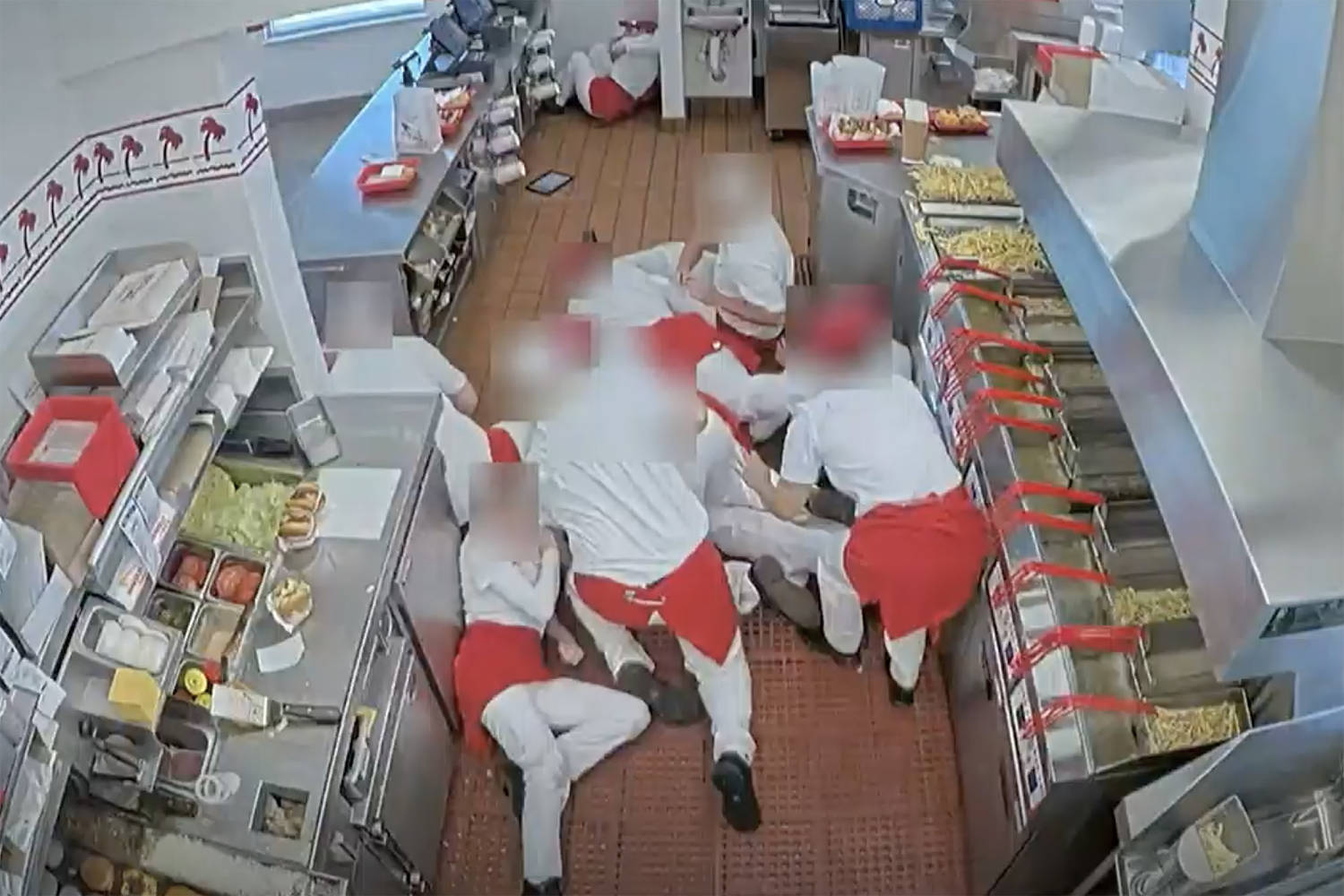
The footage is everywhere. Every digital rag and local broadcast affiliate is looping the raw, unedited security clips from the recent tragedy at the In-N-Out location. They call it transparency. They call it public safety. They call it keeping the community informed.
They are lying to your face.
What we are watching isn't reporting. It is industrialized panic porn, dressed up as civic duty. Every time a major network or online aggregator drops a newly unearthed angle of a violent episode, traffic spikes, ad revenue ticks up, and the collective anxiety of a nation inches a little higher. We have confused the consumption of horror with the pursuit of justice.
The Lazy Consensus of Total Transparency
The mainstream media narrative operates on a single, unchallenged premise: more footage equals more truth, and more truth is always a public good. If police release a chilling new video, the automatic reflex of the commentariat is to dissect every frame, freeze-frame the assailant, and turn a localized catastrophe into a viral multimedia event.
This logic is bankrupt.
I have spent over a decade analyzing crisis response, media contagion, and how violent actors feed off the oxygen of perpetual replay. I have watched organizations blow millions on crisis PR while entirely missing the mechanics of how public attention incentivizes copycats.
When you broadcast the chilling final moments of a public space turned warzone, you are not honoring the victims. You are fulfilling the exact operational blueprint the perpetrator drafted before walking through those double doors. Mass shooters and violent extremists do not just want bodies; they want a broadcast. They want an editor in Los Angeles or New York to package their hatred into a slick video package with a dramatic banner.
By demanding immediate, raw access to every piece of evidence law enforcement generates, we have built a self-service radicalization engine.
The Copycat Mechanics No One Wants to Discuss
Let us look at the data we actually have, rather than the emotional theater we prefer. Criminologists and researchers specializing in public violence have tracked the contagion effect for decades. The phenomenon is well-documented: intense, repetitive media coverage of a violent incident spikes the statistical probability of a similar event occurring within the next fourteen days.
When authorities drop "chilling new video," they trigger a cascade effect.
- The Proliferation Phase: Outlets compete to find the most graphic still image for a thumbnail.
- The Speculation Loop: Unqualified pundits analyze police tactics in real-time, teaching future bad actors what went right and what went wrong for the defense.
- The Martyrdom Cycle: The focus shifts subtly from the mundane humanity of the victims to the terrifying scale of the attacker's impact.
Imagine a scenario where law enforcement simply stopped feeding the beast. Imagine an approach where the public record documents the facts, the court trials, and the policy reforms, but starves the digital ecosystem of the sensory horror that makes violence addictive.
The pushback is immediate: "The public has a right to know."
Do they? Or do they have an addiction to catastrophe that modern platforms monetize? There is a massive operational gap between accountability and voyeurism. Handing millions of people unedited, visceral footage of a mass casualty event inside a fast-food restaurant does not make our communities safer. It desensitizes the normal, terrifies the vulnerable, and hands a megaphone to monsters.
Dismantling the Right to Know Argument
Let us address the People Also Ask queries floating around search engines right now regarding this specific footage.
Why did Idaho police release the video? Because the public pressure cooker demands it. Police departments operate in a political environment where withholding anything—even out of respect for victims or to protect ongoing investigative integrity—triggers immediate accusations of a cover-up. Transparency has been weaponized into a blunt instrument. If a department doesn't instantly yield to the digital mob's demand for gore, they get dragged across social media for lacking openness.
We have created a regulatory and cultural framework where law enforcement is forced to choose between protecting public mental health and surviving a Twitter storm. They choose the release every single time. And who can blame them? But yielding to the mob doesn't make the decision correct. It makes it cowardly.
The Cost of Our Collective Voyeurism
I have sat in rooms where executives review engagement metrics for tragedy coverage. The numbers are sickening. Articles featuring words like "chilling," "unseen," and "graphic" outperform sober policy analysis by orders of magnitude.
We are training the algorithm to demand blood.
Every click on that In-N-Out security footage tells a content director to commission three more pieces on the same horror tomorrow. It tells a tech platform to push the notification to five million lock screens. We are active participants in the commercialization of grief.
If you want to support the victims of these tragedies, stop watching the clips. Stop sharing the updates that feature the killer's face or the moment shots ring out. Starve the machine of the one commodity it cannot survive without: your eyeballs.
The next time a chilling new video drops, the most radical, contrarian, and genuinely protective thing you can do for your community is to scroll right past it.
Leave the tape in the vault.