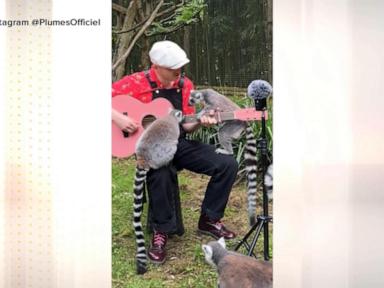
The internet loves a feel-good video of a guy playing a cello for an elephant or strumming a guitar for a pride of lions. It hits all the right emotional triggers. We get to watch a human bridge the gap between species using the universal language of music. We pat ourselves on the back for being such a sensitive, enlightened species.
It is absolute nonsense.
Underneath the heartwarming aesthetic lies a staggering amount of human arrogance. We take our own cultural obsession with acoustic vibrations and project it onto creatures whose sensory worlds have nothing to do with Bach or Beethoven. When a musician flies across continents to serenade a wild animal, they are not connecting with nature. They are performing a glorified vanity project wrapped in an eco-friendly bow.
The Narcissism of Inter-Species Serenades
Let us look at the mechanics of what happens when a human brings a musical instrument into a wildlife habitat. We assume sound is neutral, or universally appreciated because humans find it soothing. That is an anthropomorphic trap.
Animals rely on acoustic ecology to survive. Their auditory systems are fine-tuned to detect predators, prey, territory markers, and conspecific mating calls. When a human sits down with a grand piano or an acoustic guitar in the middle of a national park, we are introducing acoustic pollution.
Acoustic ecologist Bernie Krause has spent decades documenting how human noise disrupts the complex soundscapes of natural habitats. Every species occupies a specific frequency band, a biological niche of sound known as the niche hypothesis. When you blast classical music or strum folk chords, you are not harmonizing with that niche. You are trampling it.
The animal’s reaction to the music is rarely appreciation. It is usually curiosity, confusion, stress, or a threat response. That elephant standing still while a cellist plays? It is not meditating on the adagio. It is processing an entirely novel, bizarre vibration that it cannot categorize, weighing whether to charge or flee.
The Anthropomorphic Fallacy in Modern Media
We fall for these viral stunts because we want to believe in the Disney-fied fantasy of the peaceable kingdom. We want to believe that humans can transcend our history of ecological destruction simply by playing a nice tune.
Media outlets push these stories because they generate effortless engagement. They require zero critical thought from the viewer. You click, you sigh, you share, and you move on, convinced that you have witnessed a moment of pure conservation triumph.
Meanwhile, actual conservationists are pulling their hair out. Protecting wildlife requires habitat preservation, anti-poaching enforcement, and crucially, minimizing human interference. Turning wild animals into captive audiences for traveling troubadours goes against every fundamental rule of wildlife management.
Imagine a scenario where a marine biologist blasts heavy metal underwater to charm a pod of orcas. Public outrage would be instantaneous. People would rightly point out that loud, unnatural noises disorient cetaceans and interfere with their echolocation. Yet, swap the ocean for the savanna, swap a subwoofer for a cello, and suddenly everyone loses their minds with sentimental joy. The physics of sound do not change just because the instrument is acoustic.
What People Also Get Wrong About Animal Cognition
A common defense from fans of these musical stunts is that animals clearly enjoy the music because they approach the player. This reveals a fundamental misunderstanding of animal behavior.
In the wild, novelty triggers investigation. If a bright pink inflatable chair suddenly appeared in a gorilla's territory, the silverback might walk up, poke it, and inspect it. That does not mean the gorilla loves inflatable furniture. It means the animal is assessing a strange anomaly in its environment.
When an animal approaches a musician, it is performing risk assessment. It is using its senses to figure out what kind of bizarre threat or bizarre food source has just entered its domain. Interpreting that cautious approach as an artistic review is peak human egoism. We assume everything in nature exists in relation to us, evaluating us, learning from us, or finding solace in our art.
The Real Cost of Viral Wildlife Stunts
Let us talk about the logistical footprint of these globetrotting musical tours. To film a guy playing a violin for a rescued bear, you need a camera crew, sound equipment, transport vehicles, permits, and human handlers. You are burning fossil fuels, hauling heavy gear into sensitive ecosystems, and altering animal behavior through constant human presence.
Habituation is a silent killer in conservation. When wild animals lose their natural wariness of humans because humans keep showing up with cameras and instruments, they become vulnerable. Habituated animals wander into human settlements, raid farms, or fall victim to poachers. You cannot love a wild animal to safety by making it comfortable around humans.
How to Actually Support Wildlife
If you care about animals, stop funding the content creators who treat wildlife as background props for their artistic expression. True conservation is boring, tedious, and unphotogenic. It looks like land buybacks, policy advocacy, funding local rangers, and keeping your distance.
Nature does not need your soundtrack. It spent millions of years refining its own.
Put down the guitar, step back behind the perimeter, and let the animals make their own noise.