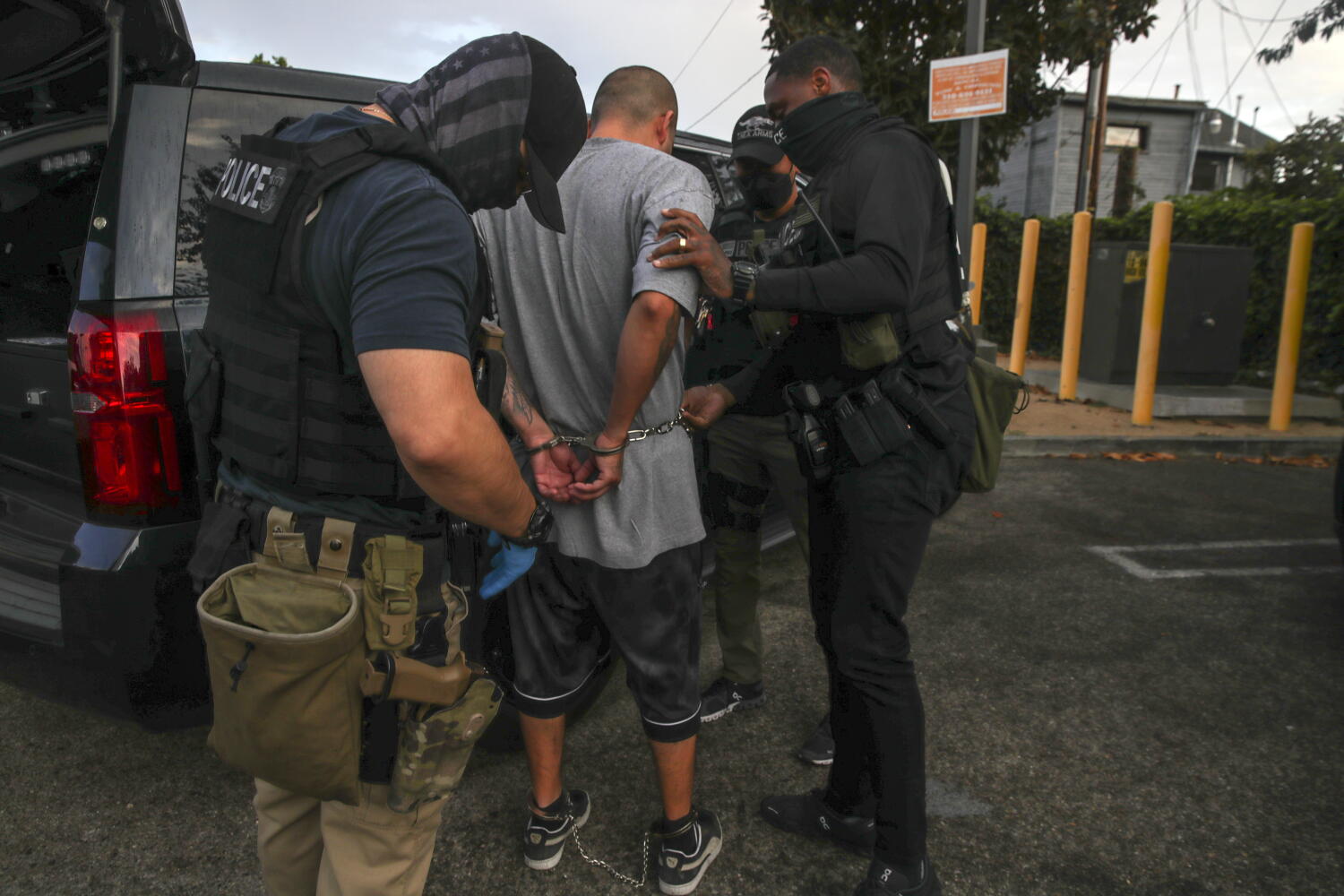
For years, the public has been fed a comforting fiction about federal immigration enforcement. We are told that agents operating in the field are running high-stakes, clock-is-ticking operations where every second counts, where suspects vanish into the shadows if administrative protocol is allowed to slow down the machinery of the state. It is a narrative built on urgency, panic, and the convenient dismissal of constitutional safeguards.
When a federal judge in Los Angeles slammed the brakes on warrantless immigration arrests across seven Southern California counties, the predictable chorus erupted. Critics screamed about handcuffed law enforcement. Defenders cheered a judicial victory. Both sides missed the structural reality. The recent preliminary injunction does not tie the hands of officers; it merely demands that federal agents stop treating the Fourth Amendment as an inconvenient bureaucratic speed bump.
Let us look past the partisan theater and examine how enforcement actually operates on the ground.
The Bureaucratic Illusion of Emergency Enforcement
To understand why the court order matters, you have to look at how warrantless arrests under Section 1357 of Title 8 have been weaponized as a matter of administrative convenience rather than actual emergency response. The statute permits immigration officers to arrest individuals without a warrant under specific statutory conditions, chief among them being the belief that the person is likely to escape before a warrant can be obtained.
In practice, that statutory threshold became a ghost requirement. Agents operating in commercial sweeps—such as car washes, factories, and construction sites—routinely skipped the escape-risk analysis entirely. They treated presence in a designated workplace or demographic proximity to a target as blanket authorization to slap cuffs on anyone who happened to be breathing in the vicinity.
When body-camera footage from operations at sites like the Handy J Car Wash in Los Angeles was unsealed, it exposed a glaring disconnect between bureaucratic paperwork and physical reality. Agents wrote narrative reports claiming suspects made sudden movements or appeared evasive, only for video evidence to show docile workers standing still, answering questions, or being detained purely based on language, accent, or occupation.
This is not law enforcement. This is administrative dragnet fishing. When the state grants itself the power to detain human beings based on vibes and hastily scribbled post-hoc justifications, you do not have a secure border; you have an erosion of administrative accountability.
Why Flight Risk Became a Legal Fiction
The core of the recent federal ruling hinges on a simple, devastatingly logical premise: if a person is standing still, cooperating, or locked down inside a surrounded commercial establishment, they are not fleeing.
Yet, for decades, federal agencies operated under the assumption that being present in the United States without documented status inherently constituted an ongoing flight risk. Think about the intellectual dishonesty required to sustain that argument. Under that logic, every single undocumented resident in the country is perpetually sprinting toward the horizon at any given second, justifying a warrantless seizure at 8:00 AM on a Tuesday while they scrub windshields or pack boxes.
A court finally called the bluff. The preliminary injunction requires officers to actually evaluate, document, and justify why an individual poses an imminent risk of escape before executing a warrantless arrest.
Opponents of the ruling claim this makes field operations impossible. That argument collapses under scrutiny. If an enforcement agency cannot articulate why a specific person is about to flee, then they have ample time to secure a judicial or administrative warrant. The Fourth Amendment was not written to accommodate the scheduling preferences of field supervisors who want to bypass judicial oversight to pad monthly arrest metrics.
The Real Cost of Administrative Shortcuts
When agencies cut corners, collateral damage is inevitable. We have seen repeated instances where United States citizens and lawful permanent residents are swept up in these dragnet operations. Veterans, citizens with Spanish surnames, and bilingual workers have been detained, questioned, and subjected to the humiliating indignity of proving their own nationality on American soil because agents relied on racial profiling and linguistic assumptions rather than individualized probable cause.
The defenders of unrestricted warrantless arrests want you to believe that occasional wrongful detentions are just regrettable background noise in a difficult war. That is an unacceptable trade-off in a constitutional republic. When the state claims the right to seize bodies without warrants, the burden of proof rests entirely on the government to demonstrate that its procedures are airtight. In Southern California, the evidence showed they were anything but airtight. They were sloppy, lazy, and systematically flawed.
Consider the data cited in oversight reports regarding recent multi-agency sweeps. In several high-profile operations where agencies claimed they were targeting dangerous criminal elements, public records and subsequent audits revealed that the vast majority of those swept up had zero criminal records. They were working-class individuals caught in statistical sweeps designed to generate high arrest volume numbers for political consumption. When the metrics become the mission, the law becomes an obstacle to be circumvented.
Dismantling the Myth of Operational Necessity
Let us address the conservative counter-argument head-on: doesn't requiring individual escape assessments slow down federal agents and allow dangerous individuals to slip away?
The answer is no, for two distinct reasons.
First, if an individual is genuinely dangerous or linked to serious criminal enterprise, law enforcement agencies already possess the investigative tools—including pre-planned warrants, intelligence dossiers, and localized tracking—to execute targeted arrests with precision. Dragnet sweeps of commercial parking lots and car washes are not precision tools; they are blunt instruments.
Second, administrative efficiency is not a valid constitutional exemption. The Founding Fathers did not draft the Bill of Rights with a clause stating, "...unless getting a warrant takes too much paperwork during a busy morning shift." The inconvenience of following the law is the price a democratic government pays to ensure its citizens and residents are not subjected to arbitrary state power.
When a federal judge tells an agency that it must document its reasoning, it is not legislilating from the bench; it is enforcing the baseline text of statutory law. Section 1357 never gave immigration officers carte blanche to treat the entire geography of Southern California as a Constitution-free zone where probable cause is optional and flight risk is assumed by default.
What Happens When the State Is Forced to Follow Its Own Rules
The Department of Homeland Security and its defenders will undoubtedly appeal, posture, and claim that judicial oversight ties their hands. Do not buy into the panic.
When organizations are forced to document their actions, institutional behavior changes for the better. Field agents will have to rely on actual investigative work—gathering intelligence, establishing verifiable patterns, and securing proper warrants—instead of rolling up to job sites with vans and quotas.
This ruling forces a professionalization of immigration enforcement. It separates serious law enforcement from political theater. If an agency cannot be bothered to write down why a person is fleeing before slapping handcuffs on them, then that arrest should never have happened in the first place.
The status quo of unchecked warrantless arrests was broken long before any judge signed an injunction. It relied on secrecy, unverified agent narratives, and the quiet assumption that nobody would look too closely at the body-cam footage. Now the footage is out, the rules are written, and the excuse window is closed.
Stop mourning the loss of shortcuts. Start demanding competence.