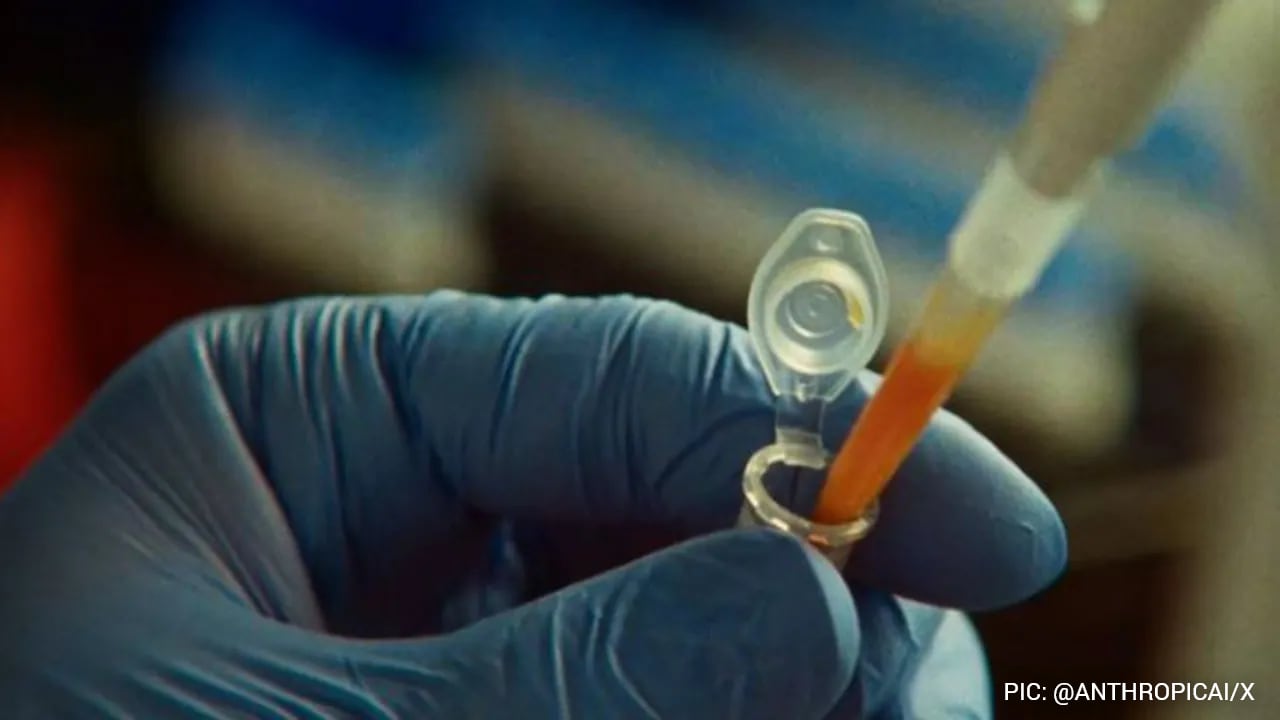
The headlines rolled in with predictable, breathless worship. Anthropic drops a press release, tech journalists scramble to update their CMS platforms, and venture capitalists start rewriting pitch decks. The claim is simple, seductive, and entirely misleading: Claude AI helped discover a novel enzyme system.
It is a masterpiece of public relations engineering. It is also a profound distortion of how scientific breakthroughs actually happen.
I have watched companies burn hundreds of millions of dollars trying to feed raw transformer outputs straight into wet-lab pipelines, expecting silicon prophecy. They treat large language models like digital Oracles of Delphi, waiting for sacred amino acid sequences to materialize from stochastic token probabilities. When one accidentally hits, the marketing machine fires up.
Let us strip away the Silicon Valley pageantry and look at what actually occurred. Claude did not discover anything. It indexed, synthesized, and interpolated data that human researchers spent decades generating, organizing, and validating. Calling an autoregressive text generator a "discoverer" is like calling Microsoft Word a co-author on a Pulitzer Prize-winning novel because it handled the spellcheck.
The Anatomy of a PR Fabrication
To understand why the narrative collapses under microscopic examination, you have to look at how biological discovery actually works. Nature does not operate via next-token prediction. Evolution tests physical constraints through thermodynamic trial and error over millions of years.
When Anthropic and its lab partners point to an AI assisting in finding a new enzyme system, they omit the grueling, unglamorous engineering reality. The model was trained on petabytes of human-curated literature, structural databases like the Protein Data Bank, and genetic repositories. When prompted, it searched its parameter space for correlations between textual descriptions of catalytic activity and molecular structures.
That is not reasoning. That is advanced stochastic lookup.
If you ask a librarian to pull every paper written on esterases, synthesize the common motifs, and suggest a structural scaffold based on existing literature, you do not say the library discovered a new catalyst. You say the library did its job. But substitute a data center running matrix multiplication for the library, and suddenly the tech press loses its collective mind, attributing agency to a collection of weights and biases.
The Dangerous Fallacy of Silicon Agency
Attributing scientific discovery to an LLM creates a toxic distortion field across the entire biotech sector. It encourages non-technical executives to bypass domain experts, assuming they can prompt their way past the physical limitations of biochemistry.
I have seen startup founders fire their senior computational biologists because they believe an off-the-shelf conversational assistant can design functional proteins on a lunch break. They do not understand the fundamental gap between text generation and functional validation.
An LLM can write a plausible-sounding paragraph about an enzyme active site with the exact same confidence it uses to invent historical facts or hallucinate medical diagnoses. In text generation, plausibility is the only metric that matters. In biochemistry, a single misplaced amino acid in the catalytic triad completely destroys enzymatic function.
When a model outputs a sequence, it has zero internal model of physics, electrostatics, or free energy landscapes. It knows what words tend to follow other words in scientific papers. Treating text prediction as biological insight is a recipe for expensive laboratory failure.
What the Hype Industrial Complex Ignores
The real breakthrough in modern computational biology is not conversational AI. It is structural prediction architecture like AlphaFold and ESMFold, combined with high-throughput assay automation. These tools are grounded in physical chemistry, evolutionary alignment, and spatial geometry. They model atomic coordinates, bond angles, and folding thermodynamics.
Claude sits entirely outside that physical loop. It operates purely in the linguistic domain.
When researchers use an LLM in a laboratory setting, they are using it as an interactive search interface for unstructured literature. They are asking it to summarize patent filings, parse dense biochemical pathways, or suggest candidate gene families from obscure species. That is an incremental productivity gain, not an autonomous paradigm shift in scientific epistemology.
Conflating literature retrieval with primary scientific discovery devalues the actual human labor required to make science move forward. It insults the graduate students pipetting samples at three in the morning, the crystallographers spending months resolving electron density maps, and the enzymologists running kinetic assays to prove a molecule actually works in the physical world.
The Real Value Proposition
I am not arguing that language models are useless in research. Dismissing them entirely is just as foolish as worshipping them.
The honest utility of these models lies in cognitive friction reduction. Modern biomedical literature is so vast, fragmented, and siloed behind paywalls that no human can read more than a microscopic fraction of it. If an LLM can parse ten thousand disparate papers on microbial extremophiles and surface a forgotten bacterial strain with unusual halotolerant properties, that is valuable.
It acts as an intelligent indexer. It accelerates the boring, administrative side of literature review.
The danger arises when we stop treating the tool as a sophisticated search engine and start treating it as a collaborator. A search engine has no intent, no understanding, and no agency. The moment we project human cognitive characteristics onto a probability distribution, we stop doing science and start practicing tech mythology.
Uncomfortable Truths for the Venture Capital Class
If you are deploying capital into biotech startups pitching autonomous AI scientists, pull your money back immediately. The companies winning in this space are not the ones with the flashiest chat interfaces. They are the ones with proprietary wet-lab robotics, robust high-throughput screening data, and rigorous validation loops that treat every AI-generated hypothesis with extreme, default skepticism.
The biological world does not care about your benchmark scores on the MMLU. It does not care how eloquent your model is or how smoothly it structures its markdown tables. If the free energy of folding is unfavorable, the protein will misfold and aggregate into useless sludge, no matter how many venture capitalists applaud the press release.
Breaking the Cycle of Hype
We need to fundamentally recalibrate how we talk about artificial intelligence in scientific research. Stop running press releases that read like science fiction scripts. Stop telling the public that machines are inventing cures while human researchers do the manual labor in the background.
The next time you read about an AI model discovering a molecule, look past the PR gloss. Ask where the validation data came from. Ask how many failed iterations were discarded. Ask which human scientists spent months building the assay pipeline that caught the model's hallucinations before they hit the peer-reviewed journals.
The future of drug discovery and molecular engineering will not be won by chatbots talking to themselves in a data center. It will be won by rigorous scientists who understand the exact boundaries of what computational tools can and cannot do.
Stop waiting for silicon to save us. Get back to the bench.


