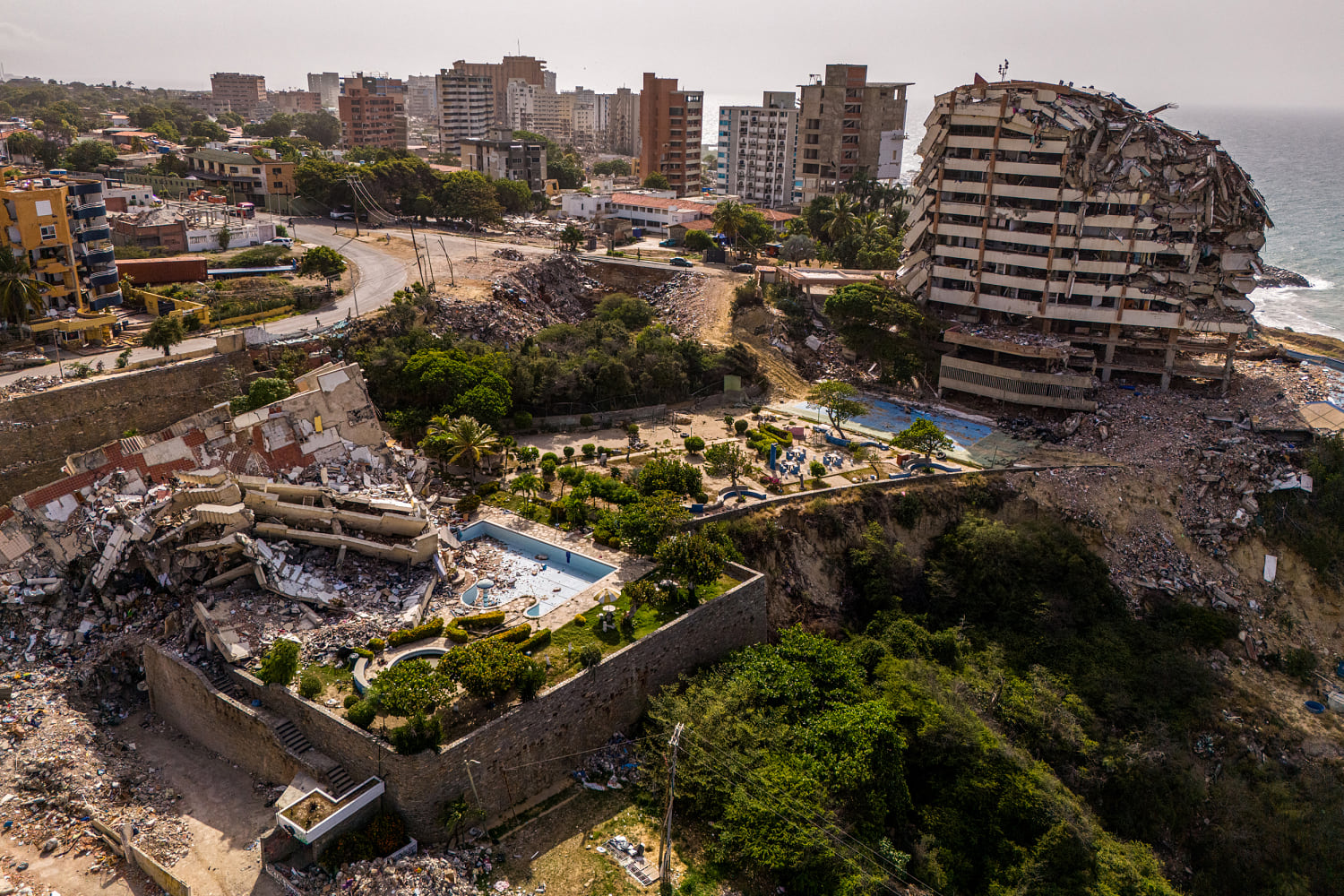
Three months after the tremors stop, the cameras leave. The anchors pack up their satellite trucks, swap their flak jackets for airport loungers, and fly back to comfortable newsrooms. What remains behind is a comforting media trope: grieving families standing over concrete rubble, desperately digging with their bare hands for the bones of their children, abandoned by a dysfunctional state.
It is a heartbreaking image. It is also an intellectual trap. Expanding on this topic, you can find more in: Why Campus Justice Systems Are Built to Protect Monsters.
Mainstream journalism has codified a rigid narrative around post-disaster recovery, centering entirely on the agonizing, eternal quest for remains. Every feature story at the ninety-day mark follows the same emotional script. Families weeping over dust. Local authorities accused of callous indifference. International organizations shaking their heads at systemic failure.
This narrative is not just lazy; it is actively dangerous. It misallocates societal attention, distorts humanitarian priorities, and locks vulnerable communities into an endless loop of mourning that paralyzes physical and economic reconstruction. If we want to understand why disaster-stricken regions struggle to rise from the ashes, we must dismantle the romanticized cult of forensic recovery and look at the brutal, unvarnished physics of catastrophe. Observers at NPR have also weighed in on this trend.
The Myth of Forensic Closure
Disaster coverage loves a bone. It loves the forensic melodrama of identification tags, DNA swabs, and weeping mothers clutching a fragment of clothing. Media outlets frame the three-month mark as a moral crisis of recovery, arguing that psychological healing is impossible without a casket, a headstone, and a funeral.
This is cultural imperialism masquerading as empathy.
I have watched international aid bureaucrats and local politicians trip over each other trying to satisfy a Western psychological checklist in environments where basic sanitation does not exist. We have imported a modern, clinical obsession with mortal remains and mapped it onto populations fighting for biological survival. Anthropologists and disaster sociologists know that grief is malleable, shaped by culture, necessity, and immediate environmental pressures. For centuries, human societies faced with catastrophic urban collapses understood a grim reality: when thousands perish beneath millions of tons of stone, the earth claims its dead.
Insisting that families must recover every physical fragment three months later to achieve mental peace is a luxury of stable, wealthy societies. In a fractured nation dealing with economic collapse, political instability, and infrastructural ruin, this demand transforms into an anchor dragging the entire community down.
The Economics of Paralysis
Let us talk about resource allocation, because sentimentality does not pay for concrete or rebuild power grids.
When a region suffers a catastrophic seismic event, every hour spent shifting tons of collapsed concrete to recover a single set of skeletal remains ninety days down the line is an hour stolen from the living. Heavy machinery is diverted from clearing vital transport arteries. Structural engineers are pulled from shoring up partially damaged hospitals and schools to inspect dangerous rubble piles for missing persons long after survival windows closed. Medical supplies, forensic kits, and administrative bandwidth are consumed by identification units rather than pediatric wards treating waterborne diseases or feeding malnourished infants.
Governments face a brutal calculus after a major disaster. When they bow to emotional blackmail and populist media pressure to keep searching indefinitely for every lost soul beneath twenty floors of pancaked concrete, they actively sacrifice the future of the survivors.
The math is merciless. Every dollar and man-hour spent on a speculative, late-stage recovery operation in a stable ruin is a dollar and man-hour not spent on housing the homeless, restoring potable water systems, or restarting local commerce. By prioritizing the dead over the living under the glare of media spotlights, we guarantee that more living people will suffer, starve, or succumb to preventable diseases.
Dismantling the State Failure Narrative
The standard media critique blames bureaucratic incompetence for the incomplete recovery efforts at the three-month mark. The argument goes like this: if only the state possessed better heavy equipment, better drones, better forensic labs, the bodies would be recovered.
This is pure fantasy. No state on earth, regardless of its budget, administrative efficiency, or technological sophistication, can easily extract thousands of bodies from a massive urban collapse after ninety days of environmental degradation, tropical heat, and structural shifting.
Consider the physics of a major earthquake in densely populated urban centers. Buildings pancaked by seismic waves undergo extreme thermal loads. Concrete cures further under intense pressure, turning into jagged monoliths that require industrial diamond saws and heavy hydraulic shears to penetrate safely. Steel reinforcement bars twist into intricate, unpredictable webs that trap debris like cages. In tropical or subtropical climates, organic matter decomposes rapidly, and structural shifting compresses remains into unrecognizable particulate matter mixed with drywall, glass, and household chemicals.
Blaming a municipal administration for failing to locate every missing person at the ninety-day mark is a convenient cop-out. It lets foreign observers pretend that this is a simple administrative glitch rather than a physical inevitability of gravity, mass, and time. When journalists act surprised that a cash-strapped government in a politically volatile country cannot perform archaeological miracles in a pile of toxic dust, they reveal their profound ignorance of civil engineering.
The Dangerous Trap of Endless Mourning
Human psychology is infinitely adaptable, but it can be hijacked by cultural scripts. When society tells survivors that they cannot move forward without a grave to visit, it manufactures a permanent state of victimhood.
Communities that pivot away from recovery toward reconstruction within weeks show radically lower rates of long-term trauma than those trapped in an eternal loop of searching, grieving, and protesting for state assistance to dig through ruins. The act of waiting—waiting for the crane, waiting for the DNA test, waiting for the official confirmation—stalls the psychological transition from victim to survivor.
This is not about cold-hearted pragmatism; it is about mental hygiene. Endless mourning maintained by external media validation keeps open wounds from scabbing over. It creates a perverse incentive structure where political grievances are anchored to unrecovered bodies, turning personal tragedy into political capital for actors who benefit from perpetual instability.
Memory does not require a cemetery plot. History is built by the living, not by forensic anthropologists performing archaeological digs in active disaster zones three seasons late. Human history is filled with mass graves and lost generations, and communities have historically survived by honoring their dead through collective continuity, not forensic nitpicking.
What Actually Works
If we want to help regions recovering from catastrophic earthquakes, we must stop funding symbolic recovery operations that serve only to soothe foreign consciences on social media.
We need an immediate operational shift in how post-disaster crises are managed after the initial search-and-rescue window closes.
First, establish hard timelines for transition. The active search window for survivors closes within days, not months. Once that window shuts, the site must be reclassified from a rescue zone to a reconstruction zone. Heavy machinery must pivot from delicate excavation to demolition, clearing, and site leveling.
Second, replace individual forensic obsession with collective memorialization. When individual identification becomes physically impossible or economically ruinous, build a central monument honoring the lost. A shared memorial provides the psychological container for grief without holding hostage the infrastructure of the entire city.
Third, redirect international donations away from endless forensic contractors and toward housing and economic stimulus. Survivors do not need closure delivered in a plastic bag; they need roofs over their heads, schools for their children, and jobs that allow them to feed their families.
Stop demanding eternal searches. Shift capital directly to housing, sanitation, and economic restart. Accept that nature sometimes claims what it crushes, and human energy belongs above ground.