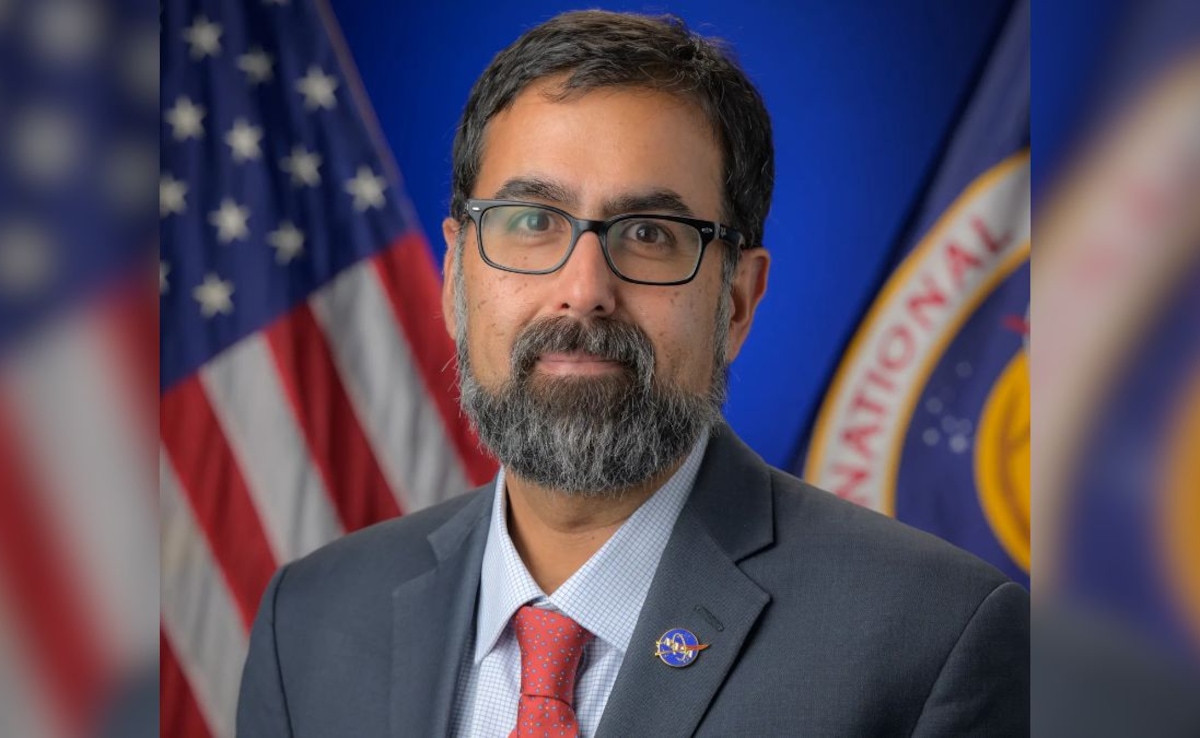
The press release cycle is predictable. A new name rises through the ranks of NASA's bureaucracy, and immediately, the headlines pivot to identity. Amit Kshatriya, the Deputy Associate Administrator for the Moon to Mars Program, is the latest beneficiary of this hollow narrative. While the media spends its energy charting his genealogy and celebrating the "Indian-American success story," the actual mission—landing humans on the Moon and keeping them there—is hemorrhaging time, money, and technical credibility.
We are distracted by the face of the program because looking at the mechanics of the program itself is too depressing.
I have spent years watching federal agencies pivot from engineering excellence to public relations management. When a project is over budget and behind schedule, you don't talk about the heat shield; you talk about the people. It is a classic shell game. Amit Kshatriya is undeniably brilliant—you don't run the Moon to Mars Office without a deep grasp of orbital mechanics—but his appointment isn't the victory the media claims it is. It is a desperate attempt to put a competent manager in charge of a structural disaster.
The Artemis Myth and the Management Trap
The current consensus suggests that Artemis is the spiritual successor to Apollo. It isn't. Apollo was a sprint fueled by an unlimited budget and a singular, existential threat. Artemis is a bloated, multi-decade marathon designed to sustain the aerospace industrial complex rather than achieve a specific scientific goal.
When Kshatriya took over the Moon to Mars Program Office, he inherited a logistical nightmare. The media focuses on his leadership as a "Senior Official," but they ignore what he is actually managing: a fragmented supply chain where the Space Launch System (SLS), the Orion capsule, and the Human Landing System (HLS) are being built by different entities with conflicting incentives.
Standard industry reporting treats the SLS as a marvel. In reality, it is a Frankenstein’s monster of Space Shuttle-era parts. We are literally using old engines from the 1980s because the political cost of starting from scratch was too high.
The math of the failure is simple:
- Cost per launch: Roughly $4.1 billion.
- Frequency: Once every two years if we are lucky.
- Outcome: A platform that is "expendable," meaning we throw away $4 billion of hardware every time we turn the key.
If you ran a logistics company with these margins, you wouldn't be celebrated in a profile piece; you’d be liquidated.
The Meritocracy Delusion
The "People Also Ask" sections of the internet are obsessed with how Kshatriya got the job. They want to know his education, his background, and his "secret to success." The premise is flawed. The question shouldn't be how an individual reached the top of NASA, but why NASA has become a place where the top job is primarily about managing failure.
Kshatriya’s role isn't just about engineering; it is about "integration." In NASA-speak, integration is the art of making sure Boeing’s hardware talks to SpaceX’s hardware while Lockheed Martin watches from the sidelines. It is a bureaucratic nightmare.
I’ve seen this before in massive tech migrations. When you have too many legacy systems, you stop innovating and start "integrating." Integration is where progress goes to die. By focusing on Kshatriya’s personal journey, we ignore the fact that his primary task is to keep a sinking ship buoyant enough to reach the lunar south pole.
Why We Aren't Going to Mars
The media loves the "Moon to Mars" branding. It sounds progressive. It sounds like a roadmap. It’s actually a shield. By tethering Mars to the Moon mission, NASA ensures that if the Moon mission fails, Mars is canceled too—and if the Moon mission succeeds, they have an excuse to ask for another trillion dollars.
The technical hurdles for Mars are not being solved by the current Artemis architecture.
- Radiation: We still don't have a viable solution for long-term deep space transit.
- Life Support: Our current systems have a "mean time between failure" (MTBF) that is far too low for a two-year round trip.
- Entry, Descent, and Landing (EDL): We can land a rover the size of a SUV on Mars. We cannot yet land a habitat the size of a house.
Kshatriya knows this. Every senior engineer at NASA knows this. Yet, the public narrative remains focused on the "Senior Official" and the "bold new era."
The Private Sector Is Not the Savior
The contrarian take usually involves pivoting to Elon Musk. "SpaceX will fix it," the tech bros scream. This is equally naive. SpaceX is currently a contractor for NASA. If Artemis fails, SpaceX loses its biggest customer for Starship.
We have created a weird, symbiotic loop. NASA provides the prestige and the taxpayer cash; the private sector provides the actual innovation (and the PR-friendly explosions). Kshatriya sits at the center of this web. He is the one who has to tell Congress why Starship isn't ready, while simultaneously telling SpaceX why the NASA requirements changed for the tenth time this year.
It is a thankless job, but let’s stop pretending it’s a heroic one. It is a managerial one.
The Truth About Representation in Aerospace
There is a patronizing undertone to the way the media covers Indian-Americans in high-stakes roles. By highlighting Kshatriya’s ethnicity as a primary feature of his leadership, the press suggests that his presence is a novelty.
Step into any Tier-1 engineering firm or NASA research center. You will see that the "Indian-American success story" isn't a new headline; it is the backbone of the entire industry. Celebrating it now feels like a distraction from the reality that the industry itself is stagnating.
True meritocracy doesn't need a press release. If we want to honor Kshatriya’s expertise, we should stop talking about where his parents came from and start asking him why the heat shield on the Orion capsule charred in a way that engineers didn't predict during the Artemis I mission. That is the conversation a real insider wants to have.
The Real Risks No One Mentions
If you want to understand the "Moon to Mars" office, you have to look at the risks they admit to in private but gloss over in public.
- The Gateway: NASA wants to build a small space station around the Moon. Why? Because it gives the SLS somewhere to go. It’s a solution looking for a problem. It adds a massive layer of complexity and risk to every landing attempt.
- The Suits: We can't even build our own spacesuits anymore. We had to outsource them to Axiom Space and Collins Aerospace because our internal development programs were a decade behind.
- The Budget: Every dollar spent on Artemis is a dollar not spent on James Webb-style telescopes or robotic exploration that actually yields high-density scientific data.
The Strategy for Real Space Exploration
If we actually wanted to get to Mars, we would stop building the SLS immediately. We would move to a fully commercial launch model where NASA buys a ride rather than owning the "bus."
We would stop the "integration" obsession and move toward modular, standardized interfaces that allow any company to plug their tech into the mission. This is what Kshatriya should be doing, but his hands are tied by a Congress that views NASA as a jobs program for their specific districts.
I have seen billions wasted on "heritage hardware." It’s the sunk cost fallacy on a planetary scale. We keep using old tech because we’ve already spent so much on it, and we keep celebrating the managers of that tech because we’re too afraid to admit the strategy is broken.
Dismantling the Narrative
Next time you see a profile on Amit Kshatriya, look past the "inspiring" adjectives. Look at the launch dates. Look at the "re-baselined" budgets.
The media wants you to feel good about the face of the program so you don't look too closely at the gears. We are being sold a story of individual triumph to mask a systemic crisis.
Amit Kshatriya is a brilliant engineer caught in a bureaucratic meat grinder. Celebrating his title is easy. Demanding a mission that actually works is hard.
Stop clap-stamping the press releases. Start asking why we are spending $100 billion to redo what we did in 1969 with more paperwork and less ambition.
The Moon isn't a destination anymore; it’s a distraction. If we don't change the architecture of how we explore, the "Moon to Mars" office will eventually just be the "Moon to Nowhere" office.
And no amount of inspiring profiles will change that.