Islamabad is back at the trough, and the global foreign policy establishment is falling for the same tired narrative.
The consensus view across Western media is simple: Pakistan played peacebroker in recent Middle East talks involving Iran, raised its global profile, and is now smartly converting diplomatic momentum into financial support. Finance Minister Muhammad Aurangzeb sits down with US Treasury Secretary Scott Bessent, requests a $10 billion Exchange Stabilization Support Facility, and the press hails it as a strategic masterclass in geopolitical leverage.
That reading is dead wrong.
What Washington is actually watching isn't a triumph of diplomacy. It is a textbook case of rentier extortion—a sovereign balance-of-payments crisis wrapped in the flag of regional mediation. Calling this $10 billion request a "reward" or a "lifeline" misdiagnoses the disease eating away at Pakistan’s economy.
Giving Islamabad a direct line to the US Treasury’s Exchange Stabilization Fund won't fix its currency. It will subsidize structural decay, bail out foreign creditors, and perpetuate an economic model built entirely on geopolitical panhandling.
The Illusion of Diplomatic Capital
Let’s dismantle the premise that mediating conflict grants a nation economic viability.
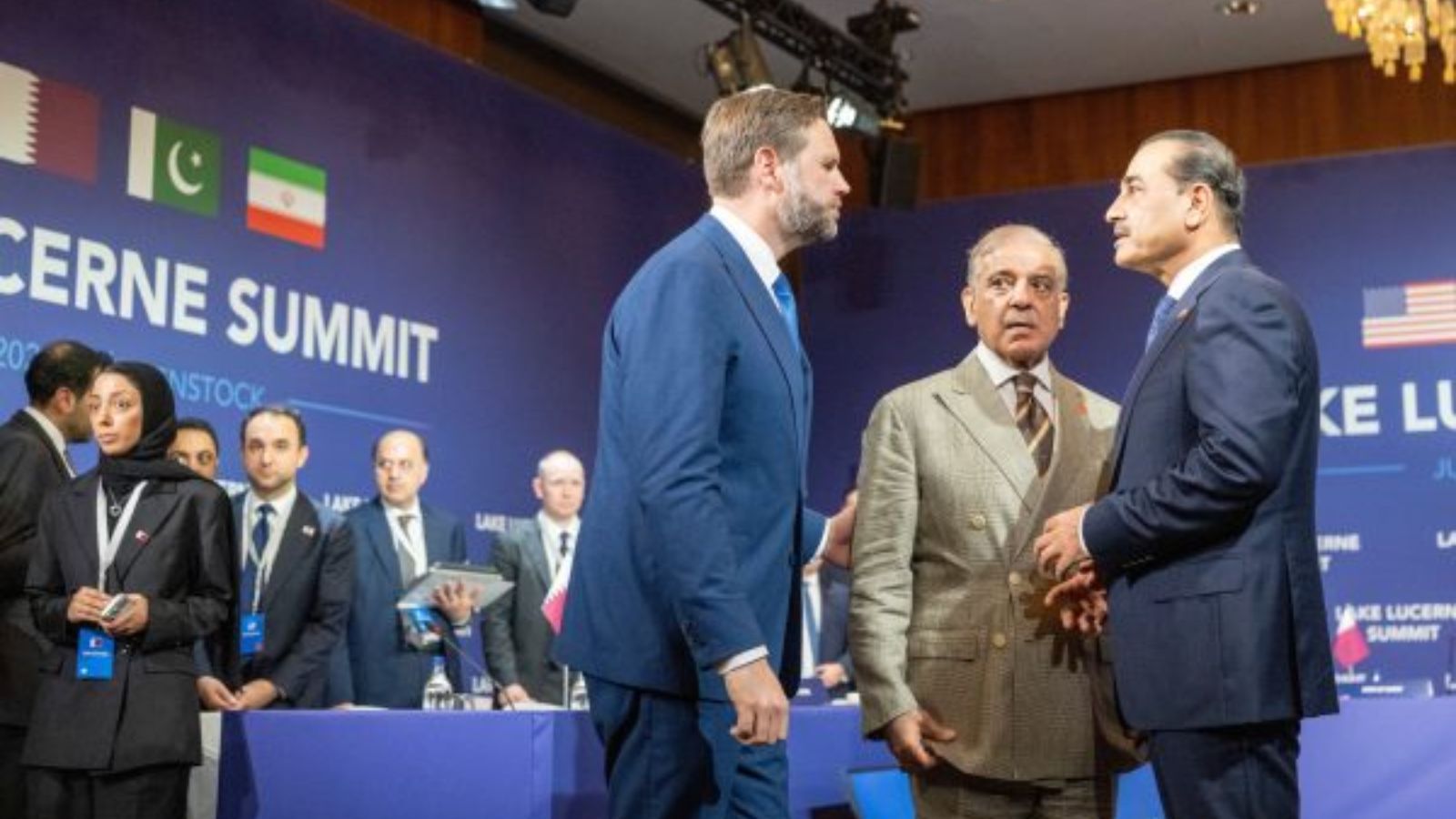
Pakistan’s diplomats love to position the country as the indispensable bridge between Washington, Tehran, and the Gulf states. When tensions flare in the Strait of Hormuz or across the Middle East, Islamabad steps into the room, nods solemnly, hosts a few quadrilateral sit-downs in Switzerland, and immediately hands Washington an invoice.
The standard playbook works like this:
- Claim neutral ground in regional fires to establish temporary geopolitical utility.
- Point to a volatile neighborhood as proof that domestic economic collapse would trigger broader regional chaos.
- Demand immediate dollar liquidity under the guise of "stabilization".
I have watched sovereign debt negotiators pull this maneuver for decades. It isn't statecraft; it's a sovereign protection racket.
Pakistan wants Washington to believe that its economy is vulnerable to regional shocks. The truth is far simpler: Pakistan’s economy is vulnerable to itself. Decades of uncollected taxes, massive military expenditures, elite subsidies, and chronic import dependencies have crippled the Pakistani rupee. Mediation didn't cause this fragility, and $10 billion from US taxpayers won't cure it.
Why an Exchange Stabilization Facility is a Disastrous Fit
To understand why this proposal is fundamentally broken, look at the actual mechanism Islamabad is asking for.
An Exchange Stabilization Facility (ESF) isn't standard multilateral aid. Managed directly by the US Treasury, ESF operations are rare, temporary interventions meant to provide emergency dollar liquidity, swaps, or guarantees to financially stable partners facing short-term market dislocation. Think Mexico or standard central bank liquidity backstops.
Islamabad wants a five-year, $10 billion facility. That isn't a short-term liquidity bridge. That is a off-budget foreign bailouts disguised as monetary stabilization.
"An Exchange Stabilization Facility is designed to smooth out transient currency volatility for nations with functioning fiscal houses. Using it to bankroll a country suffering from structural, long-term solvency issues is like using a fire extinguisher to fill a swimming pool."
If Treasury Secretary Scott Bessent approves this facility, here is what actually happens to those dollars:
| Step | Mechanics | Real-World Result |
|---|---|---|
| 1. Inflow | US Treasury transfers $10B backstop or swap facility to Pakistan's central bank. | Foreign exchange reserves jump artificially on paper. |
| 2. Rupee Defense | Central bank sells dollars into the market to support the rupee. | Importers and local elites get artificially cheap dollars to externalize capital. |
| 3. Creditor Exit | Commercial debt and bilateral obligations come due. | US dollars exit immediately to repay senior debt holders in Beijing and Riyadh. |
| 4. Depletion | Five-year maturity expires with zero structural reforms enacted. | Reserves crash back to zero; Pakistan requests another bailout. |
The US Treasury would effectively be backstopping debt repayments to China and commercial lenders while giving Pakistan's ruling class a five-year pass on tax reform.
The Moral Hazard of Perpetual Lifelines
Pakistan is already operating under a $7 billion Extended Fund Facility with the International Monetary Fund (IMF), accompanied by a $1.3 billion climate resilience package. It barely escaped sovereign default in 2023 with a $3 billion standby agreement.
Yet, every time the IMF demands real reform—such as expanding the tax net to real estate and agriculture or raising energy tariffs—Islamabad scrambles for a bilateral bypass.
Seeking $10 billion directly from Washington is an attempt to evade IMF discipline. Why enforce politically painful domestic tax hikes when you can trade a few diplomatic photo-ops for billions in Treasury swaps?
Consider the numbers that illustrate this endless loop of dependency:
- $7 Billion: Current IMF Extended Fund Facility program size.
- $3.5 Billion: External reserves wiped out in a single month (April) just paying back short-term UAE loans.
- $3 Billion: Fresh cash dropped in immediately after by Saudi Arabia to keep the lights on.
- $10 Billion: Desired US Treasury facility to kick the can down the road until 2031.
This isn't an economy in recovery. This is an economy running on financial blood transfusions. When a nation relies on Saudi deposits, Chinese debt rollovers, and US Treasury swaps just to keep its central bank reserves above zero, it doesn't have a currency problem. It has a non-viable state finance model.
The Flawed Logic of Geopolitical Monetization
Defenders of the deal argue that Washington must pay up to maintain influence in South Asia and keep Islamabad out of Beijing’s absolute orbit.
This argument is completely outdated.
China has already sunk tens of billions into the China-Pakistan Economic Corridor (CPEC). Beijing is already stuck holding senior Pakistani debt that Islamabad struggles to service. By stepping in with a $10 billion US Treasury backstop, Washington isn't buying strategic alignment. It is de-risking China's bad loans.
If the US wants real strategic engagement with Pakistan, it shouldn't come through emergency Treasury slush funds. It should come through strict commercial terms, direct foreign investment in productive assets, and uncompromising enforcement of IMF structural benchmarks.
Pakistan’s pitch to Washington—offering real estate investments, crypto payment deals, and mining stakes like Reko Diq—shows that Islamabad knows it needs a new narrative. But bundling investment promises with a demand for a $10 billion currency bailout proves they are still relying on old habits.
The Brutal Reality Washington Must Face
The US Treasury needs to issue a firm, unambiguous refusal.
A direct $10 billion exchange stabilization facility for Pakistan sets a dangerous global precedent. It tells every distressed state that structural fiscal reform is optional as long as you can manufacture regional diplomatic utility.
If Islamabad wants to stabilize the rupee, raise foreign exchange reserves to $20 billion, and regain access to international capital markets, there are no shortcuts:
- Tax the Intouchables: Enforce tax collection on the agricultural elite, retail monopolies, and real estate cartels that currently pay almost nothing.
- Stop Monetizing Deficits: End central bank interventions designed to artificially prop up the rupee for consumer imports.
- Accept IMF Realities: Complete every condition of the current $7 billion program without begging bilateral partners for emergency exits.
Diplomatic mediation is cheap. Fiscal solvency is hard. Washington must stop letting Islamabad price handshakes at $10 billion.
Shut off the emergency backstop, force the structural reforms, and make Islamabad prove its economy can survive on balance sheets rather than geopolitical favors.