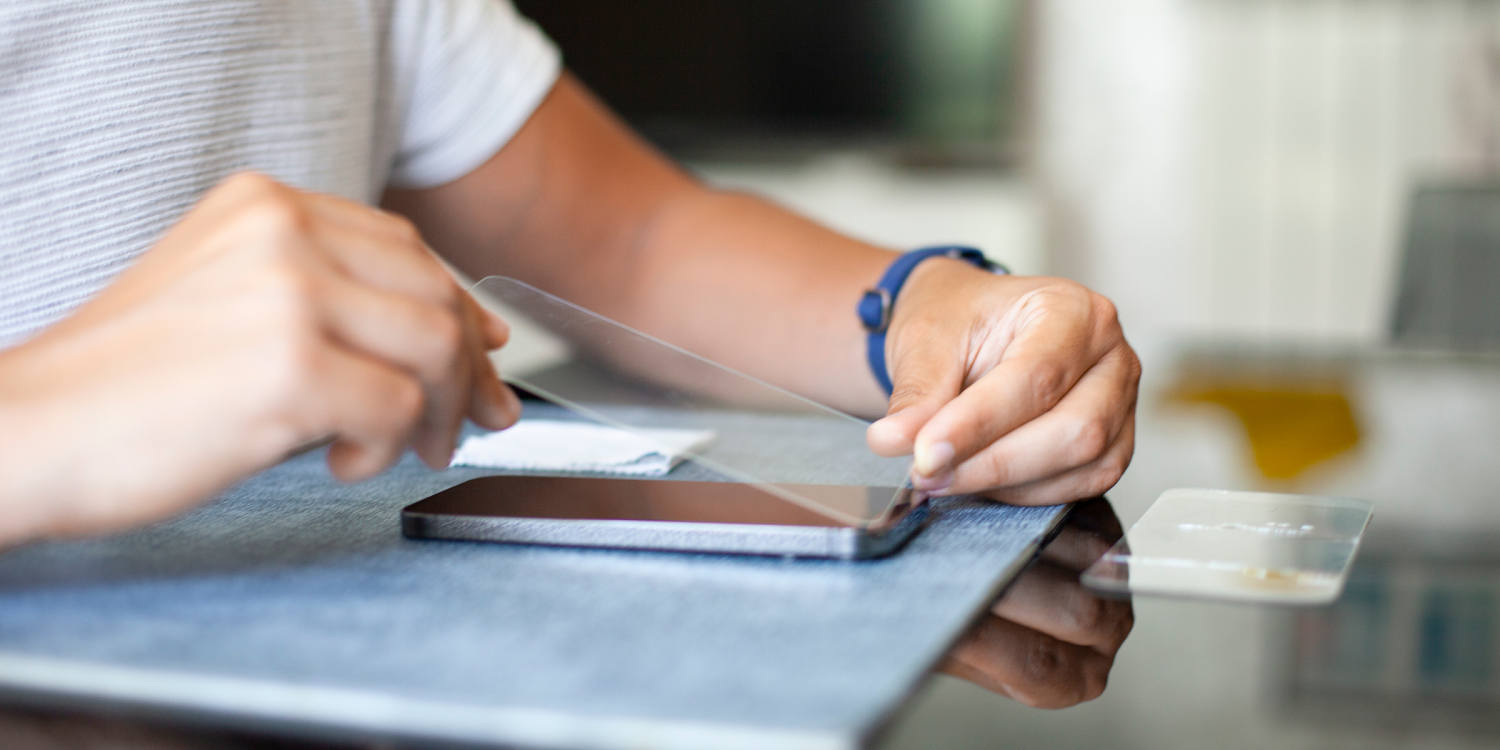
Glass does not want to be saved by a five-dollar sheet of plastic. Yet every single day, millions of people walk into retail stores or click through online carts to buy cheap pieces of tempered glass or flimsy film, slapping them onto devices engineered by some of the smartest material scientists on earth.
The lazy consensus in tech journalism is that a screen protector is mandatory insurance. Writers who have never stepped foot inside a drop-test lab rattle off the same tired advice. They tell you to buy the thickest slab of glass possible, line it up with obsessive perfection, and rest easy knowing your expensive phone is safe.
They are wrong.
I have watched hardware engineers spend millions of dollars and countless hours refining ion-exchange chemistry, only to watch consumers cover those state-of-the-art displays with a sticky, fingerprint-smudging sheet of bargain-bin glass bought off a bulk pallet. You are not protecting your phone. You are paying a voluntary emotional tax driven by marketing fear.
The Physics of Failure Nobody Wants to Admit
Modern smartphone glass is a marvel. Corning’s Ceramic Shield and similar aluminosilicate formulations rely on chemical strengthening processes where smaller ions are swapped for larger ones in a molten salt bath, creating a high compressive stress layer on the surface.
When a phone hits the pavement, the damage usually happens in one of two ways.
First, direct impact energy exceeds the elastic limit of the glass. Second, and far more common, microscopic stress concentrators—grains of quartz sand in the dirt—grind into the surface, creating micro-fractures. When a drop occurs later, those micro-fractures propagate instantly, shattering the display.
Now, what does a typical tempered glass screen protector actually do?
It sits on top. It takes the hit only if the angle of impact matches its brittle breaking point. But here is the dirty secret of the industry: cheap tempered glass protectors shatter with devastating ease precisely because they are brittle. They absorb very little actual kinetic energy before failing. Instead, they transfer the shockwave straight through the adhesive layer to the actual display underneath.
You pull your phone out of your pocket, see a massive spiderweb crack across your screen, feel your stomach drop, peel off the protector, and sigh in relief to find the original screen intact.
Except, most of the time, that original screen would have survived the exact same drop without any shield at all. The protector shattered because it was weak, not because it saved your life. You traded clarity, touch sensitivity, and oleophobic coating for a sacrificial decoy that breaks on command.
The Cost of the Fake Safety Blanket
Let us talk about what you actually sacrifice when you adopt the universal screen protector dogma.
You throw away the tactile response. Capacitive touchscreens rely on precise capacitance changes when your finger approaches or touches the glass. Slapping an extra millimeter of low-grade silica and silicone adhesive between your finger and the digitizer degrades touch accuracy. It introduces ghost touches, lag, and frustrating typing errors.
You ruin the display optics. You spent a grand or more on an OLED panel capable of breathtaking contrast ratios and peak brightness. Then you cover it with a cheap pane that diffuses light, creates rainbow glare under office fluorescents, and scratches if you look at it wrong.
Worst of all, you create a false sense of security. People slap a protector on their phone and suddenly treat it like a hockey puck. They throw it in bags with keys, toss it carelessly onto concrete tables, and ignore basic handling hygiene. When the screen inevitably breaks because physics caught up to their negligence, they blame the device design rather than their own recklessness.
The Uncomfortable Truth About Cases
If screen protectors are largely psychological placebos, what about cases?
Cases operate on a different physical principle. A proper case with air-cushioned corners creates a crumple zone. It increases the radius of the impact area and absorbs kinetic energy before it reaches the chassis of the phone.
Drop a naked phone on its corner, and the kinetic energy concentrates at a microscopic point, sending shockwaves through the internal frame and cracking the glass from the inside out. A case prevents that by distributing the blow.
Notice how nobody sells a case that covers the screen entirely while letting you use it. Because you cannot. A screen must remain exposed to function. Therefore, the industry invented the screen protector to fill a retail void, creating a high-margin accessory ecosystem that costs pennies to manufacture and sells for twenty to forty dollars a pop.
How to Actually Protect Your Device Without Losing Your Mind
If you want to keep your phone pristine without living behind a warped, scratched pane of cheap aftermarket glass, you need to change your relationship with the device.
Stop buying glass slabs. If you refuse to go naked, switch to a high-grade TPU film. TPU stands for thermoplastic polyurethane. It does not shatter. It absorbs minor impacts through elastic deformation, self-heals from light surface scratches via thermal memory, and maintains the original touch profile of your display.
Invest in drop geometry over bulk. A minimalist bumper case that elevates the screen slightly off flat surfaces when placed face-down does more to prevent catastrophic drops than twenty layers of tempered glass.
Accept micro-scratches as a badge of honor. Your phone is a tool, not a museum artifact. The microscopic swirl marks visible only under direct sunlight do not impair functionality. They are the inevitable result of using an object designed to be carried everywhere.
The next time you are standing at the checkout counter and the clerk asks if you want to add a screen protector to your purchase, look them in the eye and say no. Save your money, enjoy your display as the engineers intended, and stop funding the anxiety industry.