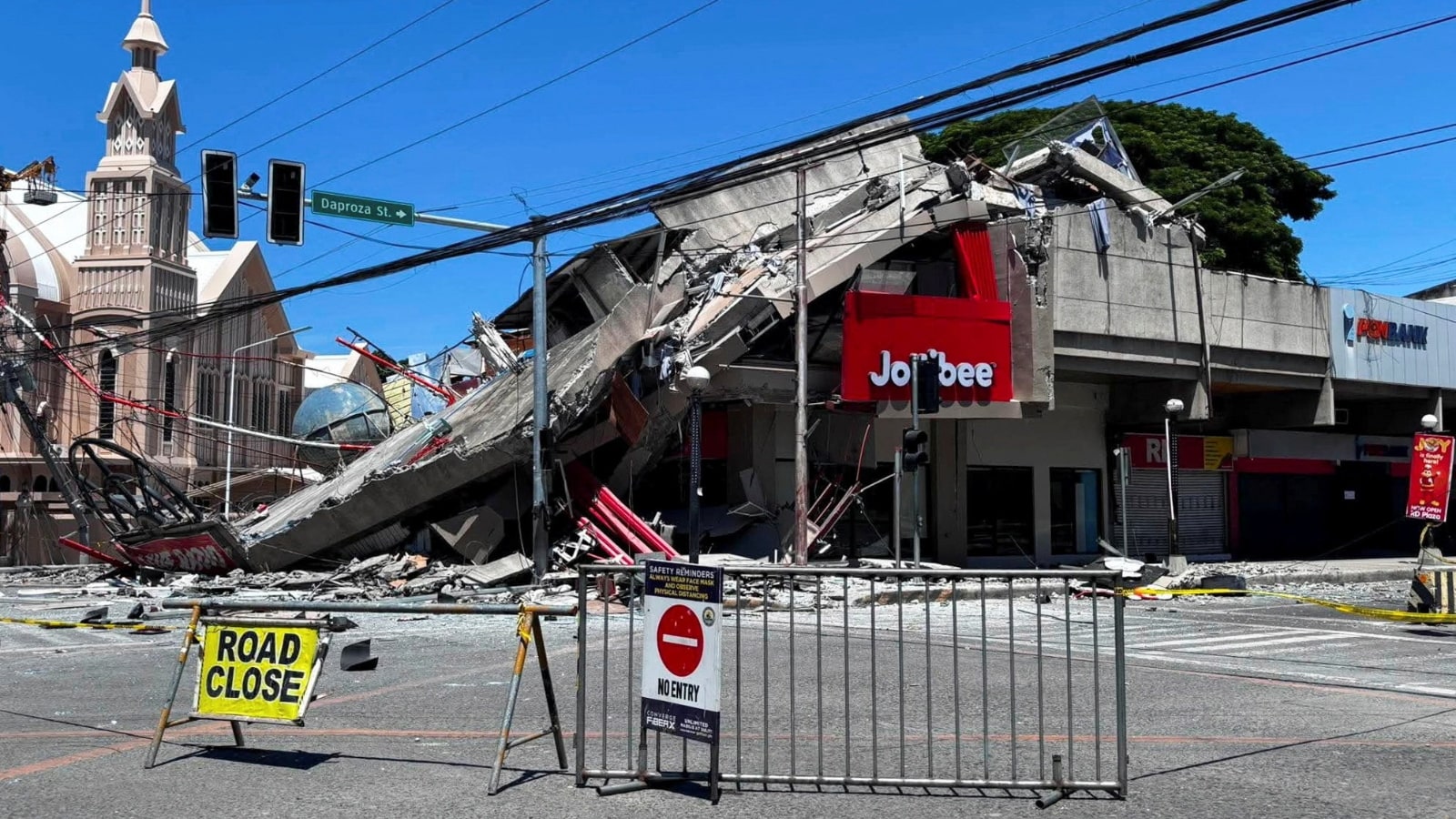
The media coverage surrounding the 7.8-magnitude earthquake off Mindanao on Monday follows a tired, predictable script. Reporters rush to the scene in General Santos City, capture shaky footage of a collapsed fast-food restaurant, quote terrified tricycle drivers, and nod sagely about the inescapable reality of the Pacific Ring of Fire. We are treated to the usual hand-wringing over the tragic loss of at least 32 lives and the standard political platitudes from President Ferdinand Marcos Jr. promising that the national government will not leave the region behind.
This narrative is worse than lazy. It is actively dangerous.
By framing a seismic event as an act of God or an unavoidable geographic curse, the mainstream press obscures the uncomfortable reality of natural disasters. Earthquakes are inevitable. Mass casualties are not.
The 32 people feared dead in Mindanao did not die because the Philippines sits on a tectonically complex part of the planet. They died because of a systemic failure in structural accountability, deficient engineering enforcement, and an international aid model that prioritizes reactive rescue over proactive prevention. Stop blaming geology for what is fundamentally a failure of governance and infrastructure.
The Myth of the Unavoidable Catastrophe
Every time a major fault line slips, the public is told that nature is simply too powerful to resist. This is a lie designed to absolve human systems of responsibility.
Consider the mechanics of the Mindanao event. A 7.8-magnitude earthquake striking at a shallow depth of 10 kilometers is undeniably massive. The energy released is immense, generating over 200 aftershocks, including a formidable 6.7-magnitude tremor that rattled nerves across Sarangani province. But size alone does not dictate the body count.
Compare this to seismic events in other hyper-active zones. Japan routinely rides out magnitude 7.0 or greater tremors with minimal disruption and single-digit casualties. Why? Because a building in Tokyo is designed to flex, absorb, and dissipate seismic energy. In contrast, when a 7.8-magnitude quake hits a developing urban hub like General Santos City, a building housing a Jollibee outlet crumbles into a cloud of dust, and schools see makeshift shelters collapse onto students.
The primary killer in an earthquake is almost never the ground shaking itself. It is falling debris, collapsing roofs, and landslides triggered by poorly stabilized terrain. When civil defense officials state that the majority of the 32 fatalities and 134 injuries were caused by falling concrete and landslides, they are pointing directly to an engineering failure, not a geological one.
I have evaluated structural damage in post-disaster zones across Southeast Asia. The story is always identical. On paper, the building codes are robust. In reality, the concrete is mixed with too much sand, the rebar is too thin, and the local inspectors are either under-trained or looking the other way. The Ring of Fire is a constant variable. The integrity of the concrete is the true differentiator.
The Performance Theater of Emergency Response
In the immediate aftermath of the quake, Manila mobilized military units and disaster response teams. Tsunami warnings were broadcasted, forcing coastal evacuations from North Sulawesi in Indonesia to Sabah in Malaysia. Political leaders issued statements calculated to project strength and competence.
This is emergency response as performance art.
While immediate search and rescue operations are necessary to pull survivors from the rubble, they represent a profound failure of long-term strategy. The international community pours billions of dollars into disaster relief, sending high-tech rescue teams, sniffer dogs, and temporary tents after a city has already been leveled.
This model is completely backwards.
Imagine a scenario where those same billions were spent retrofitting vulnerable public infrastructure, reinforcing school roofs, and strictly auditing commercial developments before the fault line ruptures. It is far less photogenic to fund structural engineers to inspect a school foundation in Alabel than it is to film soldiers clearing rubble from a collapsed classroom. But the former saves lives; the latter merely tallies the dead.
The data proves the absurdity of our current approach. The cost of retrofitting a building to withstand a major seismic event is a fraction of the cost required to rebuild that same structure from scratch, clear the debris, and provide emergency medical care to the victims inside. Yet, local governments continue to approve shoddy construction projects while relying on the national government to bail them out with relief supplies when the inevitable occurs.
The Flawed Logic of Regional Resiliency
The mainstream press loves the word "resilient." They use it to praise the survivors who return to their damaged homes, scramble for drinking water when utilities fail, and somehow find the strength to smile for the camera.
Calling a population resilient is often just a polite way of ignoring the fact that they have been abandoned by their infrastructure.
| Metric / Scenario | Reactive Crisis Management | Proactive Structural Mitigation |
|---|---|---|
| Primary Financial Focus | International aid packages, emergency medical deployment, rebuilding funds. | Strict code enforcement, mandatory structural retrofitting, soil stabilization. |
| Human Cost | High casualty rates, prolonged economic displacement, generational trauma. | Minimal casualties, rapid economic recovery, infrastructure continuity. |
| Political Utility | High. Leaders look decisive delivering aid and visiting evacuation centers. | Low. Preventive engineering is invisible and yields no immediate photo opportunities. |
| Long-Term Sustainability | Bankrupting. The same regions are destroyed and rebuilt every decade. | Highly sustainable. Structures withstand multiple seismic cycles over generations. |
Relying on the resilience of the Filipino people to survive a 7.8-magnitude earthquake is an abdication of duty. True resilience is not found in the emotional fortitude of a tricycle driver who watches a building collapse in front of his vehicle; it is found in the rigid, unyielding enforcement of the National Building Code of the Philippines.
Dismantling the Premium on Fear
The competitor article dedicates significant space to the psychological terror of the survivors, highlighting the tears of parents and the panic of school children. While these emotions are real and valid, centering the narrative on fear serves to mystify the disaster. It turns a mechanical engineering problem into a horror movie where the villain is the Earth itself.
When the public treats earthquakes as terrifying, unpredictable monsters, they accept the damage as an inevitability. They ask the wrong questions: "How can we survive the next big one?" or "Where can we run when the tsunami warning sounds?"
The brutal, honest question we should be asking is: Who signed off on the occupancy permit for the building that collapsed?
We need to strip away the emotional melodrama and look at the physical reality. A hospital in General Santos City had to be evacuated due to cracks on its upper floors. A university building at Notre Dame of Dadiangas University collapsed entirely. If that quake had struck during peak operating hours instead of early morning when classrooms were mostly empty, the death toll would not be 32. It would be in the hundreds.
The fact that we are celebrating a relatively low death toll of 32 for a magnitude 7.8 quake is a symptom of low expectations. It is an admission that we expect our buildings to fall down.
Stop Rebuilding the Same Mistakes
The disaster in Mindanao came just eight months after a 6.9-magnitude quake hit Cebu, killing 79 people, which was quickly followed by two more strong tremors in Mindanao. The region is getting pounded repeatedly by high-magnitude events. The warning signs are not subtle; they are deafening.
Yet, look at the recovery process. The aftershocks are still rattling the ground, making it impossible for disaster officer Bong Dacera to even begin structural assessments in General Santos City. But when those assessments are finally completed, the plan will inevitably be to rebuild the exact same types of structures in the exact same locations using the exact same flawed economic model.
This cycle must break.
The immediate action items for local and national leaders are uncomfortable, expensive, and politically unpopular:
- Implement a Zero-Tolerance Moratorium: Freeze all commercial occupancy permits in affected urban centers until independent structural engineers—not local bureaucrats—verify the integrity of the concrete and design.
- Criminalize Building Code Deficiencies: Treat catastrophic structural failure during a predicted natural disaster not as an accident, but as corporate negligence. If a commercial building collapses under seismic loads it was legally required to withstand, the developers and inspectors should face jail time.
- Pivot Aid to Engineering, Not Tents: Demand that international development banks redirect funds from post-disaster loans to mandatory pre-disaster retrofitting grants for public schools, hospitals, and transit hubs.
The downside to this approach is obvious. It slows down economic growth. It makes construction more expensive in a developing economy that desperately needs infrastructure. It forces difficult conversations about corruption and corner-cutting in local government.
But the alternative is to continue writing the same article every eight months. A fault slips, the ground shakes, a building collapses, people die, a politician promises aid, and the media blames the Ring of Fire.
The Earth is just doing what tectonic plates have done for four billion years. It is time to stop acting surprised by geology and start holding typography, engineering, and governance accountable. Stop building graves and calling them cities.