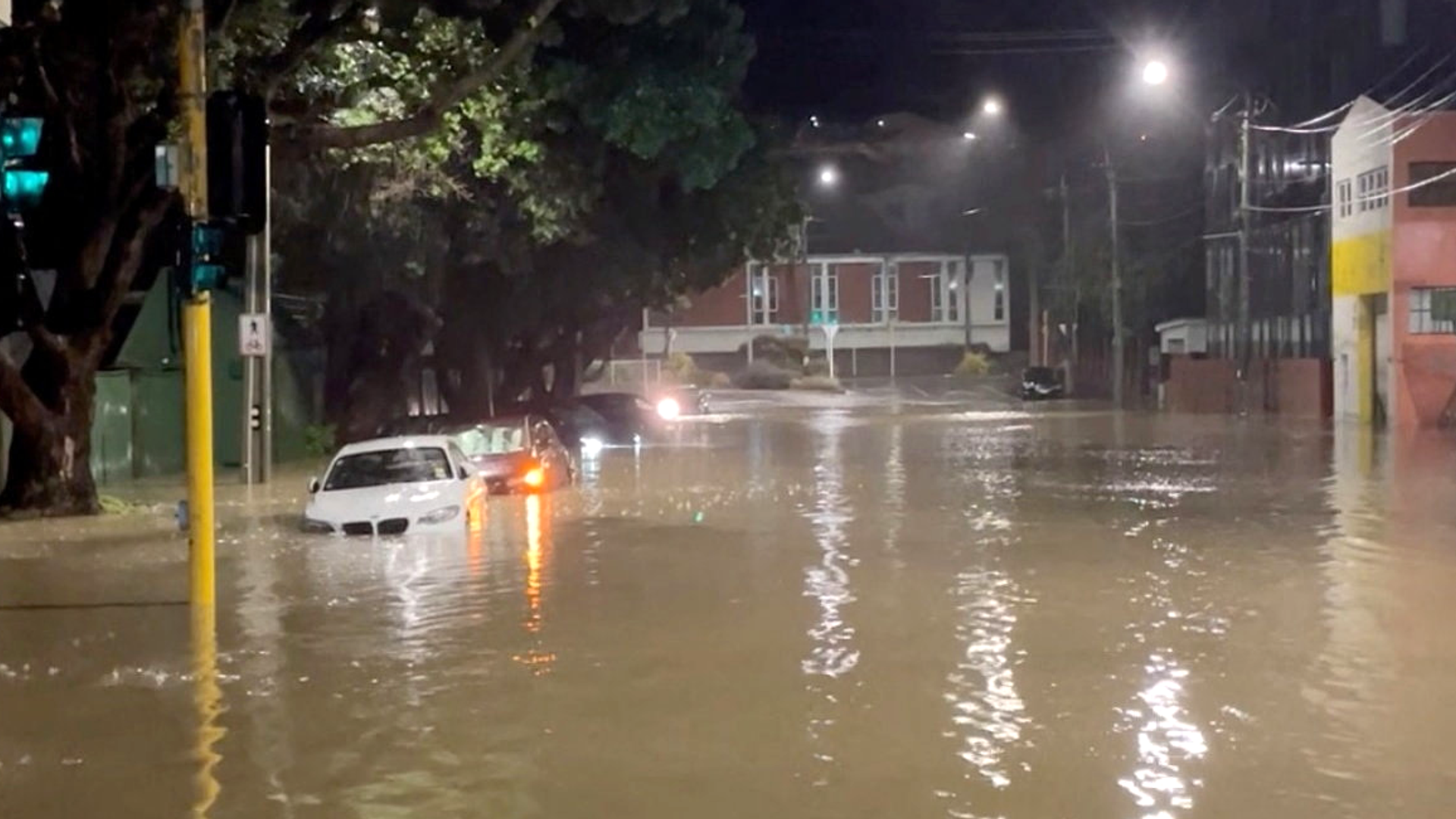
The headlines are predictable. They are lazy. They are mathematically illiterate.
Whenever the heavens open over Auckland or Nelson and the streets turn into rivers, the media industrial complex defaults to the same tired script: "Unprecedented weather," "Climate catastrophe," and "State of Emergency." They paint New Zealand as a helpless victim of a volatile sky.
It is a lie of omission.
The "State of Emergency" isn't a meteorological event; it’s a bureaucratic admission of guilt. We are witnessing the inevitable collapse of 1950s civil engineering in a 21st-century world. The rain isn't the problem. The concrete is. The zoning is. The refusal to price risk into property is.
We don't have a flooding problem. We have an "impermeable surface" problem that we’ve spent decades ignoring because it’s cheaper to pray for dry weather than it is to dig up a street.
The Myth of the Unprecedented
Every time a "one-in-a-hundred-year" flood happens every three years, the public should be rioting. Instead, we nod along as if the math checks out.
Let’s be precise. A "100-year flood" is a statistical expression of a 1% probability in any given year. It is not a timer. When these events occur with the frequency of a biennial holiday, it means your data set is dead. It means the baselines used by regional councils to approve housing developments in flood plains are relics.
I’ve spent years looking at the gutless way urban planning happens in this country. I’ve seen developers push for "high-density" wins without a single thought for where the displaced water goes. When you pave over a paddock, you remove a sponge and replace it with a slide. That water has to go somewhere. Usually, it’s into the living room of the person who bought the "affordable" townhouse at the bottom of the hill.
The "lazy consensus" blames the cloud. The insider knows it’s the culvert. If your drainage system was designed to handle the runoff of 1970, and you’ve tripled the square footage of roof and driveway since then, you haven't been hit by a disaster. You’ve been hit by physics.
The Concrete Jungle is a Drain Blockage
We talk about "Climate Adaptation" as if it’s a series of TED talks. It isn't. It’s the brutal reality of un-paving.
Traditional New Zealand suburbia is an engineering nightmare. We have massive expanses of asphalt that serve no purpose other than to accelerate water velocity. We treat rainwater as a waste product to be shunted into pipes as fast as possible.
The flaw? Pipes have a ceiling. Soil doesn't.
Why Sponge Cities Aren't "Green Washing"
The concept of a "Sponge City" is often dismissed by the "hard-hat-and-concrete" brigade as some hippie aesthetic. They are wrong. It is the only fiscally responsible way to build a city in a temperate zone.
- Permeable Pavement: Why are our sidewalks solid? In places like Copenhagen or Tokyo, they are experimenting with surfaces that allow water to pass directly through into the substrate.
- Daylighting Streams: We spent the last century burying Auckland’s streams in concrete pipes. We choked the natural arteries of the land. "Daylighting"—bringing those streams back to the surface—provides natural reservoirs that don't "burst" because they have room to breathe.
- Managed Retreat: This is the phrase politicians hate because it loses votes. We shouldn't be rebuilding in some parts of the Coromandel or Christchurch. We should be bulldozing and planting trees.
The Insurance Trap
We are currently living in a fantasy land subsidized by insurance companies that haven't yet corrected their pricing.
Within the next decade, we will see "Blue-Lining." This is where insurance companies simply stop covering flood-prone postcodes. Not "raising premiums." Stopping. The moment a house becomes uninsurable, its value drops to the price of the land—minus the cost of clearing the rubble.
If you think a State of Emergency is bad, wait until the banks realize they are holding mortgages on assets that can’t be protected. The "State of Emergency" is a temporary fix for a permanent shift in the viability of our geography.
The Engineering Arrogance
For decades, New Zealand’s approach to water has been "Command and Control."
- Build a bigger pipe.
- Build a higher levee.
- Channel the river.
This is the height of hubris. You cannot out-engineer a hydrological cycle with static infrastructure. When you channel a river, you increase its energy. When that levee breaks—and it will break—the damage is ten times worse than if the river had been allowed to spill naturally into a flood plain.
We have spent billions of dollars fighting water instead of making room for it. We treat the environment as an intruder when it’s the landlord.
Stop Asking "When Will the Rain Stop?"
The "People Also Ask" sections of the internet are filled with questions like: "Is New Zealand getting more rain?"
That is the wrong question. It’s the victim’s question.
The right question is: "Why is our infrastructure designed to fail under 100mm of rain?"
We see the same patterns in Northland, Tairāwhiti, and the West Coast. These aren't isolated incidents. They are the same story told in different accents. The story is a lack of investment in "grey-to-green" transitions and a pathological obsession with maintaining the status quo of our roading networks.
Every dollar we spend on a "State of Emergency" cleanup is a dollar we didn't spend on building a bio-swale or upgrading a pumping station three years ago. It is the most expensive way to manage a country. It is reactive, panicked, and ultimately, futile.
The Bitter Truth of the "New Normal"
The downside to my argument is that fixing this is incredibly expensive and socially disruptive. It means your street might need to be torn up for six months. It means your backyard might need to become a drainage basin. It means the value of your seaside "dream home" is a ticking time bomb.
But pretending that the "State of Emergency" is just a freak occurrence is a form of collective delusion.
We need to stop looking at the sky for answers. The answer is under our feet. It’s in the basalt, the clay, and the rusted pipes that were never meant to carry the weight of our modern ambition.
New Zealand doesn't have a flooding crisis. We have an honesty crisis. We are trying to run a first-world economy on a third-world drainage system, and we are surprised when we get wet.
The next time the rain starts, don't look for the weather report. Look at your local council’s zoning map. That’s where the disaster was actually written.
Stop rebuilding the same mistakes. Start digging.