Stone does not cry. It only remembers.
Stand on the damp turf of a medieval Scottish fortress, and the wind carries ghosts. You feel it in the marrow of your shins before you hear it in the tales—the heavy, pressing silence of a place that witnessed things too violent for songs. Centuries ago, men built these walls of grey granite to defy time, stacking boulders until they scraped the clouds. They believed stone made them invincible. They were wrong.
Beneath the floorboards of history, archaeologists found him.
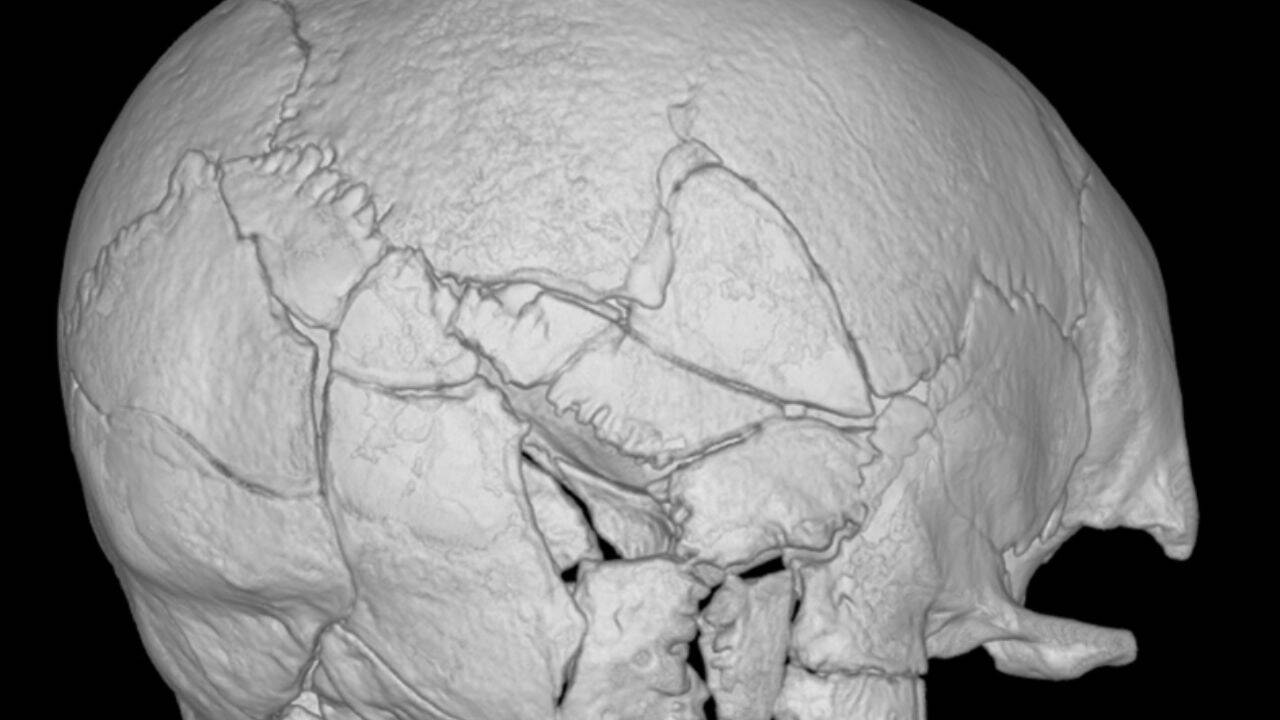
Or rather, they found what remained after the sky fell. More than one hundred and sixty fractures mapped across a single human skeleton. Think about that number. One hundred and sixty. Bones do not break like dry twigs under ordinary pressure; they splinter, shatter, and fragment only when subjected to a catastrophic, indiscriminate fury.
Scientists squinting through magnifying glasses in sterile laboratories call it data. They talk about blunt-force trauma, peri-mortem fractures, and structural compression angles. But strip away the clinical jargon, and you are left with a singular, terrifying reality.
Gravity weaponized.
[Hypothetical reconstruction: Imagine the afternoon light slicing through dust motes inside the bailey. The air smells of wet wool, woodsmoke, and rising panic. Outside, a wooden arm cranks backward, groaning under the unbearable tension of twisted sinew and heavy counterweights. A shout cuts through the din. Then, the release.]
Before that moment, war was a deeply personal affair. You looked your executioner in the eye. You measured the weight of his broadsword against the grease on your own shield. It was brutal, intimate, and exhausting. You knew who killed you.
Then came the machine.
The trebuchet changed everything. It removed the human element from slaughter, replacing muscle with physics. A massive wooden arm hurled boulders weighing hundreds of pounds through an arc so high and fast that the projectile seemed to fall directly from the wrath of heaven itself.
When researchers examined the medieval Scottish skeleton—uncovered during excavations at Stirling Castle, though the exact soil has swallowed countless other nameless dead—they realized they were looking at something unprecedented. The pattern of destruction did not match a sword slash or a charging cavalryman's lance. It matched the terminal velocity of a falling mountain.
This was likely the first confirmed trebuchet death in the historical record.
Consider what happens next in the silence of the excavation trench. The brushes sweep away centuries of peaty dirt. A ribcage, crushed inward. A skull, fragmented beyond simple reconstruction. A spine compressed like a dried reed. The individual was not fighting on an open field with room to maneuver. They were trapped inside a stone fortification designed to keep the world out, only to discover that the stone itself had become their tomb.
We romanticize the Middle Ages. We dress up in velvet at Renaissance fairs, drink mead from heavy horns, and watch cinematic battles where heroes parry blade blows with acrobatic grace. We sanitize the screaming. We sanitize the mud.
We forget the crushing weight of industrial-scale siege warfare.
I have walked these ruins. I have placed my palm against stones scarred by fire and battered by iron-tipped rams. When you touch them, the romanticism bleeds out of you. You realize that a castle was never a fairy-tale palace. It was a pressure cooker. Inside those high curtain walls, people ate, slept, bled, and prayed while giant wooden engines outside calculated the exact physics of their annihilation.
The victim at Stirling did not see the projectile coming. No one does. One second, there is the dull roar of the engine; the next, the sky turns grey with falling granite. Death arrives not as an adversary, but as an avalanche.
History often records the names of the kings who ordered the siege, the barons who funded the trebuchet, and the commanders who dictated the terms of surrender. It rarely remembers the foot soldier or the kitchen servant caught in the blind spot of a falling boulder. Yet, through one hundred and sixty shattered bones, that nameless soul speaks louder than any chronicle written by a court scribe.
The stone remembers. And beneath the quiet grass of Scotland, the mathematics of violence finally found its voice.