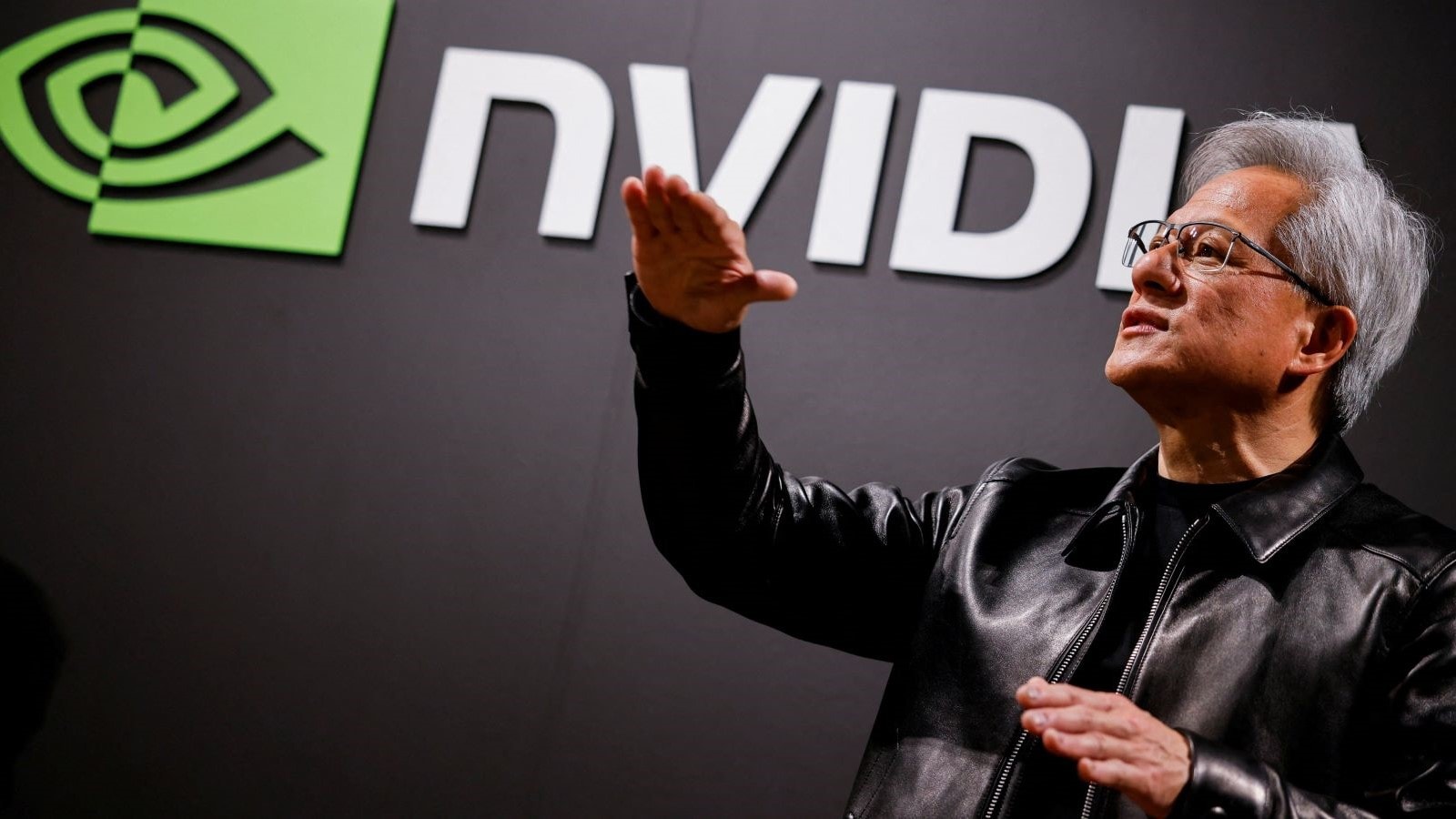
The tech press is collectively clutching its pearls because a piece of black calfskin just sold for $1 million at Sotheby’s.
They are calling it the peak of AI bubble hysteria. They are writing think pieces about tech worship, executive idolatry, and the irrational exuberance of Silicon Valley. They look at Jensen Huang’s signature wardrobe piece and see a symptom of a market that has lost its mind.
They are completely missing the point.
Buying that jacket wasn’t an act of fanboy madness. It was one of the shrewdest, most cold-blooded marketing arbitrage plays executed this year. The anonymous bidder didn’t buy a garment; they bought cheap distribution, permanent cultural positioning, and a historical artifact that anchors their brand to the architecture of the modern computing age.
Stop looking at the auction price through the lens of consumer retail. Start looking at it through the lens of enterprise customer acquisition cost.
The Lazy Consensus of Value
Mainstream financial media loves a simple narrative. The narrative here is easy: "Look at the crazy tech bros spending seven figures on a coat while Nvidia’s valuation fluctuates by billions daily."
This perspective suffers from a fundamental misunderstanding of asset allocation.
When a venture fund or a tech enterprise spends $1 million on a traditional marketing campaign, what do they get? A few programmatic ad placements, some enterprise event sponsorships, and a temporary spike in impressions that vanishes the moment the fiscal quarter ends. That money is spent. It is gone from the balance sheet forever, replaced by nebulous metrics like brand sentiment.
The $1 million spent at Sotheby’s behaves entirely differently.
- Asset vs. Expense: The jacket is a tangible cultural artifact. It sits on a balance sheet as an alternative asset. It does not depreciate like a fleet of enterprise servers.
- Earned Media Multiplication: The auction generated millions of dollars in free global press coverage. Every major financial network, tech blog, and newsletter covered the sale. If an agency tried to buy that level of mindshare organically, the invoice would far exceed seven figures.
- The Ultimate B2B Flex: In high-stakes enterprise technology, signaling matters. Displaying that jacket in a corporate lobby or a private fund office says something definitive: We possess the capital to acquire the definitive symbol of the AI era.
I have spent years watching enterprise tech companies burn tens of millions of dollars on abstract billboards along Highway 101 in Silicon Valley just to catch the eye of passing developers. It is passive, forgettable, and wildly inefficient. Buying the definitive artifact of the most influential CEO of the decade accomplishes more than a decade of billboards ever could.
The Architecture of Tech Mythology
Silicon Valley runs on narrative, and narrative requires relics.
We have seen this play out before. Steve Jobs’ black turtlenecks, Elon Musk’s cyber-whistles, Bill Gates’ oversized glasses—these are not just fashion choices. They are visual shorthand for generational shifts in how humanity processes data.
[The Evolution of Tech Relics]
Jobs' Turtleneck (Mobile/Web2) -> Huang's Leather Jacket (Accelerated Computing/AI)
Huang’s jacket represents the shift from sequential CPU processing to parallel GPU processing. It is the uniform worn during the dismantling of Moore's Law. When you buy the physical manifestation of that shift, you are inserting your organization directly into that historical timeline.
Let's break down the mechanics of why this specific item commands this premium.
1. The Scarcity of Identity
Unlike other executives who cycle through designer suits, Huang has worn variations of the same black leather jacket for over a decade. It is integrated into the Nvidia brand identity. It appeared at GTC keynotes, during the launch of the H100s, and throughout the financial runs that turned Nvidia into one of the most valuable corporations on earth. You cannot replicate this provenance.
2. The Institutional Validation
This wasn't a transaction on eBay; it was handled by Sotheby’s. That distinction matters because it introduces institutional vetting. The art market has long understood that value is derived from provenance and scarcity, not the raw material cost of the canvas or the leather. The tech sector is finally catching up to this reality.
Dismantling the Critics
The primary counterargument from the cynical crowd is that this purchase marks the definitive "top" of the market. They compare it to the dot-com excesses of 1999, citing the infamous party budgets and pet supply websites.
The comparison is flawed. The dot-com crash was driven by companies with zero revenue and high burn rates buying ads during the Super Bowl. The current hardware build-out is anchored by massive capital expenditures from hyperscalers with trillions of dollars in real, cash-generating legacy businesses.
To call a charitable or promotional auction purchase a sign of a structural market top is to confuse a side effect with a cause.
The downside to this contrarian view? Yes, if Nvidia somehow collapses into irrelevance over the next decade, the value of the jacket plummets. It is intrinsically tied to the legacy of the company. If parallel computing becomes a dead end—superseded by neuromorphic or quantum architectures faster than anticipated—the artifact loses its luster. But betting against Nvidia’s cultural footprint right now is a statistically losing position.
The Real Question You Should Be Asking
Instead of asking, "Why would anyone spend a million dollars on a jacket?" the real question enterprise leaders should ask is: "Why are our traditional marketing channels so broken that a piece of outerwear delivers better ROI than our entire digital ad spend?"
If you are running an AI startup, a data center firm, or a venture fund, your biggest enemy is anonymity. You are fighting for talent, for allocation of scarce hardware, and for limited LP capital.
Imagine a scenario where a boutique AI fund displays this jacket in their main meeting room. Every founder who walks in to pitch takes a photo. Every limited partner notices it. It becomes an immediate, shorthand proof of conviction. It proves the fund understands the cultural and material reality of the industry they operate in.
That isn't a waste of capital. That is a masterclass in positioning.
Stop evaluating tech cultural milestones using the logic of a department store accountant. The rules of attention have changed. The lines between enterprise marketing, alternative asset investment, and cultural curation have completely dissolved. The buyer of that jacket understands the new paradigm. The critics are still stuck trying to calculate the cost per square inch of leather.
The jacket isn't a bubble symbol. It is a trophy from the computing wars, and a million dollars was a discount.