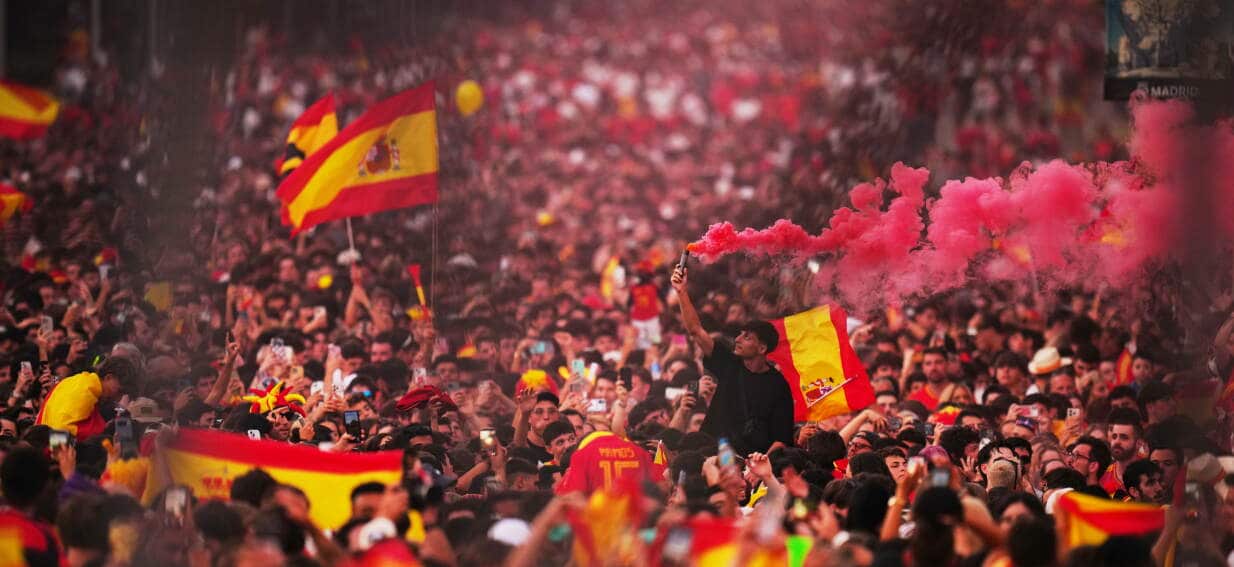
Spain won Euro 2024, but the party sweeping from Madrid to Barcelona isn't just about a trophy.
If you tuned into the final against England, you saw a masterclass on the pitch. Nico Williams and Lamine Yamal tore through defenses with sheer speed and instinct, while Rodri kept the entire tempo locked down like clockwork. Beyond the tactical brilliance, something deeper was happening across the country. Spain's national team became a mirror for a modern, booming nation that is finally shaking off years of economic doubt and cultural division.
Winning major tournaments changes a nation's mood, sure. Yet this specific victory hit at a moment when Spain was already riding a wave of massive economic growth and international influence. Football just gave the country a reason to shout about it.
The Pitch Mirrored a New Kind of Spanish Society
For decades, Spanish football carried a specific image. It was tiki-taka. It was endless passing, technical perfection, and a heavy reliance on rigid systems built in Catalan and Basque academies.
This team was different.
The stars of this tournament reflect a demographic shift that has been transforming Spanish cities over the last two decades. Lamine Yamal grew up in Rocafonda, a working-class neighborhood in Mataró with a high immigrant population. Nico Williams was raised in Pamplona by Ghanaian parents who crossed the Sahara Desert to build a life in Europe.
When those two celebrated on the pitch, they weren't just two young wings having fun. They represented millions of second-generation Spaniards who are reshaping what Spanish identity looks like in real time.
For a nation that spent years debating regional identities and immigration policies, seeing a diverse, dynamic squad capture the European title was a massive moment of collective pride. It proved that inclusion isn't just a political buzzword. It's a competitive advantage.
Economic Resilience Behind the Celebrations
You can't separate the mood in the streets from the cash in people's pockets.
When Spain won its famous treble between 2008 and 2012, the backdrop was grim. The 2008 financial crash hammered the Iberian peninsula. Youth unemployment topped 50 percent, real estate bubbles burst, and young talent fled the country in search of work in London or Berlin. The football team offered an escape, but everyone knew the party stopped the second the TV turned off.
Fast forward to mid-2024 and 2025. The economic picture looks strikingly different.
Spain has emerged as one of the fastest-growing major economies in the European Union. While central European giants like Germany struggled with industrial stagnation and high energy costs, Spain's GDP outpaced the eurozone average. Tourism hit record highs, clean energy investments paid off, and a steady influx of international tech workers filled cities like Malaga and Valencia.
- Spain's GDP growth outpaced the Eurozone average heading into 2025.
- Unemployment, while still a structural challenge, hit its lowest levels in over fifteen years.
- Massive investments in renewable energy positioned the nation as a green powerhouse in Southern Europe.
When fans cheered in the Puerta del Sol, they weren't just trying to forget their economic troubles. They were celebrating a country that actually feels like it's on the rise.
Soft Power and the Global Image
Football is soft power on overdrive.
When a nation dominates international sports, international perception shifts immediately. Spain isn't just seen as a sun-drenched holiday spot for Western Europeans anymore. It's recognized as a cultural and sporting titan.
Think about the sheer density of Spanish dominance across global sports right now. Carlos Alcaraz is taking over men's tennis. Real Madrid keeps collecting Champions League titles like casual souvenirs. Spanish coaches head up elite clubs across England, Germany, and France.
This athletic boom spills over into culture and business. Spanish TV shows top global streaming charts, Spanish music acts dominate global Spotify plays, and Spanish culinary hubs continue to draw international food critics.
The Euro victory sealed the deal. It framed Spain as a confident, modern state capable of competing and winning on every stage.
How to Understand Spain's Current Momentum
If you want to track where Spain goes from here, don't just look at the league standings. Keep an eye on three core areas:
- Investments in Youth Infrastructure: Just as Spanish football invested heavily in youth academies two decades ago, watch how the country reinvests its current economic gains into tech hubs and green energy grid development.
- Integration and Cultural Identity: Track how the success of multicultural athletes translates into public policy and national conversations around immigration.
- Tourism and International Trade: Watch whether Spain can leverage its elevated global standing to attract permanent corporate investments rather than just seasonal tourists.
Spain showed the world that success isn't an accident. It takes patience, smart investments in talent, and the courage to adapt when old methods stop working.