Wall Street expected a coronation. Instead, it got a car crash. When Space Exploration Technologies Corp. steps up to deliver its inaugural quarterly earnings report as a public entity, Elon Musk will face an investor base radically different from the forgiving private backers who funded his interplanetary ambitions for two decades. Less than two months after a blockbuster initial public offering that briefly pinned a $1.4 trillion valuation on the aerospace titan, the equity has shed over half its peak value, cratering past its initial listing price amid deep anxiety over runaway capital expenditures, ballooning net losses, and the impending expiration of crucial insider lockup provisions.
The friction between private-market mythology and public-market arithmetic is now absolute. For years, SpaceX operated under a unique corporate physics. Losses were dismissed as the cost of colonizing Mars, and hardware destruction during Starship test flights was celebrated as rapid iterative progress. Public equity markets, however, demand predictability, margin expansion, and a clear line of sight to profitability. As analysts pore over second-quarter figures showing anticipated net losses nearing $2 billion for the period alone, the honeymoon phase is over. Musk must now answer for a cash-burning apparatus that requires tens of billions annually to sustain both its orbital launch dominance and its aggressive push into space-based artificial intelligence infrastructure.
The Anatomy of the Capital Burn
To understand why public shareholders are panicking, one must look closely at the ledger. SpaceX is spending roughly $40 billion a year across its various verticals, pouring capital into heavy-lift rocket manufacturing, the expansion of the Starlink broadband constellation, and massive orbital data center architecture. While Starlink continues to scale its subscriber base at an impressive clip—projected to approach double-digit millions globally—the revenue generated by consumer broadband is currently being swallowed whole by the staggering costs of hardware development.
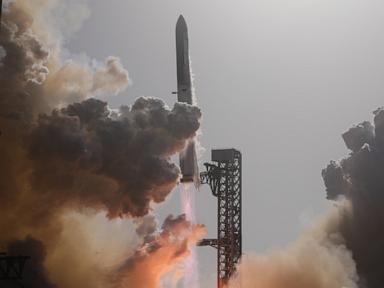
Take the Starship program as a primary cost driver. The heavy-lift vehicle is indispensable to NASA’s lunar return schedule and vital to deploying next-generation, football-field-sized satellite clusters. Yet, the iterative trial-and-error method of rocket building involves writing off millions of dollars of stainless steel and Raptor engines with every atmospheric anomaly. In private hands, this destruction was absorbed by venture funds and sovereign wealth participants willing to wait a decade. On Nasdaq under the ticker SPCX, every exploded prototype translates directly into jittery institutional selling pressure and algorithmic short positions. Short sellers have already accumulated billions in profits betting against the stock, treating Musk’s grand engineering timelines with cold, quantitative skepticism.
The Artificial Intelligence Pivot and Its Discontents
Complicating the balance sheet further is the company's aggressive pivot toward artificial intelligence. Following the integration of xAI's Grok ecosystem, SpaceX has positioned itself not merely as a transportation utility, but as a compute landlord capable of launching orbital data centers that bypass terrestrial power grid limitations.
In theory, the synergy between satellite infrastructure and off-planet compute is compelling. In practice, Wall Street views it as an expensive distraction from core cash flows. The AI segment generated hundreds of millions in early-stage revenue, but the capital expenditures required to scale orbital server arrays match or exceed those of terrestrial hyperscalers like Microsoft or Google. Institutional portfolio managers are asking an uncomfortable question: Is SpaceX stretching its balance sheet too thin by trying to conquer space and artificial intelligence simultaneously? Musk's earnings call performance will need to provide concrete metrics rather than visionary rhetoric to convince skeptics that the AI division will not dilute the company's core financial health.
The Lockup Cliff and Institutional Panic
Adding immediate downward pressure on the stock is the mechanics of the market itself. The initial public offering structure locked up insider shares to prevent immediate market saturation. That artificial scarcity evaporates as early tranches of insider shares become eligible for open-market trading. More than 900,000 restricted shares are cleared for release, with vastly larger tranches waiting in the wings over the coming months.
For retail investors who piled into the IPO at its zenith, the prospect of early investors and employees liquidating holdings to lock in life-changing wealth creates a psychological floor that keeps dropping. This impending supply shock explains why the stock recently breached all-time lows prior to the earnings release. Markets hate uncertainty, and an influx of freshly unlocked equity colliding with multi-billion-dollar quarterly losses is a recipe for extreme volatility.
Navigating the Credibility Gap
Musk is no stranger to public market hostility. He spent years battling short sellers during Tesla’s tumultuous adolescence. Yet, SpaceX presents a uniquely complex governance challenge. Rumors persist regarding potential corporate realignments or structural tie-ups with his other corporate holdings, though regulatory constraints and securities rules heavily restrict such maneuvers. Any attempt to blur the lines between his automotive, social media, and aerospace ventures during the earnings call will likely trigger immediate pushback from institutional governance committees.
The core tension of the earnings call boils down to a fundamental clash of horizons. Musk operates on a multi-decade timeline oriented toward multi-planetary civilization. Public market analysts operate on a ninety-day horizon oriented toward earnings-per-share beats and operating margin improvements. When the opening bell rang for SpaceX, it marked the end of an era where a charismatic founder could dictate terms without answering to quarterly consensus estimates. As the microphones turn live and the financial figures enter the public domain, the mythos of invincibility meets the unyielding friction of public accountability.