The sirens do not always scream. Sometimes, they merely hum—a low, mechanical vibration in the chest before the sky tears open.
In the northeast of Ukraine, Sunday arrived not with the gentle rustle of autumn leaves, but with the violent signature of Russian airstrikes. Homes became rubble. Lives were extinguished in the span of a single heartbeat. Down south and across the central plains, the capital, Kyiv, braced itself once more, wrapped in that tense, suffocating quiet that precedes the roar of incoming ordnance.
We look at the maps from thousands of miles away, tracing lines of control with the detachment of a board game player. We see red arrows and blue salients. But war is not geometry. War is the smell of plaster dust hanging heavy in a kitchen where tea was brewing moments before. War is the sudden, terrifying absence of a neighbor's voice.
The Geography of Fear
Consider what happens when the horizon becomes an enemy. In Kharkiv and its surrounding villages, civilians have learned to read the sky the way sailors read the ocean. A sudden shift in the wind, a strange contrail, the erratic flight of birds—these are the early warnings.
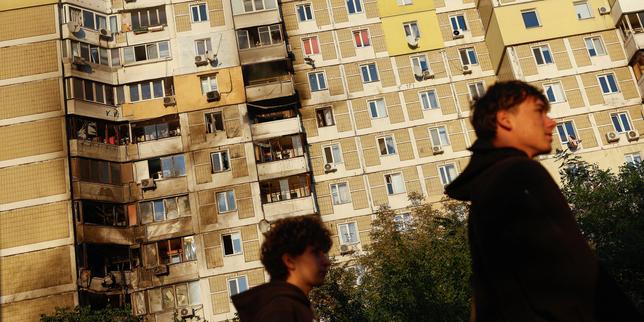
The strikes reported over the weekend targeted areas far from active frontline trenches. This is the grim reality of modern strategic bombardment: the front line is everywhere. When ballistic missiles and loitering munitions sweep across northeastern settlements, they strike indiscriminately at the fabric of normal existence. Bakeries, apartment blocks, bus stops.
(Note: While specific individual names in these zones are often withheld for operational security and privacy, the pattern of destruction is verified daily through regional military administration reports and international monitors.)
To understand this, imagine waking up to the sound of your own windows shattering inward. Not from a storm, but from a blast wave generated twenty miles away. Your hands shake as you reach for a coat, your boots, a passport. You wonder, with a sickening clarity, if the ceiling will hold for another five minutes.
The Capital and the Crucible
Farther west, Kyiv absorbs the psychological weight of the assault. The capital is a city living in a perpetual state of high-wire balance. Cafes operate behind sandbags; children play in parks within sight of reinforced concrete shelters.
When air raid alerts sound across Kyiv on a Sunday morning, a strange choreography unfolds. Subway stations transform into subterranean communities. People sit on folding chairs, scroll through news feeds on cracked phone screens, and share quiet words of comfort. It is an act of collective defiance born of pure exhaustion.
The strikes targeting the capital are designed to break something deeper than infrastructure. They target endurance. Moscow’s strategy relies on the calculation that human beings can only withstand so much terror before the will to resist fractures.
Yet, the math of occupation versus resistance rarely accounts for the human spirit's stubborn refusal to yield.
The Weight of the Unseen Stakes
Why does this matter to someone sitting in a quiet room across an ocean? Because the architecture of global security is built on shared norms. When borders are rewritten with fire and steel, the tremors are felt everywhere.
The strikes in the northeast and the capital are symptoms of a larger, grinding war of attrition. Russia maintains a numerical advantage in sheer volume of artillery and missiles, attempting to out-produce and out-last Ukrainian air defenses. Ukraine, reliant on the steady, sometimes agonizingly slow delivery of Western interceptors and anti-aircraft systems, fights a daily game of mathematical survival. Every Patriot battery or NASAMS unit is not just hardware; it is a roof over a child's head. Every delayed shipment translates directly into empty chairs at dinner tables in Kharkiv and Kyiv.
We must confront the uncomfortable truth of our own complacency. It is easy to grow fatigued by headlines that repeat the same grim cadence week after week. The human brain is wired to tune out chronic danger, to seek safety in normalization. But normalization is a dangerous luxury when millions are living beneath a sky that can turn lethal in seconds.
Living on Borrowed Time
I remember speaking with a relief worker who had just returned from a distribution run near the northeastern border. He described an elderly man sitting amidst the ruins of his kitchen, methodically sweeping up broken glass while his home had no roof left.
"Why clean?" the worker asked.
The man looked up, his eyes weary but fierce. "Because the mess is how they win. I will not live in their mess."
That is the quiet front line of this war. It is fought with brooms, with whispered lullabies in subway stations, with the stubborn insistence on planting potatoes in soil that bears the scars of shrapnel.
The explosions in the northeast and the capital this Sunday are not isolated incidents. They are chapters in a long, brutal test of wills. As the winter frost begins to settle over the plains, the stakes grow sharper, colder, and more urgent.
The sirens will sound again. The sky will light up with the cruel geometry of war. And somewhere in the dark, a hand will reach out in the dust, searching for a broom, refusing to let the silence win.