Gunfire.
In a country as vast and bruised as the Democratic Republic of the Congo, gunfire is not an interruption of daily life. It is the metronome that tells people whether the market will open, whether children will walk to school in shoes or barefoot through red mud, and whether a name spoken softly over a charcoal stove will invite a knock at midnight. Discover more on a connected subject: this related article.
For more than half a century, one surname has echoed across that volatile cadence like a bell rung from a watchtower. Kabila.
When news agencies summarize the story as rebels from father to son—tracing Laurent-Désiré Kabila, the old-school Marxist guerrilla who marched into Kinshasa in 1997 to topple Mobutu Sese Seko, and Joseph Kabila, the quiet son thrust into the presidency after his father’s assassination in 2001—they hand you a neat family tree. Clean branches. Clear dates. Tidy labels. Further analysis by Reuters highlights comparable views on the subject.
Real history in the Congo is never that neat.
I have sat in rooms in Lubumbashi and Goma where the air smelled of wet earth, diesel smoke, and sweet roasted maize while men debated whether the Kabila era was a liberation that curdled or a dynastic trap disguised as patriotism. Watching how power passes from a bush fighter to a reluctant—and later fiercely entrenched—heir is not like watching a relay race on a manicured track. It is more like watching two men pass a live grenade across a flooded trench while everyone else on the bank prays it does not slip.
To be completely transparent with you, I am using a metaphor here—a grenade in a flooded trench—because cold political science terms like neopatrimonialism or clientelist succession rarely capture the knot in your stomach when a peace deal collapses fifty miles from your cousin’s farm. And when I introduce characters in these pages to help you feel what happens on the ground, I will tell you plainly when someone is a composite or a hypothetical stand-in built from real testimonies rather than a single documented individual.
Even I have had moments where the sheer contradictions of Congo’s modern history made my head spin. How does a man who spent decades preaching revolution and self-reliance end up presiding over a state hollowed out by war, patronage, and foreign intervention? How does a young officer raised in exile, speaking Swahili and English more comfortably than the streets of Kinshasa, become the keystone of a fragile peace and then the lightning rod for democratic frustration? If you feel dizzy trying to hold all those threads at once, you are in good company. The country itself has been trying to hold them together since independence in 1960.
A Bush Fighter Enters the Palace
To understand the son, you have to hear the footsteps of the father.
Laurent-Désiré Kabila was no overnight politician. Born in Katanga in 1939, he came of age in the turbulent aftermath of Belgian colonial rule and the tragic fall of Patrice Lumumba. For decades, he operated in the shadows of eastern Congo, particularly around the rugged shores of Lake Tanganyika—a man of grand revolutionary rhetoric, stubborn independence, and shifting alliances. Che Guevara famously spent months in the region in 1965 trying to help local rebels and left disillusioned by their divisions, a footnote that hints at how complex and fractured the guerrilla world already was.
Decades later, in 1996 and 1997, the map shifted violently. Fueled by the regional fallout of the 1994 Rwandan genocide and backed decisively by neighboring armies—especially Rwanda and Uganda—the Alliance of Democratic Forces for the Liberation of Congo-Zaire (AFDL) swept westward across an enormous country where roads barely existed and Mobutu’s once-feared state had rotted from within.
Laurent-Désiré Kabila became the public face of that march. In May 1997, Mobutu fled, and Kabila declared himself president, renaming the country the Democratic Republic of the Congo.
Imagine—and here I ask you to step into a hypothetical scenario grounded in what countless Congolese families experienced in the late 1990s—a shopkeeper named Pascal in Bukavu. For years, Pascal lived under Mobutu’skleptocracy, where unpaid soldiers taxed you at every corner and inflation turned your savings into confetti. When Kabila’s forces roll in, Pascal feels a sudden surge of hope. Maybe the looting will stop. Maybe a strongman who knows the bush will finally discipline the state.
Then the alliance fractures.
Within little more than a year, the foreign backers who helped propel Laurent-Désiré Kabila into power turned against him, triggering what became known as the Second Congo War—a sprawling, devastating conflict that pulled in multiple African armies and armed militias, claiming millions of lives directly and indirectly through violence, disease, and displacement. Suddenly, the liberator was fighting for survival in a palace built over shifting sand. Pascal’s shop closes twice in six months. His nephew is pressed into a militia before his eighteenth birthday.
Laurent-Désiré Kabila grew suspicious, authoritarian, and isolated. He surrounded himself with trusted loyalists—including figures from Katanga and a tight inner circle—while alienating former allies and domestic opposition alike. On January 16, 2001, he was shot inside his marble-walled residence in Kinshasa by one of his own bodyguards and died days later.
A father who had lived by the rifle died by a bullet in his own house.
The Reluctant Heir Steps Into the Storm
If the story stopped in January 2001, it would already be a Shakespearean tragedy. Instead, it pivoted to a twenty-nine-year-old son.
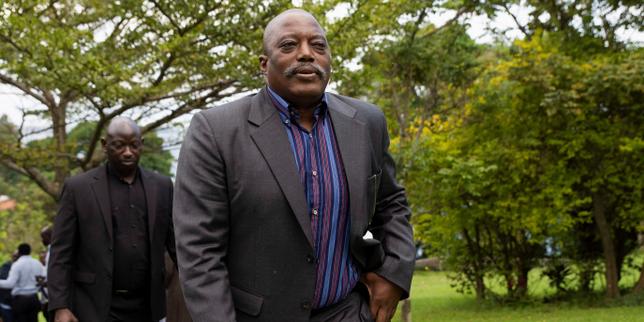
Joseph Kabila had grown up largely outside the spotlight, spending formative years in Tanzania and later serving in military roles tied to his father’s campaigns. When Laurent-Désiré was killed, Joseph was serving as army chief of staff. Almost overnight, with remarkable speed and little constitutional preparation, he was elevated to head of state.
Think about the weight dropped onto those shoulders. No deep political base of his own in Kinshasa. A civil war raging across half the country. Foreign troops occupying swaths of territory. Rival factions inside the ruling circle eyeing one another like wolves in tall grass.
At first, many outside capitals—and plenty of weary Congolese—viewed Joseph Kabila as an unlikely peacemaker. He spoke quietly, kept his cards close, and leaned toward diplomacy and international mediation rather than bombastic speeches. Under his presidency, the massive foreign military deployments were gradually negotiated out, the 2002 Sun City agreement paved the way for a transitional power-sharing government, and a new constitution was adopted in 2005–2006.
In 2006, the DRC held its first multiparty elections in decades. Joseph Kabila won a runoff against Jean-Pierre Bemba, cementing his mandate through the ballot box rather than solely through succession. In 2011, he won a contested second term amid widespread accusations of irregularities from opponents and observers.
Yet peace in the east proved elusive. Even as Kinshasa tried to project institutional normalcy, eastern provinces like North and South Kivu remained a tinderbox of competing armed groups, mineral extraction, land disputes, and cross-border tensions—from the CNDP and M23 rebellions to the FDLR and dozens of local Mai-Mai factions.
Why does rebellion in the DRC never seem to end with a single signature on a peace treaty?
Because guns in eastern Congo rarely fight for a single ideology. They fight over protection, identity, smuggling routes, local grievances, and the failure of central authority to provide security or justice. When a state struggles to pay its own soldiers regularly or monopolize violence across territory the size of Western Europe, armed groups fill the vacuum like water rushing into low ground.
When the Liberator’s House Becomes the Establishment
Every rebel dynasty faces a quiet paradox. The very qualities that make a movement dangerous in the bush—loyalty networks, informal deals, command over armed men, secrecy—often collide with the slow, rule-bound work of building a modern state.
Let us introduce another hypothetical character—a young university graduate named Chantal living in Kinshasa around 2015. Chantal was a toddler when Laurent-Désiré Kabila took power and a schoolgirl when Joseph Kabila won his first election. To Chantal, the Kabilas are not distant jungle revolutionaries. They are the ruling establishment.
As Joseph Kabila’s second and constitutionally final term neared its end in 2016, tensions boiled over. Elections were delayed repeatedly amid legal maneuvers, political negotiations, and street protests met with harsh crackdowns. For young people like Chantal, watching the constitutional clock stretch past its limit felt like watching the door to peaceful change inch shut.
Eventually, following intense domestic pressure, church-brokered talks, and international scrutiny, elections were held in late 2018. Joseph Kabila stepped down—though not without maneuvering to retain substantial influence through allied lawmakers, judges, and security figures, before power later shifted further as Félix Tshisekedi broke free of the old alliance and consolidated control.
That transition revealed something crucial about how power works in the DRC. Formal office is only part of the architecture. Informal networks—family ties, old military loyalties, business interests, and regional patronage—often outlast a title on a decree.
When people speak of the Kabilas as rebels from father to son, there is a sharper edge to that phrase than a literal biography. Laurent-Désiré fought as an armed insurgent against entrenched power. Joseph inherited a fractured state born of rebellion and navigated a political landscape where armed leverage and backroom deals remained currencies of survival. And even after leaving the presidency, the question of whether Joseph Kabila or his allies would remain a political force—or retreat, or re-emerge—kept Kinshasa guessing.
The Human Cost Behind the Headlines
Maps of the Democratic Republic of the Congo are famous for their scale. Put the DRC over Western Europe and you cover enormous distances—from dense equatorial rainforests and the winding Congo River to highland lakes and mineral-rich hills in the east.
It is easy to talk about that geography in abstractions. Strategic minerals. Geopolitical rivalry. Fragile institutions.
It is much harder to sit beside a mother in a camp outside Goma who has moved three times in two years because an armed group pushed closer to her village. For her, the rivalry between Kinshasa politicians, regional neighbors, and rebel commanders is not a cable-news debate. It is whether her children eat tonight. It is whether a stray mortar shell hits the roof above their heads. It is the exhaustion of packing everything you own into plastic sacks yet again.
When outside observers reduce Congo’s saga to a neat family story—father rebels, son rules—we risk flattening millions of distinct lives into a single plotline. Congolese citizens have never been passive extras in their own history. They have organized civic movements, marched in the streets despite tear gas and live rounds, voted in massive numbers whenever given the chance, built local economies out of sheer grit, and carried memories stretching back generations.
At the same time, ignoring the weight of those family and factional dynamics would be blind. In a country where state institutions have repeatedly been captured, weakened, or bypassed, personal networks and armed factions matter enormously. Understanding how Laurent-Désiré’s insurgency shaped the state Joseph inherited—and how Joseph’s long rule reshaped alliances, grievances, and expectations—helps explain why the past never quite stays buried in the DRC.
What Rebellion Leaves Behind
There is a lesson here that reaches far beyond one country’s borders, though it is written in bold letters across the Congo Basin.
Rebellion can break a rotten regime. A rifle can topple a dictator who has lost all legitimacy.
A rifle cannot build a court system that people trust. It cannot pave a road between two provinces so farmers can reach markets without paying informal tolls. It cannot heal ethnic mistrust overnight or turn rival warlords into patient public servants. When a political order is born in war and sustained through patronage, peace is rarely a single day on a calendar. It is a daily, grueling struggle to make law stronger than force.
I do not pretend to have an easy formula that fixes decades of intertwined crises in one stroke. Anyone who offers a five-point silver bullet for eastern Congo is selling illusions. Real change demands sustained Congolese leadership, accountable institutions, genuine regional cooperation, and an end to treating the country merely as a quarry for raw materials or a chessboard for neighboring rivalries.
Yet I also refuse to believe that endless cycle is carved in stone. People adapt. Generations push back. Memory is heavy, but human resilience in the Congo has proved stubborn enough to surprise skeptics time and again.
Night falls fast near the equator. Along the edge of a hillside in North Kivu, a single oil lamp flickers through the slats of a wooden house while crickets rattle in the tall grass and distant thunder rolls behind dark ridges—leaving you to wonder whether the rumble in the dark is a coming rainstorm or another column of men marching through the trees.