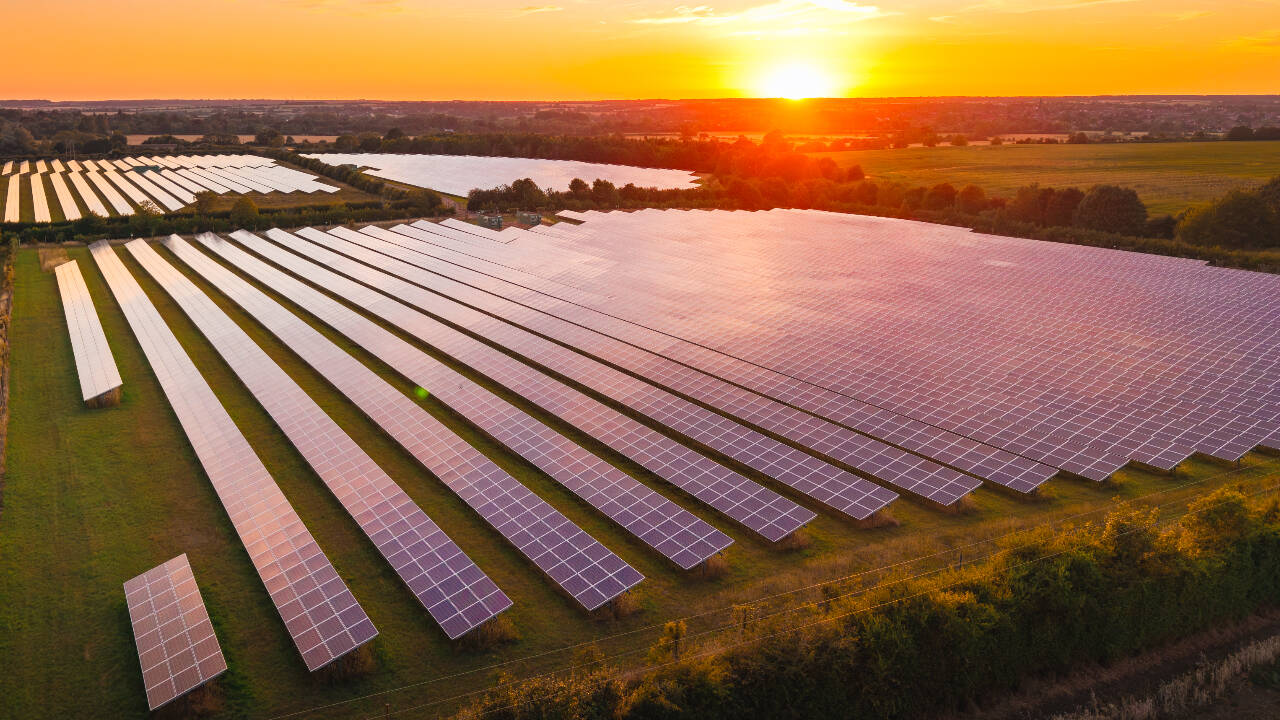
Two hundred thousand dollars a year. Sounds like a miracle check for 600 acres of Texas dirt.
It isn't. It's a financial illusion wrapped in a 35-year trap.
Every week, another puff piece hits rural feeds celebrating a landowner who signed a solar lease and retired from the grind of dryland farming or cattle ranching. The lazy consensus is simple: crops are risky, weather is brutal, input costs eat your margin, and solar developers hand out predictable mailbox money. Take the check. Plant panels. Cash out.
That math is lazy. Worse, it's dangerous.
I've spent years advising landowners, energy attorneys, and agricultural operators across Texas and the Midwest. I've seen families blow their generational leverage on shiny 30- to 40-year contracts that looked rich on day one and suffocated them by year twelve. I've watched neighbors sign "standard" leases without reading the escalation clauses, decommissioning bond language, or subsurface access carve-outs, only to discover their "mailbox money" barely beats inflation while their most flexible asset is locked under steel and glass for half a lifetime.
You don't have a crop problem. You don't have a solar problem. You have an option-value problem. And you're likely asking the wrong question entirely.
Stop Asking How Much Solar Pays Per Acre
People read a headline about $200,000 a year across 600 acres and immediately do back-of-the-napkin division. That comes out to roughly $333 per acre annually. Compared to thin dryland wheat or marginal pasture in a drought year, $333 per acre looks like found money.
Stop doing simple division on long-dated contracts. A dollar paid thirty years from now is not worth a dollar today.
When you lock 600 acres into a long-term solar lease, you aren't just selling surface use. You are surrendering optionality. Once a utility-scale array goes up, your land cannot easily pivot to higher-value agricultural uses, strategic real estate development, or other capital structures without massive friction, developer consent, or buyout negotiations.
Think about what happens in Texas over a three-decade window. Population corridors expand. Suburban and exurban growth pushes outward from metro hubs. Water rights, transmission proximity, and road frontage shift in value. A parcel that looked like remote scrubland or marginal grazing ground in year one can sit right in the path of growth by year eighteen. A rigid, long-term surface lease freezes your ability to capture that upside on your own terms.
The Hidden Drag of Flat or Weak Escalators
Many landowners get seduced by a strong starting payment and overlook weak annual escalators. Even a modest inflation rate compounds silently against a flat or 1% annual bump over thirty years. What feels generous in year one can feel thin in year twenty when property taxes, insurance, legal fees, and living costs have climbed steadily.
Landowners also routinely confuse gross lease revenue with net retained wealth. A check arriving once a year feels clean and passive. Yet real estate and agricultural operators know that gross inflows mean little without tracking:
- Property tax exposure and rollback/valuation shifts: How solar improvements and valuation rules affect your tax bill and who bears what costs under the agreement.
- Opportunity cost of encumbered acreage: What you gave up by taking 600 contiguous acres off the board for decades.
- Transaction and legal drag: The upfront legal and engineering review needed before signing a multi-decade instrument, plus ongoing compliance headaches.
- Liquidity limits: Selling encumbered land often narrows your buyer pool to investors comfortable with long-term energy leases rather than owner-operators or growth buyers.
What People Actually Ask About Solar Leases (And the Brutal Truth)
"Isn't steady solar income safer than farming or ranching?"
Safer from weather? Sure. Panels don't care if July brings 104 degrees and zero rain.
Safer financially over a multi-decade span? Not automatically. Counterparty risk exists in energy development just like biological and weather risk exists in agriculture. Developers form single-purpose LLCs for specific projects. Projects get developed, refinanced, sold, or transferred to other operators over the life of a long lease. If you don't understand assignment rules, subordination, and creditworthiness, "steady" on paper can become complicated in practice.
Plus, farming and ranching build operational skill, herd or soil equity, and annual adaptability. A fixed lease turns you into a passive spectator on your own land. Spectators don't control the game.
"Can't I just graze sheep under the panels and get the best of both worlds?"
Agrivoltaics sounds great in marketing brochures. Sheep under panels. Shade for livestock. Dual income.
In real life, grazing under solar arrays works best when the site was engineered for it from day one—with proper panel height, spacing, row layout, water access, fencing, and clear liability rules. Retrofitting an existing utility array for livestock often turns into a logistics headache. You have to coordinate access around maintenance crews, manage gate discipline so animals don't wander or damage equipment, and navigate who pays if an animal damages a wire or a panel gets knocked out of alignment.
It can work. It rarely happens by accident. And it almost never replaces full-scale agricultural autonomy on prime ground.
"What happens when the solar lease ends?"
Read the decommissioning section before you even look at the payment schedule.
Many landowners assume that when a 25- or 35-year term wraps up, the developer simply pulls the posts out of the ground and hands back clean dirt. Reality is messier. Removal obligations, concrete footings, cabling, trenching, soil compaction, and financial assurance (such as bonds, letters of credit, or escrow) vary wildly from contract to contract.
If financial assurance is weak, delayed until late in the project's life, or poorly structured, the risk of an underfunded or drawn-out cleanup shifts closer to the landowner. Imagine a scenario where a project changes hands multiple times over thirty years, market conditions shift, and the final operator drags its feet on full site restoration while you're left fighting over definitions of "original condition." That's not mailbox money. That's a headache with legal bills attached.
The Heavy Hitters and the Mechanics Nobody Explains
In power markets and land economics, heavy hitters like the Electric Reliability Council of Texas (ERCOT), the U.S. Energy Information Administration (EIA), and major university agricultural extension programs—such as Texas A&M AgriLife Extension—publish extensive data on grid interconnection, land values, and farm economics. Their core lesson is straightforward: grid economics and agricultural economics run on completely different clocks and rules.
Solar developers aren't buying dirt because they love agriculture. They are monetizing solar irradiance, interconnection queue position, transmission capacity, and project finance structures. You are providing a physical footprint so they can build a power generation asset.
Because your incentives and theirs diverge, "standard" developer lease forms are written to protect the developer's financing and construction timeline—not your family's long-term flexibility.
A Thought Experiment on 600 Acres
Imagine a scenario where you own 600 contiguous acres in Central or West Texas.
Option A: You sign a 35-year solar lease paying $200,000 a year ($333/acre) with a minimal annual escalator. For the next three and a half decades, your family collects checks, watches rows of panels stretch across the horizon, and has limited freedom to repurpose or redevelop that footprint without navigating lease constraints.
Option B: You split the problem. Instead of treating all 600 acres as an all-or-nothing binary choice between "farming" and "solar," you evaluate which specific parcels have real agricultural or appreciation value, which parcels are genuinely marginal, and how short-to-medium-term land strategies, conservation or grazing improvements, phased leasing, or outright sale/reinvestment compare on a risk-adjusted basis.
Most landowners never run that comparison. They fall in love with the headline check because farming is hard and the check looks easy.
The Downsides of Playing It Contrarian
Being contrarian doesn't make you right by default. Let's put the downsides of pushing back on solar leases right on the table.
First, saying no to a lease can mean leaving real cash on the table today. If you have high-interest debt, succession pressures among heirs who don't want to farm, or land with poor soil, scarce water, and zero near-term development prospects, turning down strong lease terms can be costly.
Second, agriculture has real, brutal volatility. Drought, input price spikes, equipment costs, labor shortages, and commodity swings punish operators who don't have scale, efficiency, or strong balance sheets. Romanticizing ranching or farming when the numbers don't work is just as foolish as signing a bad lease.
Third, negotiating hard or walking away requires work. You have to hire sharp legal and tax counsel, model real cash flows, and be willing to walk away if a developer won't budge on key protections. Plenty of landowners hate confrontation or don't want to spend money upfront on advisors—so they sign whatever lands in their inbox.
Unconventional Moves That Actually Protect Landowners
If you have solar developers knocking on your gate—or you're simply looking at a headline like "$200,000 a year on 600 acres" and wondering what to do with your own land—stop thinking like a passive check-catcher. Start thinking like a capital allocator.
1. Audit Your Land by Tier, Not by Total Acreage
Never treat 600 acres as one uniform block. Map every parcel by soil quality, water access, road frontage, proximity to growing towns, and distance to transmission lines. Your best land and your worst land do not deserve the same 35-year strategy.
2. Price the Option Value Before You Price the Rent
Ask yourself what happens if this land is needed for a different purpose in 10 or 15 years. If a contract locks you in for 30 to 40 years with tight restrictions, make sure the compensation reflects the true cost of giving up future flexibility—not just today's agricultural net income.
3. Treat Every Clause in a Solar Lease as Negotiable Until Proven Otherwise
Nothing in an initial developer draft is carved in stone. Pay close attention to:
- Term length and renewal options: Know how long you are truly committed.
- Escalation structure: Understand how payments grow over time against inflation.
- Easements and access: Watch out for broad underground line, road, or transmission rights that linger or complicate other uses.
- Decommissioning and security: Insist on clear restoration standards and enforceable financial backing rather than vague promises.
- Subsurface and mineral coordination: Make sure surface restrictions don't trigger avoidable conflicts with mineral rights or existing operations.
4. Compare Against Selling or Redeploying Capital
Sometimes the smartest move isn't a 35-year lease and isn't clinging to low-return acreage out of nostalgia. Sometimes selling non-core land—or structuring a smart transaction—and redeploying capital into higher-returning, more liquid, or better-diversified assets beats waiting decades for modest annual payouts.
5. Never Sign Without Independent Counsel
Developer landmen are pros. They negotiate these agreements every single week. If you sign a multi-decade contract without an attorney who actually knows energy leases and a CPA or advisor who understands your tax picture, you're bringing a pocketknife to a contract fight.
A $200,000 check on 600 acres isn't proof that solar is a magic bullet. It's a test of whether you understand what you're actually giving up to get it. Keep your land sharp, keep your options open, and never trade thirty-five years of freedom for a headline number.


