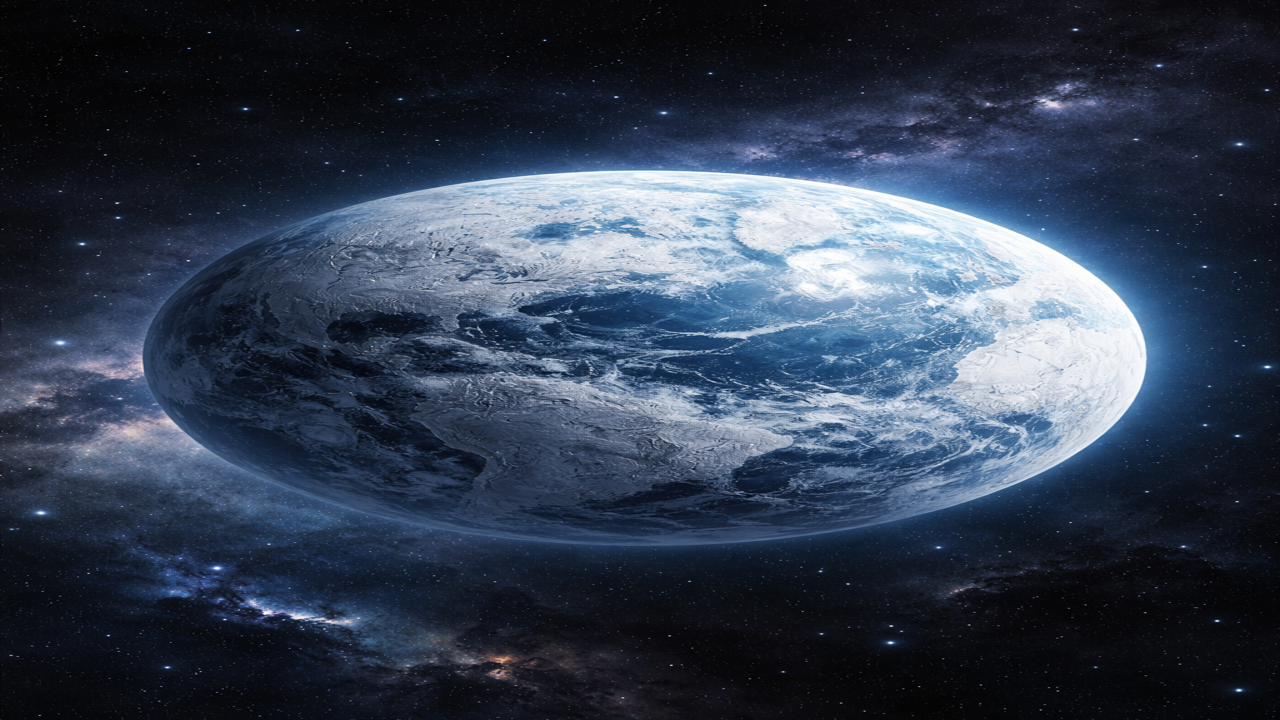
Imagine a world where the equator feels like the South Pole. That isn't a scene from a low-budget sci-fi flick. It happened. About 700 million years ago, our planet didn't just get cold; it turned into a giant, cosmic ice cube. Geologists call this the Sturtian glaciation, but most of us know it as Snowball Earth.
If you're looking for the reason why we aren't all still microscopic blobs floating in a lukewarm puddle, this is it. Most people think of the ice ages as a setback for life. They've got it backward. The deep freeze was the pressure cooker that forced evolution to stop playing around and get serious. It was a brutal, global-scale filter that only the toughest, most adaptable organisms could pass.
The Day the Thermostat Broke
How do you freeze an entire planet? It’s harder than you’d think. You need a perfect storm of bad luck. Back in the Neoproterozoic era, most of the Earth's landmasses were huddled together near the equator in a supercontinent called Rodinia. This was a massive tactical error by the planet.
When rocks weather, they soak up carbon dioxide. Since Rodinia was in the tropics—where it’s hot and rainy—weathering happened at hyper-speed. The continents literally sucked the greenhouse gases out of the sky. At the same time, massive volcanic eruptions in what is now Arctic Canada pumped sulfur into the atmosphere, reflecting sunlight back into space.
The temperature plummeted. Once the ice reached about 30 degrees latitude—roughly where New Orleans or Cairo sit today—a feedback loop took over. Ice is white. It reflects sun. More ice meant less heat absorbed, which meant more ice. The glaciers didn't stop until they met at the equator. The ocean was capped with a lid of ice a kilometer thick.
Survival in a Frozen Hell
You’d think life would just give up. Honestly, it almost did. But life is stubborn. While the surface was a wasteland, tiny pockets of survival remained.
Deep-sea hydrothermal vents kept the water boiling in the dark. In these volcanic hotspots, heat and minerals provided a chemical soup that kept bacteria and simple organisms going. There were also likely "cryoconite holes"—small puddles on the surface of glaciers where dust melted a tiny bit of ice. These microscopic oases allowed photosynthetic algae to cling to existence.
This wasn't just a waiting game. It was a biological arms race. When resources are that scarce, you either find a new way to eat or you die. This period is likely when the ancestors of all animals began to diversify. We see the first hints of complex multicellularity right around this time. The ice didn't just trap life; it forced it to innovate.
The Great Thaw and the Oxygen Spike
The "Snowball" didn't melt because the sun got hotter. It melted because volcanoes kept erupting under the ice. For tens of millions of years, they pumped carbon dioxide into the atmosphere. With the oceans capped, there was no water cycle to wash that CO2 back into the rocks.
The greenhouse effect built up to an insane level. When the ice finally cracked, the melt wasn't a slow spring. It was a violent, global flash-flood.
As the ice retreated, it ground up the continents, dumping a staggering amount of nutrients—phosphorus, nitrogen, and minerals—into the sea. This was like dumping a tanker of Miracle-Gro into the ocean. The resulting bloom of cyanobacteria and algae didn't just feed the survivors; it flooded the atmosphere with oxygen.
Before the freeze, oxygen levels were pathetic. After the thaw, they surged. High oxygen is the fuel needed for high-energy life. Big bodies. Muscles. Nervous systems. You can't build a predator on low-grade fuel. The Snowball Earth provided the high-octane atmosphere required for the Cambrian Explosion that followed.
Why This Matters Today
We like to think of Earth as a stable, self-regulating paradise. It’s not. It’s a chaotic system that has survived near-death experiences. Understanding the Snowball Earth isn't just about dusty geology. It’s about recognizing the fragility of the climate systems we take for granted.
If you want to see the evidence yourself, you don't need a lab. Geologists find "dropstones" all over the world—massive boulders dropped by melting icebergs into fine-layered seafloor mud. You can see these in places like the Flinders Ranges in Australia or the Namibian desert. They are the physical scars of a planet that almost died.
If you’re interested in the mechanics of how our world stays habitable, start by looking into the "Carbon-Silicate Cycle." It's the planet's internal thermostat that eventually saved us from the deep freeze. You can also track the latest research from the International Commission on Stratigraphy to see how they're refining the dates on these massive shifts. The story of life isn't a straight line; it's a series of brutal restarts.
Next time you’re annoyed by a cold winter morning, just remember that a few hundred million years ago, that cold saved your ancestors from being pond scum.