The air in Boyle Heights does not just hold oxygen; it holds memory. It carries the faint, stubborn ghost of burnt rubber, old motor oil, and the sharp, metallic tang of industrial exhaust that never quite washes out of the stucco walls.
For Maria, who has lived down the block from a labyrinth of auto-body shops and chemical storage yards for twenty-two years, morning does not begin with birdsong. It begins with the low, teeth-rattling rumble of heavy freight trucks down-shifting on narrow residential streets, followed by the familiar, low-grade thrum of anxiety. She keeps her windows shut tight, even in July. She has to. Opening them invites an uninvited guest: a fine, greasy grit that settles on her windowsills, her kitchen table, and, she fears, the lungs of her nine-year-old grandson.
Then came the fire.
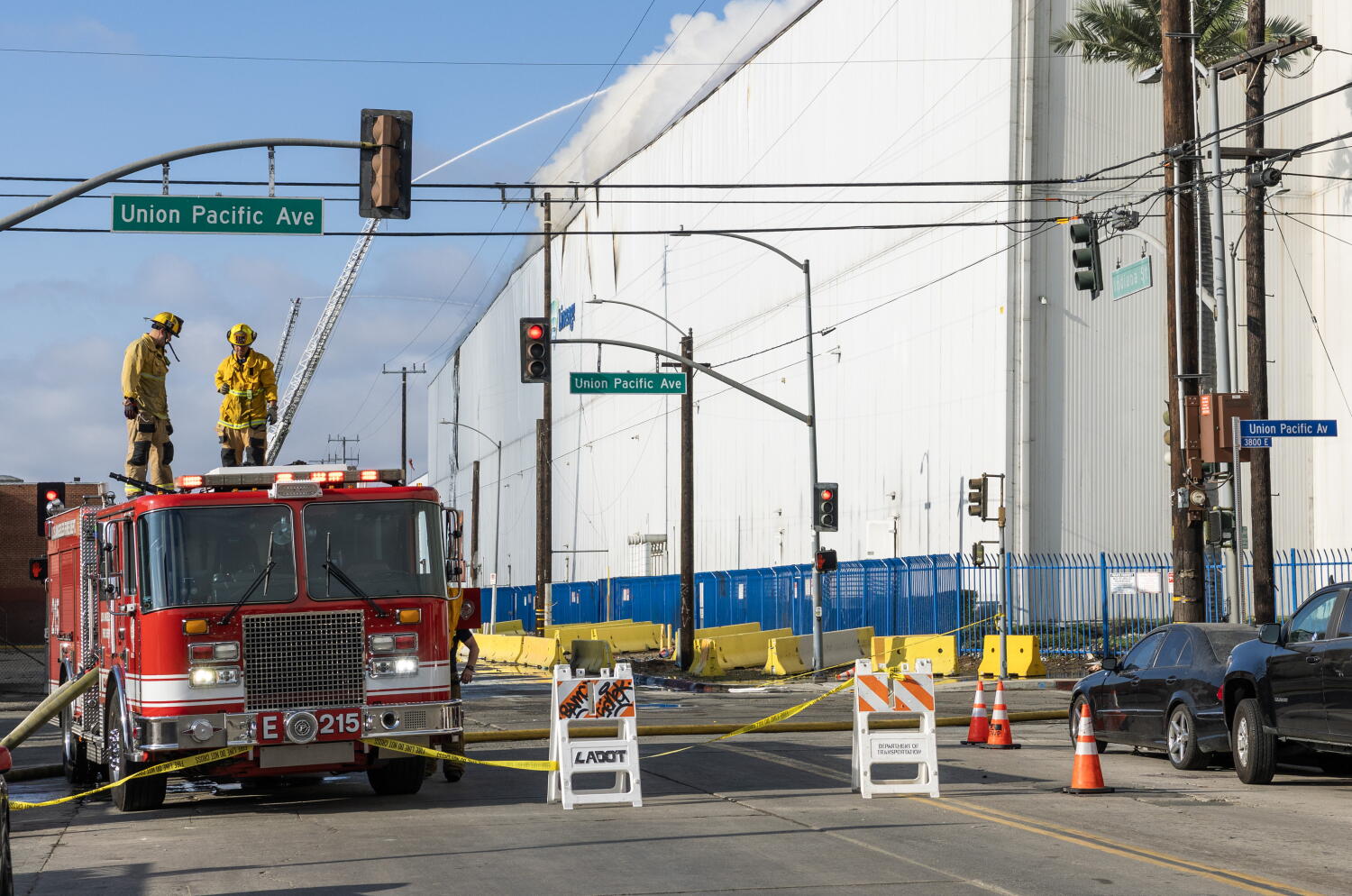
It wasn't just a fire. It was a roar that swallowed the night sky, turning the horizon the color of a bruised peach and sending up a towering column of black smoke so dense it blotted out the stars. For hours, families stood on curbs in their pajamas, watching orange tongues lick at the clouds, clutching their children and wondering silently: What are we breathing right now?
That single catastrophe in Boyle Heights did something rare. It cracked open a door that industrial operators had spent decades keeping firmly bolted shut. It forced state lawmakers to look past the neat, sanitized zoning maps in air-conditioned Sacramento boardrooms and witness the messy, dangerous reality of heavy industry jammed up against elementary schools and apartment buildings.
We have lived for generations under a strange, permissive hypnosis. We assume that if a business is operating, someone must have checked it. Someone must have ensured that the drums of solvent aren't leaking into the soil, that the outdated wiring won't spark a disaster, and that the distance between a volatile chemical yard and a backyard playground is measured in safety rather than convenience.
That assumption is a ghost story we tell ourselves to sleep better at night.
Consider what happens next when the smoke clears and the TV cameras pack up. The politicians arrive in tailored suits, shaking hands and speaking in grave tones about accountability. But accountability has a short memory in the halls of power. Or at least, it used to.
Following the inferno, state lawmakers didn't just issue polite wrist-slaps or recommendations for voluntary compliance. They passed a suite of aggressive new bills targeting industrial operators, fundamentally rewriting the rules of engagement for heavy commercial activity squeezed into dense urban neighborhoods.
These new legislative measures do not merely suggest better behavior. They mandate teeth. They ramp up unannounced inspections, dramatically increase fines for environmental violations that treat penalties as mere "cost of doing business," and give local enforcement agencies the legal muscle to shut down repeat offenders before a spark becomes a catastrophe.
To understand why this matters, you have to look at the math of neglect. For years, operating an unpermitted or dangerously non-compliant industrial site in a working-class neighborhood was a calculated risk. The fine for violating hazardous storage codes was often cheaper than renting a proper waste-disposal facility. The system, in effect, subsidized danger.
(As a hypothetical scenario, imagine a local plating shop trying to save two thousand dollars a month on proper wastewater filtration, choosing instead to illegally dump runoff into the municipal drain. Multiply that by dozens of shady operators across a sprawling metropolis, and you begin to see how an entire community's groundwater and air quality become collateral damage.)
The new laws aim to flip that equation entirely. Now, the cost of cutting corners is designed to bankrupt the violator, not the community's health.
Yet, legislation on paper is like a blueprint for a house that hasn't been built yet. The ink is dry, but the dust is still settling. Industrial trade groups have already begun whispering about overreach, about lost jobs, about the delicate machinery of commerce grinding to a halt because of bureaucratic interference.
It is a familiar refrain. Whenever public safety threatens private profit, the banner of economic ruin is hoisted high.
But talk to Maria. Ask her if a zoning variance is worth the midnight cough that wakes her grandson gasping for air. Ask the families who watched their neighborhood turn into a war zone of ash and water runoff whether tougher regulations are too much to ask.
The struggle in Boyle Heights is not an isolated incident. It is a mirror reflecting a nationwide reckoning. Across post-industrial corridors from the Rust Belt to the ports of Los Angeles, urban planning is colliding with the raw, unfiltered consequences of historical zoning blind spots. For decades, cities grew haphazardly, carving out cheap industrial zones right next to affordable housing developments. Low-income neighborhoods and communities of color became the default shock absorbers for the nation's manufacturing and logistics supply chains.
You cannot simply wave a magic wand and relocate every industrial operator to an empty desert. The economy relies on these gears turning. Trucks need to be repaired, goods need to be warehoused, materials need to be processed.
The true challenge of our current moment is not choosing between clean lungs and commerce. It is forcing modern enterprise to respect the boundaries of human habitation. It is recognizing that a neighborhood is not a sacrifice zone.
The bills passed in the wake of the fire are a start, sharp and overdue. But laws do not enforce themselves. They require vigilance from citizens who are tired of smelling burning plastic with their morning coffee. They require local journalists, activists, and ordinary neighbors to keep shining a relentless, uncomfortable light into the dark corners where oversight used to sleep.
Back in Boyle Heights, the sun is setting behind the silhouette of an auto-dismantling yard. The sky is streaked with brilliant, bruised shades of purple and gold. Maria steps out onto her front porch, sweeping away a thin layer of grey dust that drifted in overnight. She looks down the street, past the chain-link fences and the warning signs, toward the horizon where the fire once raged.
The smoke is gone. But the air still remembers. And for the first time in a very long time, the laws are finally starting to remember, too.