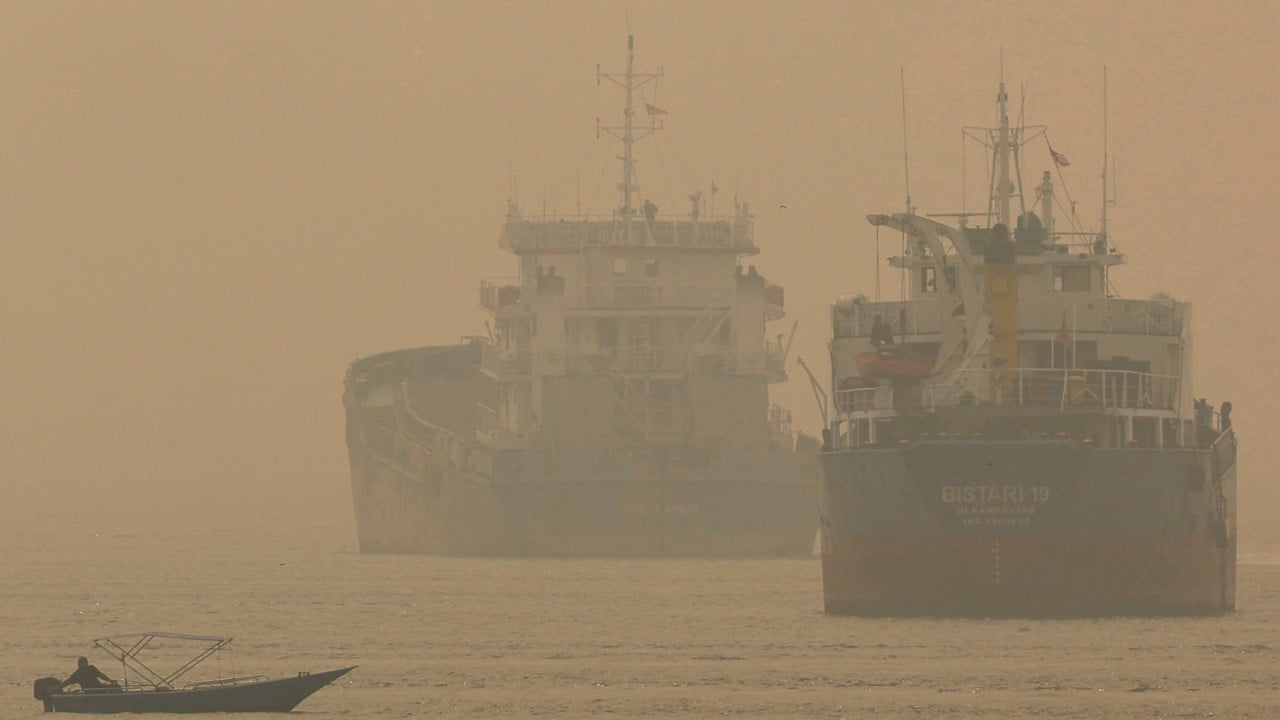
The sky over Kuala Lumpur does not darken all at once. It curdles.
You step out of a condo elevator at seven in the morning expecting the sharp, humid green of a tropical dawn, and instead the air tastes faintly of wet ash and burnt rubber. Across the city, glass towers that normally gleam like silver needles blur into gray smudges. Visibility drops. Car headlights glow like amber ghosts in mid-morning traffic.
I have stood on balconies in Southeast Asia during these seasons and watched parents wipe black soot from school uniforms before their children even walk downstairs. You can taste the particulate matter at the back of your throat before you ever check the air quality index. It feels personal, even when the smoke is drifting across an international border.
Every time the seasonal haze returns to Malaysia, the argument that follows is almost as predictable as the monsoon winds. On one side stands Prime Minister Anwar Ibrahim and his government, insisting that Malaysia has done everything it reasonably can to prepare, protect citizens, and engage neighbors. On the other side stand environmental groups, public health advocates, and opposition critics who look at the gray horizon and say that "everything we can" is still an excuse built for a smaller crisis than the one arriving.
Both claims carry weight. Neither one clears the air.
The Weight of a Gray Horizon
To understand why this debate stings so much, meet Farhana, a composite character modeled after real mothers I have spoken with in Selangor and Penang. Her four-year-old son has mild asthma. When the Air Pollutant Index climbs into unhealthy territory, her morning routine turns into a quiet triage.
She checks the readings on her phone while brewing tea. She closes the louvered windows that normally let cross-breezes cool the apartment, then switches on an air purifier that hums like a small refrigerator in the corner of the living room. If schools are ordered shut or outdoor sports are canceled, she has to juggle work calls while keeping an energetic boy indoors without turning the television into a twelve-hour babysitter.
Farhana does not care much about diplomatic niceties when her son wakes up wheezing at two in the morning. To her, smoke drifting over the Strait of Malacca is not an abstract regional issue. It is an invisible weight pressing on her child's chest.
When leaders say the country has done everything it can, parents like Farhana hear two very different things. They hear genuine effort—cloud seeding, health advisories, school closures, emergency response plans, diplomatic outreach. Yet they also hear a ceiling. If this is the ceiling, what happens when El Niño stretches dry spells longer, or when hotter years turn peatlands into tinderboxes?
Smoke does not respect passports, customs checkpoints, or ministerial press briefings.
It travels on wind currents that care nothing for sovereignty. For decades, Southeast Asia has struggled with transboundary haze driven largely by land-clearing fires and burning peat soils across the region, exacerbated during dry phases by weather patterns like El Niño. When fires burn in neighboring territories—such as Sumatra or Kalimantan—and winds blow northeast, Malaysian cities end up breathing someone else's fire.
That geography creates a maddening political trap. A prime minister in Putrajaya cannot simply send bulldozers or water bombers across another sovereign nation's border without diplomatic friction and legal limits. At the same time, citizens living under a toxic pall expect their own government to shield them.
What "Everything We Can" Actually Covers
Let us be fair to the government's position, because dismissing real measures makes it harder to see where the real gaps lie.
When Anwar and his administration argue that Malaysia has done what it can, they point to tangible interventions. Authorities monitor air quality stations across the country, issue public health warnings, restrict open burning domestically, prepare hospitals and clinics for spikes in respiratory cases, and deploy cloud seeding when atmospheric conditions allow rain to be coaxed from stubborn clouds. On the diplomatic front, Malaysian leaders raise the issue in regional forums and bilateral talks with neighboring governments, pushing for cooperative fire prevention and enforcement.
Those steps are not nothing. In a sudden crisis, emergency coordination matters. Keeping vulnerable people informed, protecting domestic forests from local fires, and pressing neighbors through official channels are real parts of governing.
Still, critics push back with a sharper question. Is crisis management the same thing as maximum effort?
Think of it like a house with a leaking roof. Putting buckets under every drip and mopping the hallway every afternoon is hard work. You can even call it doing everything you can once the rain starts falling. Yet if you never repair the shingles during dry months, or refuse to press the neighbor whose overgrown tree keeps scraping the tiles loose, you are managing symptoms rather than changing the outcome. (Note: That leaky-roof comparison is a metaphor for reactive versus preventive governance.)
Critics in Malaysia argue that the government often treats haze like an inevitable seasonal storm rather than a systemic failure that demands bolder domestic rules and tougher regional accountability.
The Blind Spots Critics Point Out
Why do environmental advocates and critics insist there is more on the table? Because the haze is not just a weather event; it is an economic and regulatory story too.
First comes domestic accountability. Even when transboundary smoke makes up the bulk of severe haze episodes, local open burning and poorly regulated land use can worsen localized air quality. Critics routinely call for stricter enforcement against illegal burning, clearer transparency around air quality data, and stronger support for clean air in schools and public buildings—not just emergency closures after pollution spikes, which leave working parents scrambling and children losing classroom days.
Second comes the supply chain. Palm oil and timber sit at the heart of regional economies, and Malaysian companies or financiers sometimes have ties to land development and plantations across neighboring islands. Critics argue that governments should push harder for strict corporate transparency, supply-chain traceability, and legal consequences when companies tied to regional operations profit from unsustainable land clearing.
Third comes regional diplomacy. Southeast Asia has long relied on cooperative frameworks—most famously the ASEAN Agreement on Transboundary Haze Pollution—that emphasize consultation, mutual assistance, and non-interference. For decades, polite diplomacy has struggled to stop recurring smoke emergencies when dry conditions hit. Critics want Malaysia to take a firmer, more vocal leadership role in pushing for binding accountability, shared fire-prevention funding, and rapid early-warning action rather than waiting until skies turn brown.
Here is the uncomfortable truth that makes this debate so heated. Neither side has a magic switch that turns off regional winds.
I admit that writing about this makes me feel a quiet frustration, because I have watched too many cycles repeat. Year after year, the same headlines appear: unhealthy air readings, warnings for children and the elderly, promises of regional talks, and then—once the rains finally wash the sky clean—the urgency fades until the next dry spell. It is easy to feel cynical when a problem keeps coming back.
Yet cynicism is lazy. Real accountability requires looking closely at where power actually sits.
Between Diplomacy and Duty
Imagine a fictional mid-level civil servant, let's call him Zaki, sitting in a meeting room in Putrajaya as satellite hotspot maps glow red across the region. (This is a hypothetical scenario created to illustrate institutional trade-offs.)
Zaki knows the constraints. He knows how delicate regional relations can be when neighbors are sensitive about sovereignty and economic livelihoods. He knows that pushing too hard in public can sometimes harden positions behind closed doors, while saying too little makes his own government look indifferent to suffering at home. Every memo he drafts walks a tightrope between diplomatic tact and domestic urgency.
That tension explains much of why leaders sound defensive when criticized. From inside government, every move involves trade-offs that outsiders do not always see.
Yet voters are not hired to manage diplomatic delicacy. They are hired—or rather, they elect leaders—to protect public health, safeguard livelihoods, and push the boundaries of what is politically possible. When a leader says Malaysia has done everything it can, critics hear a premature closing of the book. What if there is still more leverage to pull—through trade rules, corporate disclosure mandates, regional coalition-building, or domestic clean-air standards?
Public health experts also remind us that the harm of haze is not limited to days when the sky looks visibly thick. Fine particulate matter—tiny particles small enough to slip deep into lungs and enter the bloodstream—can linger and compound cardiovascular and respiratory strain, especially among children, older adults, and outdoor workers like delivery riders, construction crews, and market vendors.
A delivery rider weaving through traffic in Kuala Lumpur or Johor Bahru does not get to work from a filtered living room when the air turns foul. His lungs are his livelihood.
What Real Leadership Looks Like Under Gray Skies
So who is right when Anwar says Malaysia has done what it can, and critics say it can do more?
Maybe the most honest answer is that both statements describe a piece of the truth while missing the full picture. The government has taken real steps within existing diplomatic and administrative boundaries. Critics are right that existing boundaries have repeatedly failed to spare citizens from recurring smoke.
Moving forward takes more than trading blame every time the wind shifts. It takes refusing to treat recurring haze as fate. It means pairing immediate protection—like better indoor air standards for schools and clinics and clear support for outdoor workers—with long-term pressure on unsustainable land practices and stronger regional cooperation before fires spiral out of control.
Hard problems rarely yield to slogans. They yield to persistence, transparency, and the courage to admit when past methods are no longer enough.
Out on the street, a child pulls a surgical mask up over a small nose, looks past the blurred silhouettes of familiar towers, and asks why the sun looks like a pale coin behind a curtain of smoke.


