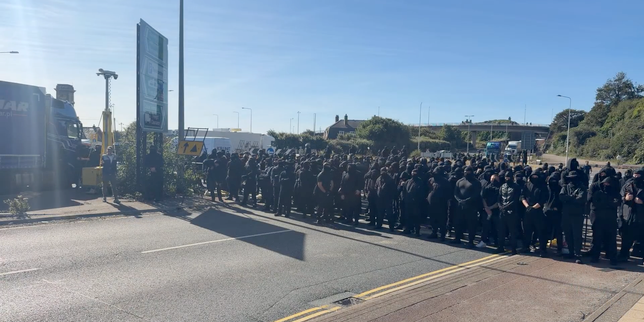
The media machine loves a floating crisis. Every single week, headlines scream about the Channel crossings, treating a few dozen rubber dinghies as an existential threat to the British state. The lazy consensus from mainstream commentators follows a predictable script: immigration numbers fluctuate, the extreme right seizes the panic, and politicians scramble to look tough on borders.
It is a comfortable narrative because it reduces a sprawling, complex systemic failure into a simple visual of a crowded inflatable boat. It gives talking heads something to debate over morning coffee. It also happens to be completely wrong about what is actually driving public anger and political paralysis in the United Kingdom.
Stop looking at the water. The real crisis is happening on dry land, and blaming the small boats is the oldest political sleight of hand in the book.
The Geography of a Manufactured Panic
Let us look at the actual mechanics of this panic. When immigration numbers drop in certain categories—as official data frequently shows—the political narrative pivots immediately to maritime arrivals. Why? Because an inflated sense of invasion is politically useful. It creates a perpetual state of emergency where normal governance is suspended in favor of performative legislation.
I have spent years watching policy analysts dissect migration patterns, and the disconnect between the political theatre and economic reality is staggering. Governments cycle through rhetoric about "stopping the boats" the way bad executives blame external market forces for poor quarterly earnings. It shifts accountability away from domestic administrative incompetence, crumbling infrastructure, and decades of underinvestment in public services.
If you convince the electorate that every hospital waiting list and housing shortage is caused by a man stepping off a dinghy in Dover, you never have to explain why local councils are bankrupt or why housing policy has been broken since the nineties.
The Economics Nobody Wants to Admit
Let us talk about the labor market, because this is where the conventional narrative completely collapses under the weight of basic math.
The UK economy relies on a flexible, often undocumented or precarious workforce to keep entire sectors functioning. Agriculture, hospitality, social care, and logistics would grind to a halt overnight without migrant labor. Yet, the political class maintains a bizarre doublethink: they demand stricter border enforcement while businesses quietly panic over severe labor shortages.
To understand why the small boats obsession persists, you have to look at who benefits from the distraction. A hyper-fixation on border security allows governments to avoid making hard choices about productivity, training domestic workers, or reforming wage structures. It is much easier to pass symbolic laws that sound tough on television than it is to overhaul an entire economic model built on cheap labor.
The extreme right thrives on this exact dynamic. By keeping the focus exclusively on unauthorized maritime arrivals, they set the terms of the national debate. They frame the issue as an invasion rather than a symptom of global displacement and broken asylum processing systems. And mainstream politicians, terrified of losing populist ground, chase them down that rabbit hole, adopting the same framing while offering marginally different enforcement mechanisms.
Dismantling the Asylum Backlog Myth
A common question pops up in every policy forum: Why can the state not simply process claims faster and deport those who fail?
The premise sounds logical, but it ignores the deliberate bureaucratic bottlenecking built into the system over the past decade. Legal aid for asylum seekers was systematically gutted. Decision-making centers were underfunded, leading to catastrophic backlogs where tens of thousands of people sit in limbo in hotels across the country at astronomical taxpayer expense.
This is not an accident. A functional, efficient processing system would resolve claims quickly, granting status to those with legitimate fears and returning those without. But a functional system ruins the aesthetic of perpetual crisis. Politicians do not want a quiet, efficient administrative process; they want a villain to campaign against.
The contrarian truth is uncomfortable for both the left and the right: the current state of affairs persists because powerful interests benefit from the chaos. The private contractors running detention centers and asylum accommodation make millions from the backlog. Politicians get a reliable wedge issue for election cycles. Extremists get a recruiting tool.
The Real Cost of Looking the Wrong Way
When public debate is hijacked by the theater of small boats, real policy failures go unaddressed.
Infrastructure spending is paralyzed. Regional inequality deepens. The legal framework surrounding international human rights is chipped away piece by piece, creating dangerous precedents that affect far more than just asylum seekers.
If you want to fix the system, you have to abandon the lazy consensus that a few thousand people in small boats are sinking the British state. They are not. They are merely the canaries in a coal mine of institutional decay.
Stop asking how to stop the boats for a moment and ask why the political establishment is so desperate to keep you looking at the water while they pick your pocket on land.