Silence.
In a city of nearly eight million people, true silence is rare, yet that is always what precedes it—a sudden, inexplicable drop in the ambient hum of air conditioners and distant highway traffic just before the glass begins to vibrate. Then comes the sound that rattles the fillings in your teeth and turns the morning coffee in your cup into concentric ripples of panic. Read more on a similar subject: this related article.
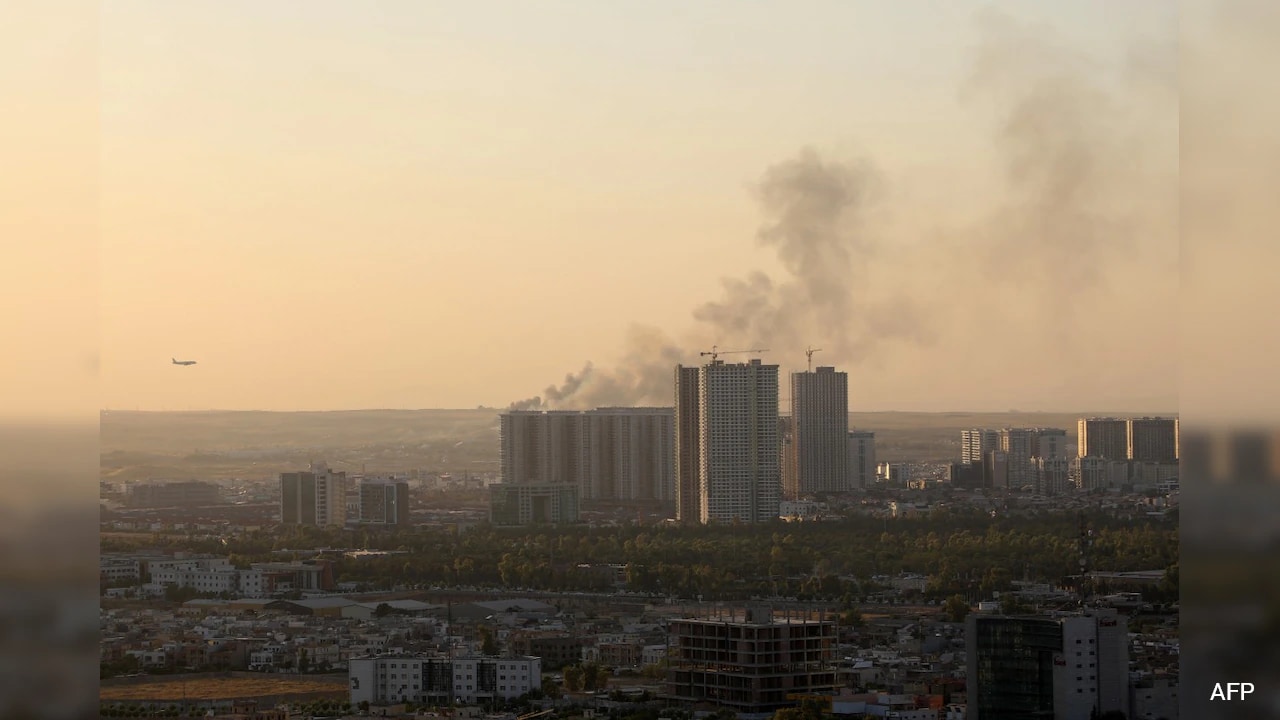
When reports broke of an extremely loud explosion in Saudi Arabia’s capital of Riyadh, accompanied by a plume of dark smoke rising near the perimeter of King Khalid International Airport, the global news cycle reacted with its usual mechanical efficiency. Wire services spat out three-sentence alerts. Social media feeds flooded with shaky vertical videos filmed from apartment balconies and moving cars. Financial algorithms twitched, briefly nudging oil futures by fractions of a cent before settling back into their daily grooves. To someone scrolling through headlines over breakfast in London, New York, or Singapore, the incident was little more than a fleeting blip—a headline about a loud bang near an airport in the Middle East, quickly buried beneath celebrity gossip and quarterly earnings reports.
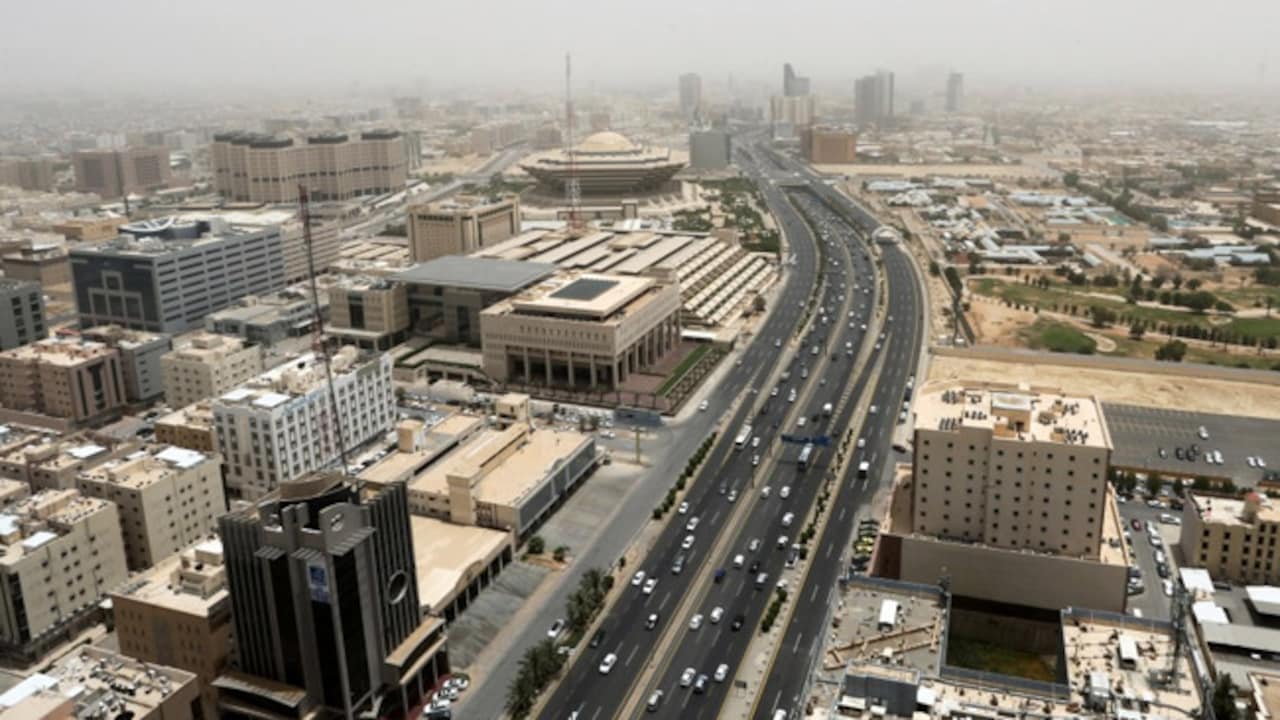
That cold detachment is a luxury reserved for distance. On the ground, inside the glass-and-limestone sprawl of Riyadh, a sound like that does not vanish when you swipe to the next story. It lingers in the chest. It alters the geometry of an ordinary afternoon, turning an international transit hub—a place defined by reunions, business trips, and the mundane bureaucracy of baggage claims—into an immediate question mark. Further analysis by Associated Press delves into related views on this issue.
The Anatomy of a Shockwave
To understand what happens when an unexplained blast echoes near a major international airport, consider a hypothetical scenario grounded in the everyday reality of modern aviation hubs. Picture a traveler named Tariq—not a real individual from the flight manifests, though his experience mirrors that of thousands of passengers who pass through Riyadh every single hour.
Tariq is sitting in Terminal 5, nursing a lukewarm espresso while waiting for a domestic connection to Jeddah. He is checking emails on his phone, mildly annoyed that his flight is delayed by twenty minutes. Outside the floor-to-ceiling windows, ground crews in neon vests are loading suitcases onto a wide-body jet under the bleached white glare of the Arabian sun. Everything in this environment is engineered to project absolute predictability. Airports are cathedrals of routine; we surrender our shoes, our liquids, and our autonomy to security checkpoints precisely because we trust the invisible shield surrounding the tarmac.
Then the concussion wave hits the terminal facade.
It is not a sharp crack like a firework, nor the rolling rumble of thunder. A high-energy acoustic wave feels physical, like an invisible heavy hand pressing flat against the glass walls and your own ribcage simultaneously. In that split second, the brain does not process geopolitics, air defense batteries, or industrial accidents. It processes only the sudden violation of safety. Heads snap toward the windows. The low murmur of duty-free chatter dies instantly. Across the tarmac, beyond the perimeter fencing where the desert scrub meets the asphalt, a column of dark smoke begins to unspool against the pale sky.
Within sixty seconds, every smartphone in the terminal lights up with the same frantic question: What just happened?
This is the exact moment where the gap between official information and human anxiety yawns widest. In the immediate aftermath of an explosion near critical infrastructure, verified facts move at the speed of investigation, while fear moves at the speed of fiber-optic cables. Authorities must confirm whether the sound originated from an intercepted aerial threat, a mechanical failure at a nearby facility, a fuel depot incident, or routine military exercises that echoed unexpectedly due to atmospheric conditions. Each of those possibilities carries wildly different implications for the people standing inside that terminal—and for the millions living in the neighborhoods surrounding the airport.
The Invisible Web Above the Desert
Why does a plume of smoke near Riyadh’s airport trigger such immediate international tremor? Because King Khalid International Airport is far more than a local runway. Located roughly thirty-five kilometers north of central Riyadh, it sits at the geographic and economic heart of Saudi Arabia’s massive transformation.
Over the past decade, Riyadh has been aggressively reshaping itself from a conservative administrative capital into a global crossroads for finance, tourism, and logistics. Billions of dollars have been poured into transforming the city into a rival to Dubai and Doha—a place where international executives fly in for morning meetings and depart by evening, and where global supply chains converge. An airport is the literal lungs of such a metropolis. When smoke rises near its perimeter, it threatens the fragile psychological contract that keeps global commerce flowing: the assumption of uninterrupted stability.
Think of modern air travel as a high-wire act performed thirty-five thousand feet above the ground, supported by an intricate, invisible net of radar, satellite telemetry, diplomatic agreements, and perimeter security. Most of the time, passengers never notice the net. We complain about legroom, stale pretzels, and boarding groups while taking for granted the staggering choreography required to keep hundreds of metal tubes moving safely through contested skies.
When an explosion shatters that illusion, we are suddenly forced to look down.
Historically, Riyadh has lived with this tension more intimately than most major capitals. Situated on a vast plateau in the center of the Arabian Peninsula, the city has long been insulated by distance from the coastal borders, yet modern aerospace technology has erased traditional geographic buffers. Over the last several years, residents of Riyadh have occasionally been jarred awake by the deep, resonant thuds of Patriot missile batteries intercepting incoming drones or ballistic projectiles high in the stratosphere—events that produce deafening sonic booms and trails of white smoke across the night sky, even when the physical debris falls harmlessly into uninhabited desert sands. At other times, loud blasts reported by residents have turned out to be entirely terrestrial: industrial fires, transformer explosions, or construction demolitions amplified by temperature inversions in the dry desert air.
Yet to the ear of a parent walking their child to school, or a taxi driver merging onto the airport highway, the acoustic signature of a disaster and the acoustic signature of a successful defense sound remarkably similar. Both rattle the windows. Both send smoke curling into the horizon. Both force an involuntary flinch.
Living in the Information Vacuum
If you have ever stood in a crowded room when a fire alarm goes off and nobody moves because nobody knows if it is a drill, you understand the peculiar paralysis of the modern breaking-news event.
In the first half-hour after the blast in Riyadh, witnesses described the sound as "extremely loud"—a phrase that captures both the intensity of the noise and the complete absence of context. In that vacuum, rumors breed with astonishing speed. Within minutes of the first smoke sightings near the airport, unverified accounts circulated online claiming everything from runway strikes to commercial aviation disasters. Nervous relatives abroad began calling family members in Riyadh, their voices tight with panic, relaying rumors they had just read on their screens to people who were standing five miles from the scene and still trying to figure out why their car alarms were blaring.
This is the hidden psychological tax of living in an era of hyper-connected uncertainty. There is an honest vulnerability in admitting how disorienting those minutes truly are. Even seasoned observers, analysts who spend their lives tracking regional security and aviation telemetry, find themselves staring at grainy footage, trying to judge wind direction from the angle of a smoke plume or estimating distance by counting the seconds between a flash and a rumble. Nobody has the full picture in minute five. Anyone claiming they do is selling certainty they do not possess.
What makes these moments even heavier is how quickly the world demands a return to normalcy. Flight tracking data in the aftermath of such incidents almost always tells a remarkable story of resilience—or stubbornness, depending on how you view it. Planes in holding patterns eventually receive clearance to land. Ground crews resume loading luggage. Terminal announcements return to their soothing, multilingual cadences, reminding passengers not to leave their bags unattended.
On paper, the disruption looks negligible. A few delayed departures, a brief spike in local emergency dispatches, a handful of dramatic photographs captured against the desert horizon. Life resumes its relentless forward march because cities of eight million people cannot afford to pause for long.
The Weight of a Single Sound
Consider what happens next, long after the smoke dissipates into the upper atmosphere and the news tickers move on to another crisis in another time zone.
For the people on the ground, the event does not end when the official statement is released or when the airport operations return to schedule. It settles into the background hum of daily life as a subtle shift in awareness. For weeks afterward, a slammed heavy door in an underground parking garage makes people pause half a second longer than usual. The distant rumble of a low-flying cargo plane banking toward the northern runways draws eyes upward toward the sky.
We tend to measure the impact of dramatic news events by physical damage—by shattered concrete, halted flights, or disrupted supply chains. When those metrics remain low, we label the incident minor and file it away. That ledger misses the most human part of the equation. It ignores the quiet recalibration that occurs inside ordinary people every time the sky splits open with an unexpected roar, reminding them just how thin the boundary truly is between a routine Tuesday afternoon and the unknown.
The smoke over Riyadh eventually thinned, carried away by the dry desert wind until the horizon looked completely unchanged, leaving behind nothing more than a lingering scent of scorched air and a thousand unanswered glances aimed toward the sky.