Silence.
That is the first thing you notice when a nation stops breathing, not the wail of sirens or the murmur of a crowd, just a heavy, suffocating stillness that settles over stone plazas and sunlit avenues like dust after an earthquake.
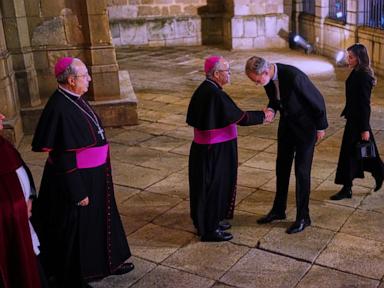
On a crisp morning in Spain, that silence gathered inside a cathedral, draped over sixty-nine wooden caskets and the bowed heads of thousands who came to say goodbye to strangers who felt like kin. A state funeral is a strange, solemn choreography of grief. Black suits. White lilies. The slow, measured tread of pallbearers carrying the weight of an unimaginable failure on their shoulders. Official bulletins call it a tragedy, tallying the dead with the cold precision of an accountant closing a ledger—sixty-nine souls lost in a high-speed rail crash that tore through the countryside and shattered the quiet certainty of modern European travel.
Numbers lie by omission. When you read "sixty-nine killed," your brain processes a statistic, a grim headline scrolled past over morning coffee before you check the weather or answer an email. You do not see the half-packed suitcase left open on a bedroom floor in Seville, or the unread text message glowing on a shattered screen in the tall grass beside a twisted steel bogie.
The Architecture of Trust
To understand why this particular loss feels like a fracture in the national psyche, you have to understand what the high-speed train means to Spain.
For decades, the Alta Velocidad network has been more than steel rails and overhead catenary wires. It has been the circulatory system of a modern democracy, a triumph of engineering that shrank a vast, mountainous peninsula into a neighborhood. You step onto a sleek, aerodynamic carriage in Madrid with a paper cup of espresso, watch olive groves blur into impressionist streaks of silver and green outside tinted glass, and step off in another city before your coffee has gone cold.
Think of a commercial airliner cruising at thirty-five thousand feet. You accept a quiet bargain every time you fasten your seatbelt: you surrender total control of your survival to physics, maintenance logs, and the vigilance of people you will never meet. High-speed rail asks for that exact same surrender, except it wraps it in the deceptive comfort of the ground. Because the wheels stay kissed to the earth, we forget we are hurtling through space at three hundred kilometers an hour. We unbuckle. We walk to the café car. We let our children sleep with their heads resting against the windowpane.
Consider a hypothetical passenger—let us call her Elena, a twenty-nine-year-old architect traveling south to finalize drawings for a coastal library. In our imagined reconstruction of that morning, she sits in Coach 4, Window Seat 12A, her laptop balanced on the fold-down tray, reviewing load-bearing calculations while sunlight flickers through the passing trees. She is not thinking about signaling protocols, axle fatigue, or braking distances. Why would she? Every schedule posted on the departure board is a silent promise signed by engineers, regulators, and ministers: We have done the math. You are safe.
At three hundred kilometers an hour, physics does not negotiate. A train moving at that velocity carries the kinetic energy of a small meteor, and when something goes catastrophically wrong—a misaligned switch, a sudden obstruction, a failure in the invisible digital handshake between track and locomotive—there is no margin for human reflex. A driver has less than two seconds to comprehend an anomaly before steel meets steel, before momentum turns comfort into chaos.
Beneath the Black Ribbons
Walk outside the cathedral doors after the bells stop tolling, and the air smells of incense, damp wool, and diesel exhaust from the idling motorcades. Inside, dignitaries in dark coats offered measured words of solidarity, promising thorough investigations and unwavering support for the bereaved. Royal heads bowed. Flags hung at half-mast from municipal balconies across every autonomous community, from the misty coasts of Galicia to the sun-baked squares of Andalusia.
Grief, when institutionalized by the state, wears a dignified mask. Yet anyone who has ever sat in the sterile waiting room of a municipal morgue, clutching a plastic bag containing a loved one's scuffed leather wallet, knows that institutional mourning is only the outer shell of a much messier, quieter devastation.
Look closer at the faces in the front pews. You see a grandfather gripping the wooden rail until his knuckles turn the color of chalk, his eyes fixed on a framed photograph resting atop a flag-draped coffin. You see two brothers leaning against each other, neither crying, both wearing the hollow, stunned expression of men who walked into a nightmare on a Tuesday afternoon and have not yet found the exit.
I remember standing on a rain-slicked platform in northern Spain years ago, waiting for a delayed regional train just weeks after another rail disaster had dominated the front pages. Nobody looked at their phones. Every single person on that concrete platform stood three paces back from the yellow safety line, staring down the empty tracks with a shared, unspoken dread. When the headlights finally pierced the fog, the collective flinch of fifty strangers was visible in the dim station light. That is what a crash steals beyond the lives listed in the obituary columns: it steals the effortless grace of ordinary movement. It turns a routine commute into an act of quiet bravery.
The Invisible Arithmetic of Negligence
Why do these catastrophes keep happening in nations equipped with the finest engineering minds on earth?
The uncomfortable truth, stripped of diplomatic phrasing, rarely points to a single villain twirling a mustache in a control room. Disasters of this magnitude almost always grow out of a slow, silent accumulation of compromises. A deferred maintenance window here. A budget trimmed during a fiscal squeeze there. An alarm system calibrated to chime so frequently that operators learn to mute its urgency, treating a warning light like a barking dog down the street.
Imagine a bridge held up by a thousand identical rivets. If one rivet rusts through, the bridge stands. If ten fail, the asphalt still feels solid beneath your tires. Engineers call this redundancy, and it is the bedrock of modern safety. The danger lies in how human institutions treat redundancy over time. Administrators look at a bridge standing strong with nine hundred and fifty rivets and ask if they really need to pay for the missing fifty this quarter. Everything works—until the exact afternoon when a sudden storm hits at the same moment a heavy freight convoy crosses the span, and the remaining steel discovers it has nothing left to give.
Spain knows this painful arithmetic well. Anyone who remembers the curve at Angrois outside Santiago de Compostela in 2013 knows how quickly national pride in technological speed can curdle into fury over unanswered safety questions. Back then, too, there were black ribbons, solemn state ceremonies, and promises that the lessons written in blood would permanently alter how tracks were monitored and trains were governed.
Yet here the nation stands again, counting to sixty-nine.
When investigators sift through the wreckage—measuring gouges in the ballast, downloading telemetry from crushed black boxes, interviewing dispatchers whose hands still shake when they hold a pen—they are not merely reconstructing a mechanical failure. They are auditing a culture. They are asking whether the pursuit of speed, efficiency, and record passenger numbers quietly outpaced the stubborn, unglamorous work of keeping the rails immaculate.
What Remains When the Cameras Leave
By late afternoon, the television crews begin coiling their cables. The motorcades pull away from the cathedral square, sirens silent, leaving behind heaps of white carnations and handwritten notes taped to iron barricades. Tonight, news anchors will move on to parliamentary debates, inflation figures, and weekend football fixtures. The state funeral will take its place in the digital archive, neatly tagged and searchable.
For the families boarding slow regional buses back to quiet apartments in Madrid, Valencia, Malaga, and small towns whose names rarely make national broadcasts, the ceremony was not a closing chapter. It was merely the first page of a lifelong absence.
There will be sixty-nine empty chairs at Sunday lunches this week. Sixty-nine pairs of shoes sitting neatly by front doors, waiting for feet that will never step through them again. Somewhere in a sunlit kitchen, a kettle will boil for one person instead of two, and the sheer, ordinary quiet of that room will carry more weight than every speech delivered beneath the vaulted stone arches of the cathedral.
Out in the countryside, crews have already cleared the twisted metal, leveled the scarred earth, and laid fresh gravel along the corridor where the coaches left the tracks. Soon, another sleek silver train will glide down that exact stretch of steel at three hundred kilometers an hour, its passengers sipping coffee, scrolling through messages, trusting the ground beneath them to hold.
Watch the glass as it passes, and count the windows.