Politicians and team executives love a good stadium photo-op. They stand side-by-side, flashing choreographed smiles, holding oversized novelty checks, and tossing out numbers so massive they sound like phone digits. The latest case study in this economic theater is Touchdown Kelowna.
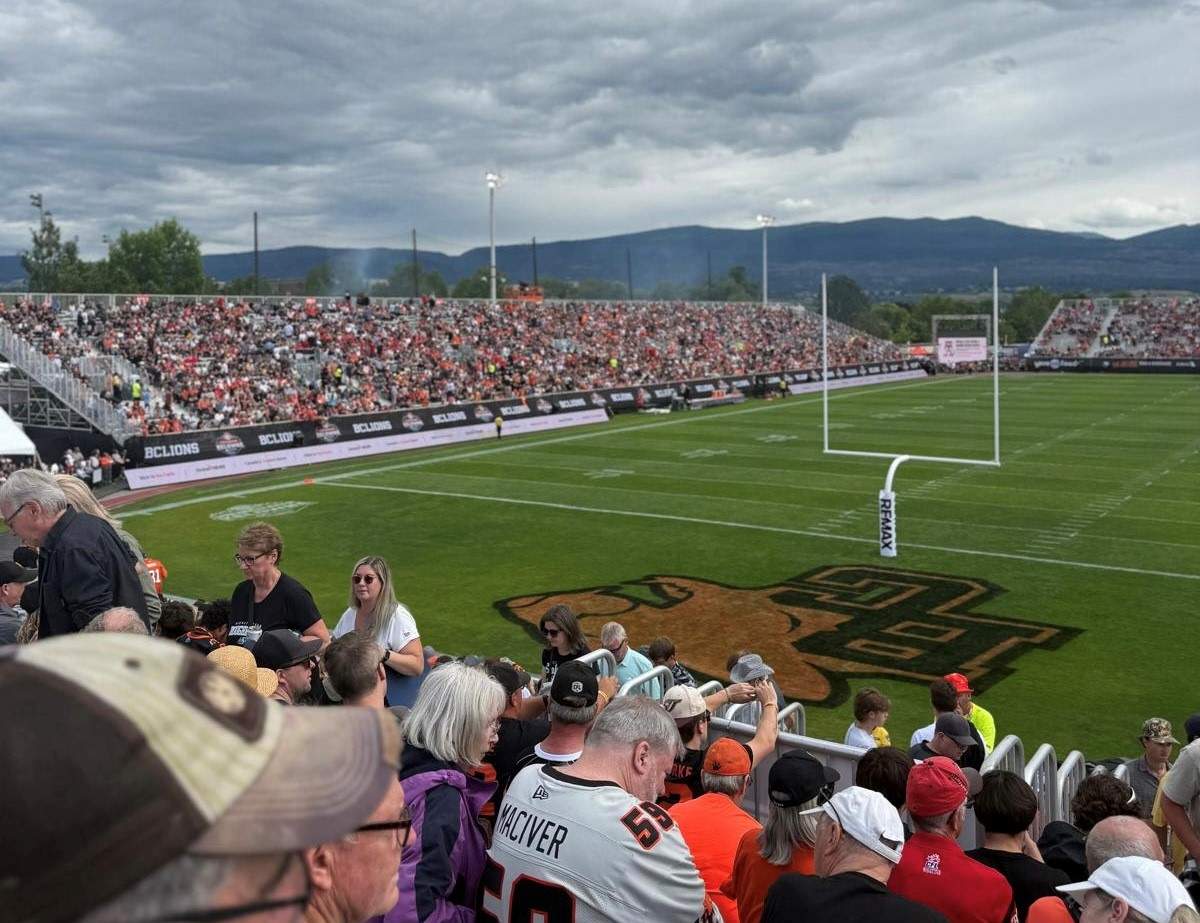
The official narrative is identical to every municipal sports press release written over the last half-century. The BC Lions brought two regular-season Canadian Football League games to the Apple Bowl, wrapped them in a ten-day fan festival, and magically generated sixty million dollars in local economic impact. The provincial government chipped in one million dollars of taxpayer cash to expand the stands, calling it an essential pillar of a plan to double visitor spending. Local business groups cheered a short-term spike in brewery foot traffic.
It is a beautiful fiction. It is also completely wrong.
As someone who has analyzed municipal budgets and event-hosting metrics for decades, I have seen cities repeatedly incinerate capital on the altar of sports tourism. The math behind these mega-event projections relies on flawed economic multipliers, deliberate blind spots, and an outright refusal to track where the money actually goes. Touchdown Kelowna did not enrich the Okanagan. It orchestrated a massive wealth transfer from local taxpayers to a wealthy sports franchise and corporate hotel chains, leaving small businesses with little more than extra garbage to clean up.
The Flawed Multiplier Matrix
Every economic impact study commissioned by an event organizer uses the same trick. They take the estimated number of out-of-town attendees, multiply it by an arbitrary daily spending figure, and then apply a regional multiplier to simulate how that money ripples through the economy.
If a fan buys a forty-dollar steak at a restaurant, the model assumes that forty dollars pays the waiter, who buys groceries, who pays the cashier, who buys gas, turning forty dollars into one hundred dollars of economic activity.
This model ignores basic corporate mechanics. Kelowna is a major tourism hub dominated by national hotel chains, corporate restaurant groups, and multinational fuel brands. When an out-of-town football fan spends three hundred dollars a night on a hotel room during a peak summer weekend, that money does not stay in the Okanagan. It flies straight to corporate headquarters in Toronto, Vancouver, or Chicago. The local economy retains only the minimum-wage slice paid to the housekeepers and front desk staff. The profit is drained instantly.
Economists like Robert Baade and Victor Matheson have spent decades analyzing communities that host major sporting events. Their findings are uniform: the actual net economic impact of these events is either non-existent or a fraction of what promoters claim. The sixty million dollar figure touted by the British Columbia Ministry of Tourism is an unverified projection built to justify a political handout, not a balance sheet.
The Displacement Effect and Summer Crowding
The greatest structural error in the Touchdown Kelowna narrative is the assumption that every visitor at the Apple Bowl represents net-new economic activity. It completely ignores the displacement effect.
Kelowna in late June and early July does not need help attracting tourists. The region is already operating at near-peak capacity. Wine tours are booked, beaches are packed, and hotels are running high occupancy rates without a football festival.
When you dump thirty-five thousand football fans into a market that is already full, you do not add thirty-five thousand tourists' worth of spending. You simply replace high-spending leisure travelers with sports fans.
Consider the mechanics of a typical Okanagan summer tourist versus a visiting football fan. The traditional summer visitor spends a week renting boats, buying local wine, dining at upscale bistros, and exploring regional orchards. The sports fan arrives for a long weekend, buys cheap beer, eats fast food or pub fare, spends hours inside a stadium or fan zone eating corporate-sponsored concessions, and leaves.
By filling hotel rooms with sports tourists, Kelowna systematically crowded out the very demographic that sustains its premium local businesses. I talked to a local boutique winery owner who noted that tasting room bookings dropped significantly during the festival window. Regular affluent tourists stayed away because they wanted to avoid the traffic congestion, rowdy crowds, and jacked-up hotel prices associated with a football crowd. The city traded high-margin organic growth for low-margin stadium volume.
The Leakage of Public Subsidies
Let us follow the one million dollar provincial subsidy. The government claimed this cash was used to temporarily expand seating at the Apple Bowl and improve the stadium experience.
Think about that logic for a moment. Taxpayers handed over one million dollars to build temporary infrastructure for a private sports entity—the BC Lions—to sell tickets that they kept the revenue from. The grandstands were expanded, the tickets sold out, and the gate receipts moved straight into the team’s bank account.
When a city subsidizes a temporary stadium expansion, it is paying the capital expenses for a billionaire's business while capping the public return at zero. The municipal government bears the operational costs: increased police presence, traffic management, sanitation crews, and transit adjustments. These costs are rarely subtracted from the gross economic impact figures presented to the public.
If a city spends hundreds of thousands of dollars in municipal services to facilitate an event that nets a twenty percent increase in local beer sales for four days, that is a catastrophic return on investment. The local independent breweries might see a momentary lift, but they are paying for that lift through their own tax dollars, which were diverted from long-term infrastructure to fund a ten-day party.
Dismantling the Press Release Premise
People often ask variations of the same question: "Even if the numbers are inflated, isn't some tourism better than no tourism?"
This question is fundamentally flawed because it assumes the alternative to a subsidized sports festival is empty streets. Kelowna is not an economically depressed rust-belt town looking for an identity. It is one of the premier destination markets in Western Canada.
When you analyze the opportunity cost of that one million dollar provincial grant and the accompanying municipal resources, the reality becomes stark. Imagine a scenario where that same capital was invested in permanent regional tourism assets—improving public waterfront access, expanding cycling infrastructure through the vineyards, or supporting year-round cultural spaces. Those investments generate recurring dividend payments every single weekend of the year, without requiring ongoing public cash infusions to keep private sports franchises interested.
Instead, the city chose a transient circus. The temporary seats will be torn down, the BC Lions will return to Vancouver, and the Apple Bowl will revert to its standard capacity. The sixty million dollars will remain a ghost in a spreadsheet, completely undetectable in the city’s actual year-end tax collection.
Stop Chasing Stadium Spectacles
The lesson from Touchdown Kelowna is a warning for secondary markets across the country. Stop letting sports franchises use your municipal pride as a lever to extract public funds. They need your market to expand their regional broadcasting footprint and sell merchandise; you do not need their temporary events to validate your economy.
If a sporting event cannot afford to pay the full market rate for its stadium upgrades, municipal policing, and waste management out of its own ticket sales and sponsorship revenues, it is not an economic boost. It is a subsidized hobby.
True economic development is slow, permanent, and structural. It is built on permanent infrastructure that locals and visitors use daily, not temporary grandstands built for a two-game road trip. The next time a politician stands at a podium and promises a massive financial windfall wrapped in a sports jersey, look past the giant novelty check. The money they are playing with belongs to you, and the profits are already leaving town on the next flight out.