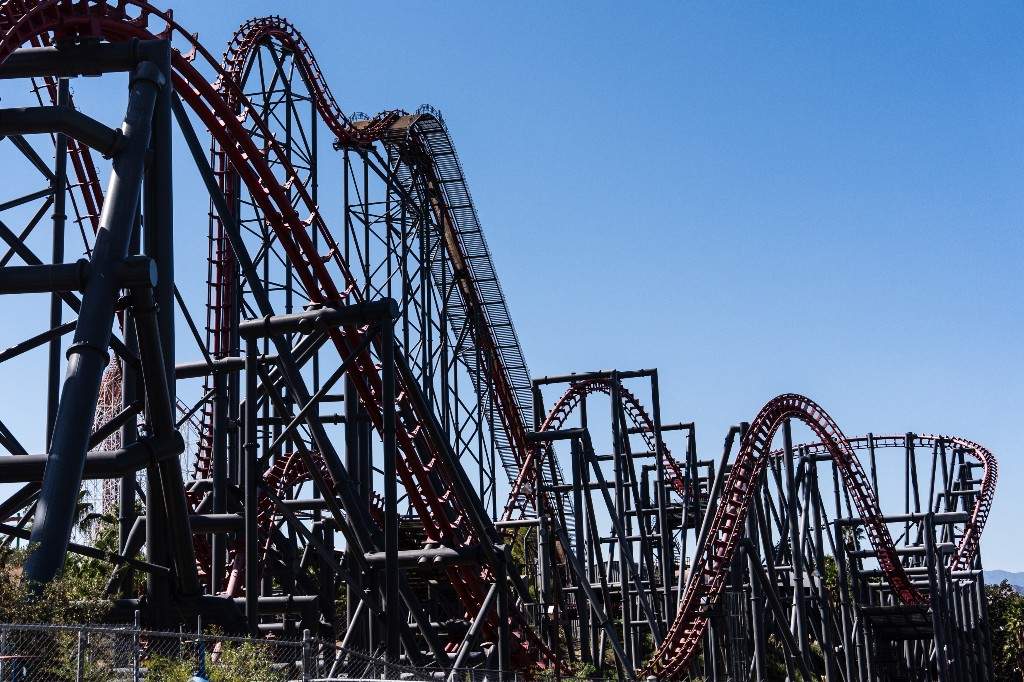
If you spent any time at Six Flags Magic Mountain over the past two decades, you knew the beast. The X2 roller coaster wasn't just another steel track with standard loops and drops. It was a chaotic, sensory-overload machine featuring 4D rotating seats that spun independently of the track layout, dropping riders head-first while blasting onboard audio and firing flame effects. It was loud, it was aggressive, and for thrill-seekers, it was an absolute badge of honor.
Now, the iconic ride is dead.
Six Flags officially announced the permanent retirement of X2 following a mounting wave of severe personal injury lawsuits and mounting pressure over rider safety. While amusement park loyalists mourn the loss of a landmark attraction, the reality behind its closure reveals a terrifying intersection of aggressive engineering and high-stakes litigation.
The Mounting Pressure of Brain Injury Lawsuits
The writing was on the wall long before the official corporate press release hit. Legal representation for injured riders stepped forward with allegations that painted a grim picture of what was happening off the platform. Lawsuits filed against Six Flags Magic Mountain claimed that the violent, whipping motion of the X2 roller coaster caused catastrophic traumatic brain injuries, severe concussions, and closed-head trauma.
Legal filings detailed horrifying scenarios. Multiple riders collapsed or showed signs of acute trauma immediately after pulling back into the station, with victims requiring emergency brain surgery or facing extended comas due to acute internal bleeding. Compounding the public relations disaster was a tragic wrongful-death lawsuit filed by the family of 22-year-old Christopher Hawley, who died from blunt head trauma the day after riding X2. Though that specific case settled out of court just before trial, it opened the floodgates. Attorneys announced that more than 100 people came forward with complaints linked to the ride, turning a beloved fan-favorite coaster into an active legal liability.
The Engineering Reality Behind 4D Coasters
To understand why X2 became such a target, you have to look at how it operated. Built by Arrow Dynamics and originally opened as X in 2002 before getting a massive overhaul and reopening as X2 in 2008, it was the world’s first fourth-dimension roller coaster.
Traditional coasters move along a fixed pitch, roll, and yaw. On a 4D coaster, the seats rotate on a separate axis controlled by extra rails. The result is a ride where you never quite know which way is up. You drop face-down down a 215-foot raven drop while your seat flips backward.
That innovation came with a brutal physical cost. The lateral G-forces and rapid, unpredictable snapping motions placed immense strain on the human neck and brain. While engineers designed restraint systems to keep bodies secure inside the physical shell, they couldn't stop the brain from slamming against the inside of the skull during sudden, violent directional changes. Enthusiasts often joked about needing a chiropractor after a ride on X2, but for a growing number of guests, the toll was far more permanent than a stiff neck.
Corporate Survival Over Nostalgia
Park President Brian Oerding pointed to dwindling guest confidence as a core driver for the permanent shutdown. Theme parks survive on an ecosystem of trust. Parents need to feel confident that buying a season pass means a fun Saturday, not an emergency room visit. When major media outlets begin broadcasting legal press conferences detailing emergency craniotomies and brain bleeds tied to a specific park attraction, the brand damage scales faster than ticket sales.
Even though park officials maintained that the ride routinely cleared standard structural safety tests, risk management math changed. Keeping the ride shuttered indefinitely during ongoing investigations wasn't working, and reopening it would have invited fresh protests, constant media scrutiny, and an endless queue of trial lawyers ready to pounce on the next incident. Dismantling the track was the only clean way to stop the bleeding.
The loss of X2 marks the end of an era for extreme ride design at Magic Mountain. It proves that the era of building coasters that push the human body to absolute structural breaking points is facing a severe reckoning. Thrill seekers want adrenaline, but there's a hard boundary between a good scare and a permanent injury. X2 crossed that line once too often, and now it's history.