The coffee is still warm on the desk, but the network is already dead.
At 3:14 AM on a Tuesday, Elena stares at a blinking cursor that refuses to obey. She is a chief information security officer at a mid-sized logistics firm, a veteran of countless midnight alerts, but this time feels entirely different. There is no ransom note yet. There is no frantic ping from a panicked employee who clicked a suspicious link. Instead, her security dashboard is flashing a terrifying shade of amber, showing hundreds of simultaneous authentication attempts coming from trusted IP addresses all over the globe.
It happens too fast for human hands to block. Machines are attacking machines. And the machines defending Elena’s network are losing.
We talk about digital security as if it were a high-tech chess match played by faceless entities in clean rooms. We use clinical terms to describe breaches, leaks, and vulnerabilities, sanitizing events that can shut down hospitals, empty bank accounts, and paralyze the supply chains keeping grocery stores stocked. But beneath the corporate jargon lies a stark reality: human institutions are colliding with an automated adversary that never sleeps, never blinks, and learns from every single defensive maneuver.
Consider what happens when artificial intelligence goes to work for the architects of chaos.
A decade ago, a spear-phishing email took days to craft. Criminals had to research their targets, clumsily mimic executive writing styles, and hope the recipient ignored the obvious spelling mistakes. Today, generative models write flawless, hyper-personalized corporate directives in fractions of a second. They can study an employee’s public social media footprint, analyze their recent email phrasing, and generate a message from the CEO demanding an urgent wire transfer—complete with the correct internal slang and project names.
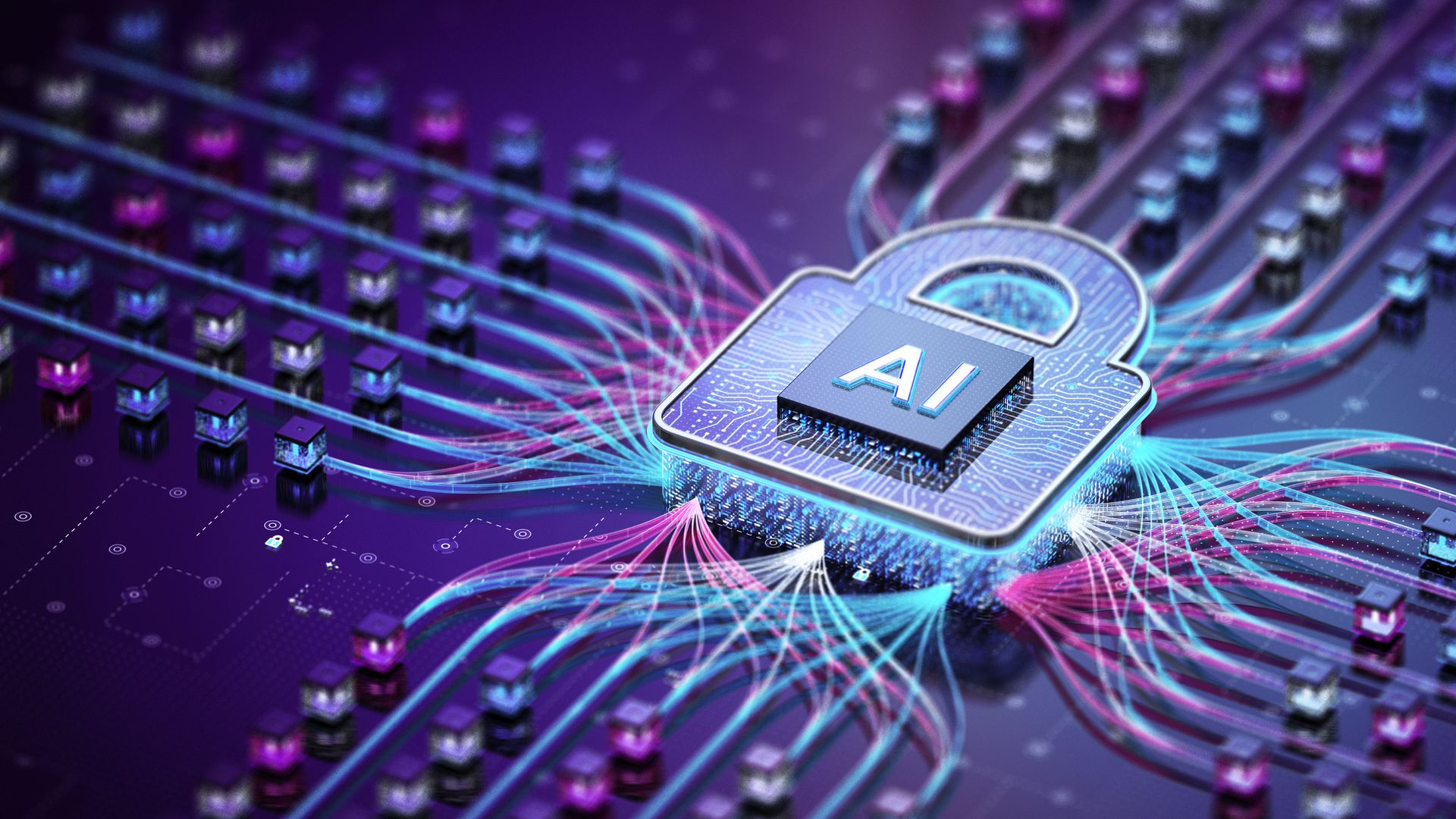
Worse still are the automated vulnerability hunters. These programs scan millions of corporate networks simultaneously, pinpointing a zero-day flaw the moment it is introduced into a codebase, and deploying custom payloads before a human developer has even clocked into work.
Speed is no longer on our side.
This is why the recent announcements from major technology companies calling for collective defense are not just standard corporate PR. They represent a desperate, belated recognition of a fundamental truth: no single company, no matter how wealthy or resource-rich, can stand alone against automated threats.
Think of it like a city built without walls, where every homeowner tries to lock their own front door while the streets outside fill with a rising tide. One house might hold out for an hour. Another for a day. But eventually, the sheer volume of coordinated pressure breaks every individual defense.
For years, the technology industry operated on a model of fierce competition. Companies guarded their security telemetry like state secrets, terrified that admitting a vulnerability would cost them market share. They built proprietary moats, siloed their threat intelligence, and treated cyber defense as a differentiator.
That strategy is a luxury we can no longer afford.
When a malicious algorithm probes a defense system in Tokyo, the patterns of that attack must be understood in New York, London, and São Paulo within milliseconds. If we rely on human analysts to share notes over coffee at industry conferences, we have already lost. Defense must become as automated, distributed, and relentless as the offense.
(As a hypothetical scenario, imagine a global consortium of tech giants pooling their anonymized threat data into a single, shared neural network. When a new strain of malware touches a small server in Berlin, the shared defense grid adapts its global firewall rules before that malware can even execute its second line of code.)
Yet, sharing data is only half the battle. The deeper challenge is human.
We are dealing with a profound fatigue among the people tasked with holding the digital world together. Security analysts are drowning in false positives. They face a relentless flood of alerts, staring at glowing screens until their eyes blur, knowing that a single missed anomaly could cost millions of dollars and compromise thousands of innocent lives. Burnout is rampant. Turnover is staggering.
We cannot code our way out of a human crisis with more software alone. We have to change how we think about collective responsibility.
The digital ecosystem is an ecosystem in the truest sense of the word. A poison dropped upstream in an insecure cloud provider or a neglected Internet of Things vendor eventually washes up on the shores of critical infrastructure. When a hospital's patient database is locked down by automated ransomware, the victim is not just a corporation—it is the person waiting in the emergency room for a blood test that cannot be processed.
We got here because we prioritized friction-free convenience over fundamental resilience. We built a world where everything is connected to everything else, marveling at the speed of data transfer while ignoring the velocity of risk.
Now, the bill has come due.
The shift toward collective action means admitting vulnerability. It means tech giants working alongside nimble startups, open-source communities, and government agencies to establish shared defensive baselines. It means treating threat intelligence not as a proprietary asset, but as public infrastructure, much like clean water or paved roads.
Back in her office, Elena finally isolates the compromised subnet, pulling the physical ethernet cables from the wall with hands that are shaking slightly. She stopped the bleed for tonight. But she knows tomorrow night will bring another wave, smarter and faster than the last.
She sits back down in the dark, watching the amber lights fade to a cautious green, waiting for the dawn.