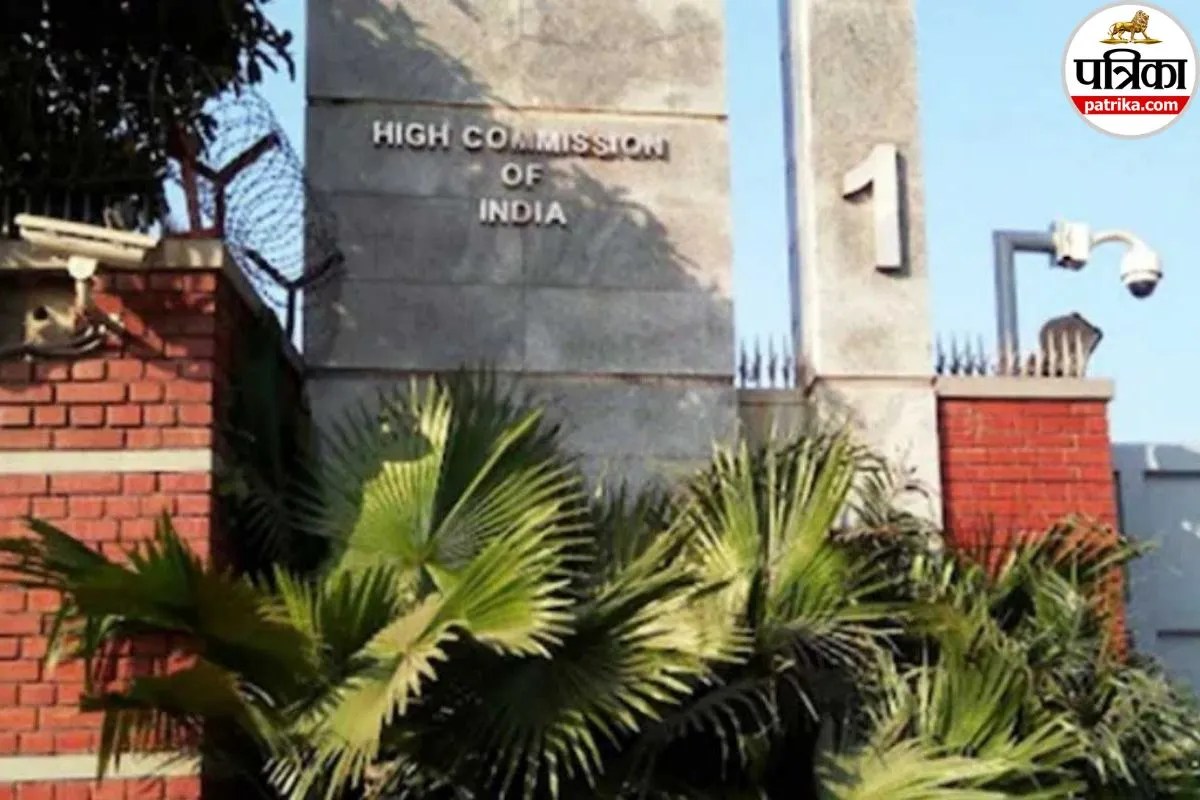
The fan spins with a low, monotonous drone in the heavy heat of Dhaka. It is a sound that everyone who has ever worked a diplomatic posting in South Asia knows intimately. It fills the quiet spaces between secure phone calls, encrypted emails, and the exhausting, polite theater of international relations. But on a Tuesday that should have been entirely ordinary, the silence inside a residential building in the Baridhara diplomatic zone grew too heavy.
An official attached to the Indian High Commission lay dead.
The news, when it finally broke, arrived in the flat, clipped language of police blotters and rushed agency wires. "Suspicious circumstances." "Investigation underway." "No immediate signs of foul play." The words were designed to cool the temperature, to keep the public pulse steady. Yet, for anyone who understands the fragile geography of diplomacy, those dry phrases feel entirely inadequate. They strip away the human weight of what it means to serve your country in a foreign land, and they obscure the invisible stakes that instantly skyrocket the moment a diplomat dies behind closed doors.
The Reality Behind the Secure Gates
To the outsider, the life of a foreign service officer looks like an endless sequence of high-end cocktail parties, crisp suits, and the quiet privilege of diplomatic immunity.
The reality is far more isolating.
Imagine living in a gilded fishbowl. Baridhara is a beautiful neighborhood, heavily guarded, clean, and manicured. It is an oasis in the middle of Dhaka’s beautiful, chaotic, roaring intensity. But an oasis is still an island. When you cross that threshold as an attache or an officer, you carry the weight of your entire nation on your shoulders. Every conversation is calculated. Every casual interaction is weighed for geopolitical subtext. Your home is not just a house; it is an extension of sovereign territory, watched by friendly eyes and scrutinized by unfriendly ones.
When a sudden death occurs within this world, the clock starts ticking at a terrifying pace.
Consider the sequence of events that unfolded when the Dhaka Metropolitan Police were called to the scene. This was not a standard emergency response. A local police officer cannot simply march into a diplomatic residence, snap photographs, and bag evidence the way they would at a neighborhood crime scene. International law, specifically the Vienna Convention, wraps these spaces in a protective layer of sovereignty.
Every step requires a dance of protocol. The local authorities must coordinate with the High Commission. The High Commission must communicate with New Delhi. The family, thousands of miles away, must be notified before the rumors on social media outrun the truth.
The Toll of the Unseen Pressure
We often talk about the casualties of statecraft in terms of soldiers on a border or spies caught in the shadows. We rarely talk about the psychological toll of the bureaucratic frontline.
The individual who passed away was an official dealing with the daily, grinding machinery of bilateral relations. It is a job defined by compounding stress. You are living away from home, navigating a political landscape that can shift overnight, and managing crises that the public never even hears about. The human heart, regardless of how many diplomatic passports it holds, carries these burdens in secret.
When the local police entered the apartment alongside Indian officials, they found a scene that raised immediate questions. There were no obvious signs of a break-in. No shattered glass. No signs of a violent struggle. Yet, the word "suspicious" immediately attached itself to the incident.
In the vocabulary of law enforcement, "suspicious" does not always mean a cinematic conspiracy. Sometimes, it simply means an unnatural end. It means a body found alone, ahead of its time, under a cloud of unanswered questions. It means that the system must pause and rule out every dark possibility before it can accept a simpler, sadder truth.
A History of Shadows
The tension surrounding this event cannot be understood without looking at the map. The relationship between India and Bangladesh is a complex web of shared history, deep cultural ties, and sharp geopolitical anxieties. They share a border that stretches over four thousand kilometers. They share rivers, trade routes, and a volatile political history.
Dhaka is a high-stakes post. Every major global power has a footprint there, watching, waiting, and competing for influence.
When an Indian official dies unexpectedly in Dhaka, it is never just a local news story. The intelligence agencies of multiple nations immediately look for patterns. Is this an intimidation tactic? Is it connected to a breach of security? Or is it a deeply personal tragedy that happened to occur within the radius of a geopolitical hotspot?
The mind naturally leaps to the most dramatic conclusion. We want the story to be a thriller because a thriller has a clear villain and a clean resolution. The truth is often far more haunting. The truth is usually that the machinery of international bureaucracy is indifferent to the fragile health of the individuals who keep it running.
The Search for Certainty
As the investigation moved from the apartment in Baridhara to the autopsy room, the focus shifted to medical science. This is where the narrative must ground itself in cold reality. A post-mortem examination in a case involving a foreign diplomat is a high-wire act. The findings must be flawless. They must satisfy the forensic standards of the host country, the demands of the home government, and the agonizing need for closure from a grieving family.
The initial reports began to lean toward a medical emergency—a sudden, catastrophic failure of the body. A stroke or a massive cardiac event can mimic the suddenness of violence without leaving a single external mark.
But the word "suspicious" lingers like smoke in a room long after the fire has been put out. It lingers because trust is the rarest commodity in international relations. Once the word is uttered, it creates a narrative gravity that is almost impossible to escape.
Think of the family waiting for the body to be repatriated. For them, the geopolitical context matters very little. The grand strategies of New Delhi and Dhaka offer no comfort when a coffin arrives at the airport wrapped in a national flag. They are left with the brutal reality that a loved one went to work for their country and never came home.
The Empty Desk
The day after the discovery, the Indian High Commission in Dhaka had to open its doors again. The visas had to be processed. The diplomatic cables had to be sent. The meetings with Bangladeshi officials had to take place.
That is the most ruthless aspect of diplomacy. The institution does not pause to mourn. The machinery demands that the vacancy be filled, that the continuity of statehood be maintained at all costs.
But in the quiet corridors of the embassy, the atmosphere changes. Colleagues look at each other with a renewed awareness of their own vulnerability. They look at the high walls, the security checkpoints, and the armed guards not just as shields against the outside world, but as barriers that keep them separated from the lives they left behind.
The investigation will eventually release its final report. The official cause of death will be neatly typed onto a document, stamped with official seals, and filed away in an archive. The public will move on to the next headline, the next political crisis, the next shift in global alliances.
Yet, the image that remains is not one of geopolitical intrigue or international scandal. It is the image of a quiet room in Dhaka, where a servant of the state breathed their last, far from home, surrounded only by the silent, indifferent walls of an embassy compound.