Rain doesn't always wash away the dust of history. Sometimes, it just turns it into a sticky, complicated mud that clings to the boots of every diplomat who tries to walk through it.
In the high-ceilinged rooms where the fate of the Middle East is debated, the air is usually thick with the scent of expensive coffee and the static of old grievances. For decades, the map of mediation followed a predictable, if often failing, geometry. You had the Western powers with their heavy footprints, the regional neighbors with their skin in the game, and the ideological outliers who shouted from the sidelines. Among those outliers, Pakistan long held a specific kind of space. It was the "Islamic Brother," the nuclear-armed state with a direct line to the heart of the Muslim world.
But maps change. Tectonic plates shift, not with a bang, but with the quiet scratching of pens on trade agreements.
Recently, the Israeli envoy to India, Reuven Azar, sat down and said something that would have been unthinkable twenty years ago. He didn't just suggest India was a participant in the modern diplomatic theater. He argued that India is a fundamentally better mediator than Pakistan. This wasn't just a bit of flattery for a host nation. It was a cold, calculated recognition of a new reality.
The Weight of the Handshake
Consider a hypothetical negotiator named Arjun. Arjun doesn't carry a holy book to the table, nor does he carry a manifesto of historical victimhood. When he sits down with an Israeli tech mogul in Tel Aviv and then flies to Riyadh to discuss energy infrastructure, he is carrying a ledger.
This ledger isn't just about money. It’s about a rare commodity in the 21st century: multi-alignment.
Pakistan’s position has always been hamstrung by its own internal contradictions. To be a mediator, you must be able to speak to both sides without one side feeling like you are holding a knife behind your back. For Israel, Pakistan isn't a mediator; it is a state that does not recognize its existence. It is a nation whose internal politics are often dictated by a street-level fervor that makes compromise look like treason.
When you cannot recognize the person across the table as a legitimate entity, the "mediation" ends before the water glasses are filled.
India, conversely, has mastered the art of being "the friend of all and the disciple of none." It has managed to deepen a strategic and military partnership with Israel while simultaneously becoming the primary economic anchor for several Arab Gulf states. This isn't just clever politics. It is a structural shift in how power is brokered in the Global South.
The Ghost of 1947 and the Reality of 2026
The shadow of the Partition still looms over the subcontinent, but it manifests differently in the two siblings. Pakistan’s identity was forged in the furnace of religious distinction. That identity, while powerful, acts as a set of blinkers when dealing with the hyper-complex, multi-faith, and post-ideological conflicts of the modern Middle East.
If you are a mediator who viewed the world only through the lens of religious solidarity, you are useless when the conflict involves two Muslim nations fighting over a border, or when a Jewish state is negotiating a trade route with a Sunni monarchy.
India’s strength lies in its messiness.
It is a country that contains a multitude of identities within its own borders. It understands that you can disagree on the divine and still agree on the price of grain. This secular pragmatism—often messy and frustrating at home—becomes a superpower abroad.
The Israeli envoy’s preference for India isn't based on an emotional affinity. It’s based on the fact that India has "skin in the peace."
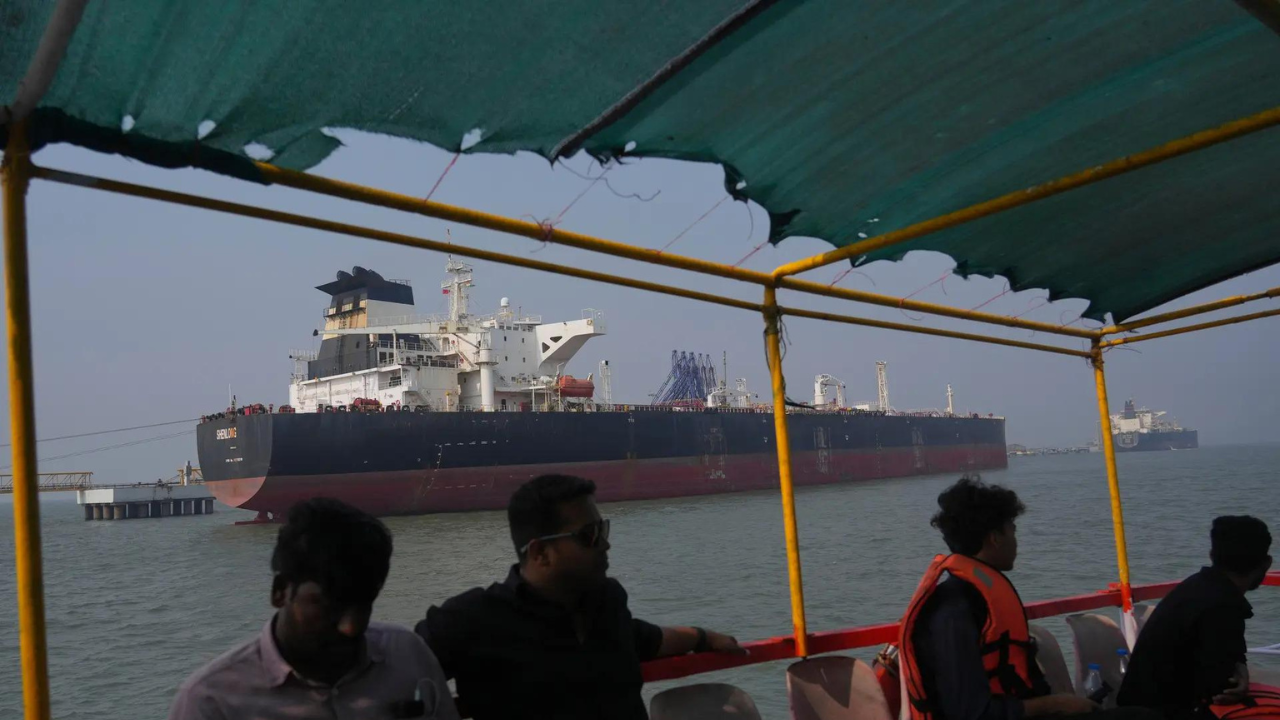
When the Red Sea becomes a shooting gallery for insurgents, Indian trade suffers. When energy prices spike due to instability in the Levant, the Indian middle class feels the squeeze at the petrol pump. Pakistan’s economic instability has, tragically, made it more reliant on the chaos; it seeks aid and leverage through its strategic position. India seeks stability because it has an empire of commerce to maintain.
The Invisible Stakes of the Middle East Corridor
There is a project that rarely makes the front pages but haunts the dreams of every strategist from Washington to Beijing: the India-Middle East-Europe Economic Corridor (IMEC).
This isn't just a railway and some shipping lanes. It is a bypass surgery for the planet’s trade. If this corridor succeeds, it ties the fate of Haifa to the docks of Mumbai and the logistics hubs of Dubai.
In this framework, India isn't just an observer. It is the destination.
Pakistan, for all its geographic potential, has spent decades leaning into the "veto power" of disruption. It has used its geography to block, to negotiate for passage, and to play a role in the "Great Game." But the game has changed. The world is tired of the veto. The world wants the connection.
Reuven Azar’s comments reflect a growing realization in Jerusalem: the traditional mediators are tired. The US is distracted by internal fractures and a pivot to the Pacific. The Europeans are bogged down in the plains of Ukraine. Who is left with the economic heft, the military capability, and the lack of historical baggage to actually move the needle?
The Anatomy of Trust
Trust in diplomacy isn't about liking someone. You don't have to like the person across the table. You just have to believe that they will do what is in their own best interest.
Israel trusts India's self-interest.
They know India wants a stable Middle East to ensure the safety of millions of Indian expatriates working in the Gulf. They know India wants to counter-balance Chinese influence in the region. They know India needs Israeli irrigation and defense technology.
Conversely, the Arab world trusts India because India has never tried to export a revolution or an ideology. India arrives with engineers, not missionaries.
Pakistan’s tragedy is that its primary export for decades was strategic depth—a concept that relied on instability in neighboring Afghanistan and a permanent state of tension with India. In a world that is moving toward hyper-integration, strategic depth is a relic. It is a hole in the ground when everyone else is building a skyscraper.
The Human Element
Let’s look at this through the eyes of a merchant in a small port town. Let’s call him Omar.
Omar doesn't care about the grand speeches at the UN. He cares that his containers are sitting in a port because a drone hit a tanker. He cares that his daughter’s tuition depends on the steady flow of goods.
When Pakistan speaks, Omar hears the echoes of the 20th century—calls for solidarity that don't pay the bills. When India speaks, Omar sees a path to a market of 1.4 billion people. He sees a country that handled the G20 presidency by talking about "One Earth, One Family, One Future" while simultaneously signing billion-dollar defense deals.
That is the "better" that the Israeli envoy was talking about. It’s not a moral judgment. It’s a functional one.
The Breaking of the Old Guard
The shift toward India as a preferred mediator marks the end of the "specialist" era. For a long time, we thought we needed specialists in the Middle East—people who spoke the specific language of that specific pain.
We were wrong.
We need generalists. We need people who understand that a conflict in the Middle East is actually a conflict about energy, technology, food security, and the aspirations of a rising generation that is tired of dying for their grandfathers' mistakes.
India is the ultimate generalist.
It is a country that is simultaneously a developing nation and a space-faring power. It is a country of extreme poverty and extreme wealth. It is a country that is both ancient and brand new. This duality allows it to mirror the complexities of the Middle East in a way that a more monolithic state like Pakistan simply cannot.
The Silence After the Speech
When the envoy finished speaking, there was no uproar. There were no frantic cables sent from Islamabad that could change the momentum. The silence was the most telling part.
It was the silence of an undisputed fact settling into the room.
Pakistan remains a vital player in the region, but its role has shifted from the architect to the gatekeeper. And gatekeepers are only important as long as people want to go through the gate. India is building a whole new road.
As the sun sets over the Mediterranean, reflecting off the glass towers of Tel Aviv and the ancient stones of Jerusalem, the shadow cast toward the East is getting longer. It is reaching past the traditional hubs of power, skipping over the old battlefields of the Indus Valley, and landing squarely on the desks of New Delhi.
The bridge is being built. It isn't made of steel or concrete. It’s made of the quiet, relentless pursuit of a future where trade routes are more sacred than old borders, and where the mediator is the one who has the most to lose if the peace fails.
India is that mediator because India is finally ready to win.