The asphalt does not remember. It takes the weight of a footfall, the crushing tonnage of a semi-trailer, the stuttered roll of a wheelchair, and it gives nothing back. It is a neutral thing, indifferent to what passes over it.
On a Tuesday night in Long Beach, the asphalt took something it could not keep.
Let us speak of the invisible architecture of a city after dark. To the healthy, the ambulatory, the ones who stride across concrete with the arrogant assumption that the earth will rise to meet every step, the street is a corridor. It is a means to get from an open door to a locked one. But lower your perspective by three feet. Sit in the chair. Suddenly, the curb cuts are no longer conveniences; they are cliffhangers. The lighting is no longer a mood; it is survival. The headlights of oncoming traffic are no longer a distant glare; they are horizontal suns pointed directly at your chest.
Long Beach is a grid of palm trees and salt air, a place where the Pacific breeze softens the edges of industrial grit. But on Seventh Street, the grit wins.
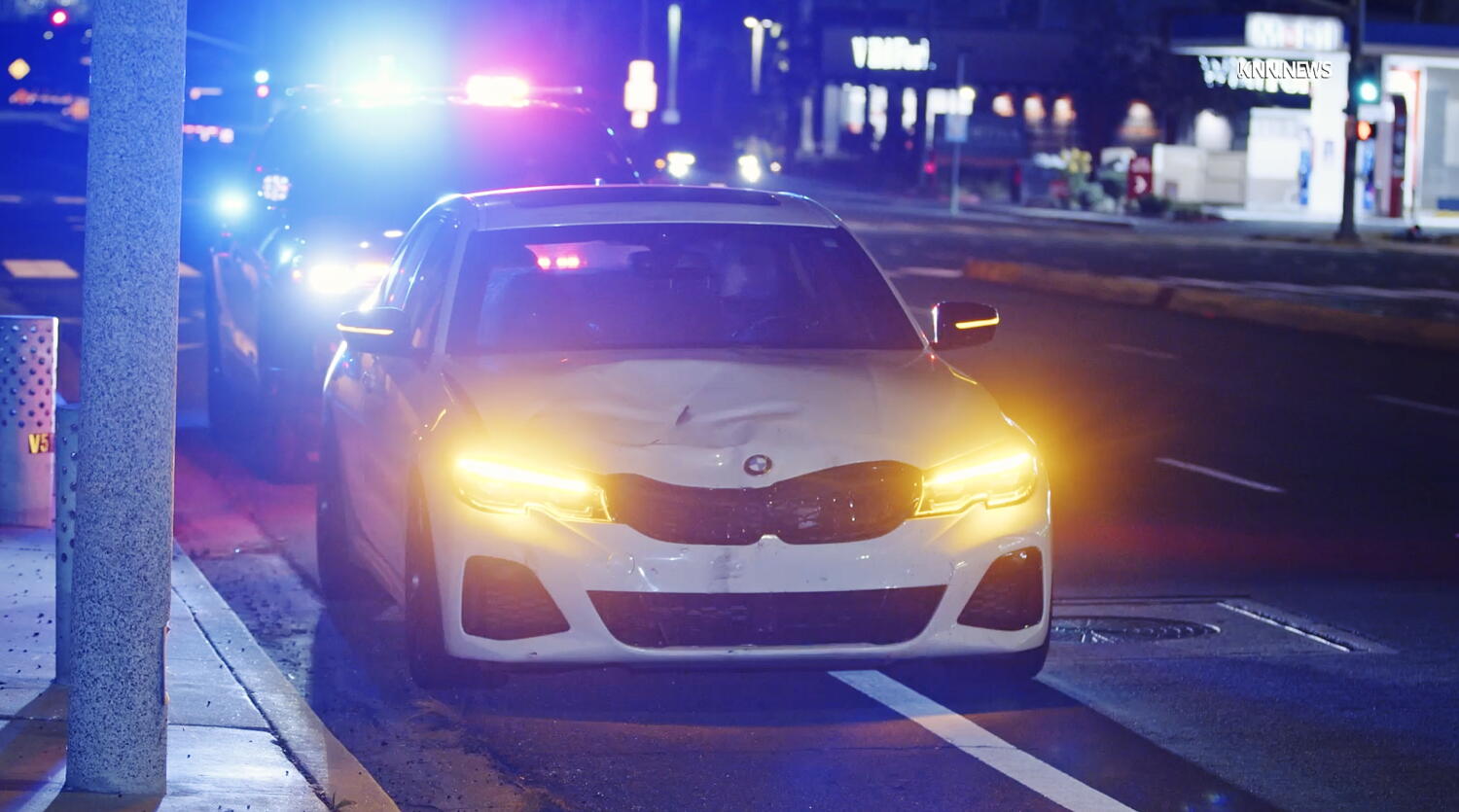
An arrest has been made. That is the phrase the reports use. It is a clean, antiseptic collection of syllables designed to soothe an anxious public. An arrest was made after a man in a wheelchair was struck and killed in a hit-and-run. The authorities arrived. The tape went up, fluttering like yellow caution tape always flutters, snapping against chain-link and signposts in the ocean draft. Investigators pieced together paint flakes, security camera footage, the low-resolution blur of a sedan turning a corner too fast, the red brake lights flaring for a fraction of a second—or perhaps not flaring at all—before the driver pressed the pedal down and dissolved into the grid.
We call these things accidents. That is our first lie.
An accident implies a collision of fate, a meteorological mishap like a sudden squall or a falling branch. What happened on Seventh Street was not weather. It was the product of a calculation made in milliseconds by a human being who decided that the dent in their bumper was more valuable than the breath in another person's lungs.
Consider the physics of vulnerability. When a two-ton machine impacts a pedestrian, the transfer of kinetic energy is absolute. When that pedestrian is seated, lower to the ground, with no capacity to leap, twist, or absorb the blow with the legs, the physics become a tragedy of pure geometry. There is no defense. There is only the metal, the glass, and the dark.
We rarely talk about the life that occupied the chair before the sirens came. We want our news fast, functional, and disposable. We want the headline: Arrest made. We want the checkmark of justice applied so we can scroll on to the weather or the sports scores. But a man lived in that frame. He navigated a world built by people who never once considered what it is like to board a bus with a wheelchair lift that rattles in protest, or to cross a six-lane boulevard during a pedestrian signal timed for someone running a five-minute mile.
Every city has its second-class citizens, though we never sign the paperwork to make it official. They are the ones who move at a different speed. They are the elderly pushing walkers like fragile carts of glass, the parents wrestling strollers through gravel lots, the individuals whose wheels are their legs. To move slowly in a culture obsessed with velocity is to render yourself invisible. And when you are invisible, people feel they can drive right through you and keep going.
That is the true shock of the hit-and-run. It is not the impact itself—though that is horrific enough. It is the aftermath. It is the choice.
To feel a bump beneath your tires, to hear the sickening crunch of fiberglass and bone, and to look in your rearview mirror and press the accelerator harder. What happens inside a human soul at that exact second? What kind of moral anesthesia must a person inject into their own veins to look away from a crumpled heap on the pavement and decide that their evening plans, their insurance rates, their temporary freedom, are worth more than a human life?
We live in an era of total surveillance and absolute detachment. Ring doorbells capture every porch pirate. Traffic cameras log every license plate. Dashcams record the mundane friction of daily commutes. Yet, despite this panopticon of our own making, people still vanish in plain sight. They are hit on thoroughfares designed for speed rather than safety, in zones where civil engineers prioritized the flow of traffic over the beating hearts of the citizens who live beside it.
When the police announced the arrest in Long Beach, the collective sigh of the city was audible only in its silence. Another case closed. Another mugshot flashed across the local news affiliates for thirty seconds before cutting away to a commercial for local dealerships.
We move on. We have to. If we stopped to mourn every broken body left behind by our addiction to convenience and horsepower, we would never leave our houses.
Yet the asphalt remembers, even if it doesn't speak.
Walk down Seventh Street at midnight. Stand at the intersection where the yellow tape used to be. Watch the headlights cut through the marine layer. Notice how the cars drift slightly toward the shoulder when the drivers check their phones. Notice how the pedestrian crossing lights blink with a frantic, meager urgency, giving you barely enough time to clear the crosswalk if your legs are young and strong. Imagine trying to make that crossing when your world is bound by steel spokes and rubber tires.
The man who was hit is gone. The driver is behind bars, facing a ledger of charges that cannot possibly sum up the totality of what was taken. The headlines will fade. The algorithms will shuffle this tragedy down the feed, replacing it with the next outrage, the next sensational local crime, the next distraction.
But the street remains. And the question it asks us every single day, whether we are walking, rolling, or driving, is terrifyingly simple.
Who are we when no one is watching?
The answer is written in the tracks we leave behind, long after the sirens have gone quiet and the street has cleared of everything except the dark.



