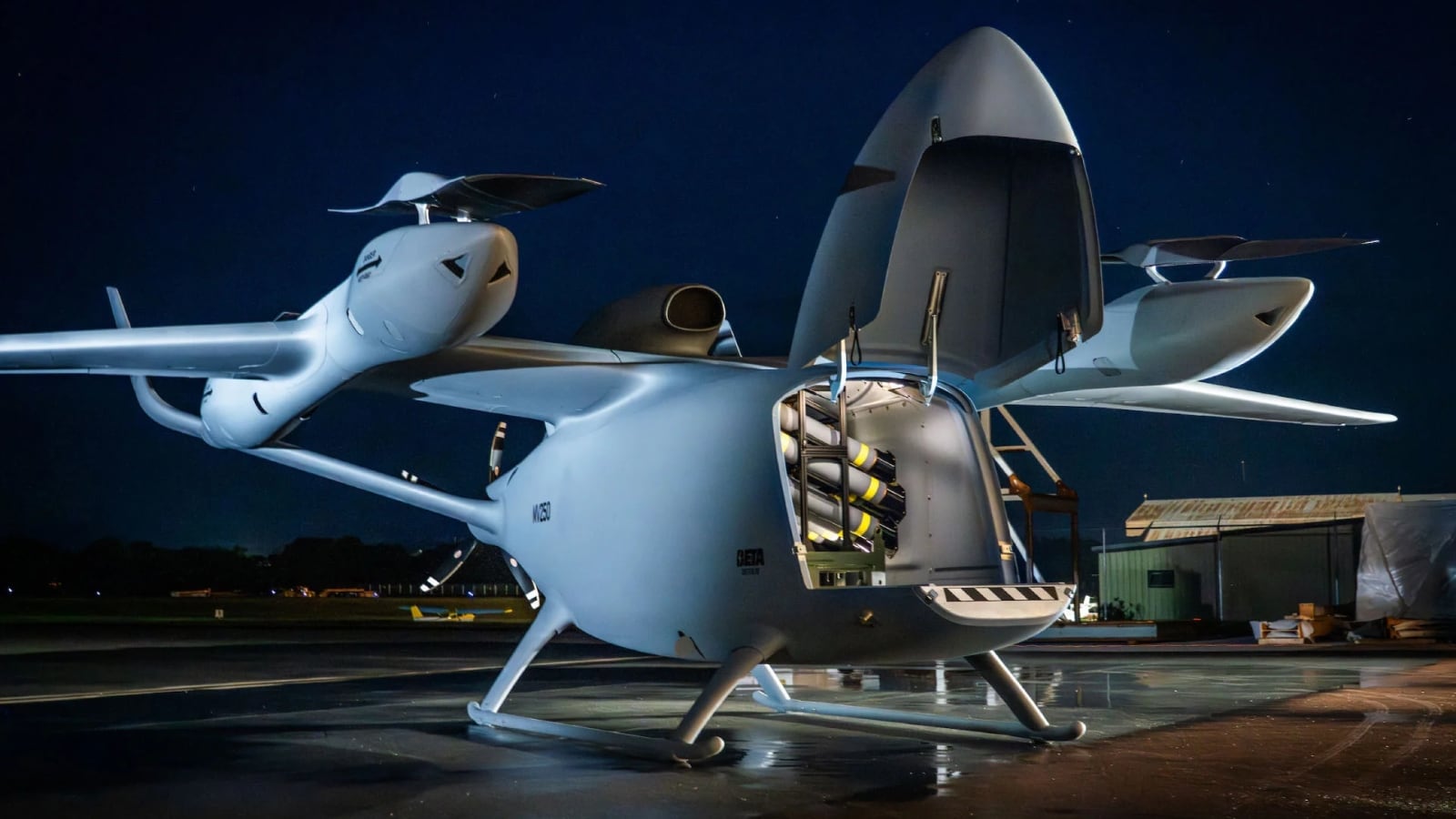
The Roar That Went Missing
Stand at the end of a military tarmac during a heavy transport launch, and your bones will shake. The air thumps against your lungs. Jet fuel burns your throat with a sharp, kerosene tang that lingers long after the tail fins disappear into the haze. For generations, military logistics meant noise, heat, and sheer, brute-force volume.
Then came a quiet morning in Vermont.
An aircraft took off into the cold air. It carried nearly a ton of deadweight in its belly—907 kilograms, to be exact. It flew past county lines, across state borders, tracing a line through the sky that stretched over 2,400 kilometers.
Inside the cockpit, no one was breathing.
There was no human hand adjusting the throttle. No flight officer scanning the altimeter. No pilot sweating through a flight suit during a rough patch of turbulence. The cockpit sat empty, bathed in the neutral glow of digital displays feeding commands back and forth to ground monitors.
When the machine finally touched down after its massive cross-country run, it changed a quiet truth about how humans move supplies through dangerous places. Beta Technologies, a company born far from the traditional defense hubs of Southern California and Northern Virginia, had just proved that heavy, long-distance military resupply could happen without a human life hanging in the balance, and without burning thousands of gallons of traditional aviation fuel.
The Freight Problem Nobody Talks About
To understand why this flight matters, you have to look at the unglamorous underbelly of defense operations. Movies focus on fighter jets breaking the sound barrier. But wars, disaster relief operations, and humanitarian missions are won or lost on freight.
Food. Water. Batteries. Ammunition. Blood plasma.
Moving these items across a map is notoriously dangerous. During conflicts in remote regions over the past two decades, a huge percentage of casualties occurred not during direct combat, but during supply runs. Truck convoys hit improvised explosives on dusty roads. Transport helicopters, lumbering under the weight of heavy cargo, became slow-moving targets while attempting to drop off crates in clearing zones.
Consider a hypothetical scenario in a contested island chain or a flooded mountain valley. (This is a narrative illustration to ground the logistics crisis in real-world friction.) A forward outpost is running out of clean drinking water and medical kits. The terrain is brutal. The weather is closing in.
Sending a traditional military transport helicopter means putting three or four crew members at risk. It means firing up a twin-turbine engine that screams its location to anyone within a thirty-mile radius. It costs thousands of dollars per flight hour in jet fuel and maintenance.
If that helicopter goes down, the loss of human life is devastating, and the asset lost costs tens of millions of dollars.
The military knew it needed a middle ground: something that could carry serious weight, cover vast distances, run quietly, and leave the human crew safely on the ground.
Electric Ambition Meets Harsh Reality
For years, the dream of electric aviation ran straight into a wall of physics.
Batteries are heavy. Gasoline is dense.
A gallon of aviation fuel packs roughly fifty times more energy by weight than the best lithium-ion battery cell available today. That energy density gap meant early electric aircraft were essentially expensive toys—capable of carrying a couple of people for twenty minutes before needing a four-hour charge.
If you wanted to carry a 907-kilogram payload across 2,400 kilometers, pure battery power was off the table. The battery required to push that much weight over that distance would be so heavy the plane could never leave the ground.
This is where Beta Technologies took a different path.
Instead of waiting decades for battery chemistry to catch up with physics, they built a hybrid-electric architecture. They combined high-efficiency electric motors with a small, onboard turbogenerator.
Think of it like a long-range hybrid car, but elevated into three dimensions. The electric motors provide immediate thrust, whisper-quiet operation, and low maintenance. The onboard generator burns fuel at a steady, ultra-efficient rate to keep the system charged while in high-altitude cruise.
By blending the two, the machine bypasses the range limit that choked earlier designs. It gets the range of a traditional liquid-fueled aircraft with the low signature, reduced operating cost, and mechanical simplicity of an electric vehicle.
The Ghost in the Cockpit
Range and payload are only two sides of a three-sided coin. The third side is autonomy.
Removing the human from the flight deck isn't just about slipping a computer into the seat. It requires rebuilding the trust between machine and operator.
During the 2,400-kilometer test run, autonomous control algorithms managed the complex variables of flight: wind shear, altitude adjustments, fuel burn optimization, and route planning. Ground controllers monitored the data streams, but the aircraft handled the heavy lifting of navigation and stability.
For military logisticians, an uncrewed hybrid-electric aircraft shifts the entire math of risk.
If a machine carrying two thousand pounds of cargo is targeted or encounters catastrophic weather over hostile territory, no family receives a tragic visit. A piece of hardware is lost, but the crew lives to fly another mission from a control station hundreds of miles away.
Furthermore, removing life-support systems, ejection mechanisms, flight controls, and armored cockpit glass frees up massive amounts of internal space. Every pound saved from human survival gear is a pound gained for cargo.
Why the Silence Matters
There is another detail from the Vermont team’s milestone that easy to overlook: acoustic footprint.
Traditional military transports are loud. You hear them coming miles away. In tactical scenarios, sound is information; it tells an adversary where you are, where you are going, and how fast you are moving.
Electric propellers sound fundamentally different from jet turbines or heavy rotor blades. They hum rather than roar. At cruising altitude, a hybrid-electric craft operating on its electric drive is virtually impossible to detect by ear from the ground.
It slips through the sky unnoticed. It drops supplies into a remote clearing or an austere landing strip, then climbs back into the cloud layer before anyone realizes it was there.
That quiet operation changes how emergency resupply works. It transforms a noisy, high-visibility event into a discreet transfer of essential supplies.
The Ripple Beyond the Tarmac
While the armed forces are driving early adoption through programs like the U.S. Air Force’s Agility Prime initiative, the implications extend far past military defense.
The same machine that carries military cargo across 2,400 kilometers without a pilot can transport organ donors between regional hospitals. It can drop tons of relief supplies into isolated towns after an earthquake destroys bridges and roads. It can fly fresh produce into remote northern villages that are cut off from ground transport for six months of the year.
We are watching the early stages of a fundamental shift in how physical goods move through the air.
For a century, aviation forced a stark compromise: pay exorbitant costs for speed and range, or settle for slow ground transport. The pairing of hybrid-electric power and pilotless systems erases that compromise. It offers long range, heavy payload, minimal noise, and drastically reduced operational costs, all without putting a pilot in harm's way.
The runway in Vermont is clear again. The test plane sits back in its hangar, cooling down after a journey that would have seemed like pure science fiction a decade ago. But the air above the tarmac feels different now. The era of the loud, heavy, high-risk cargo run is fading, replaced by the quiet, steady hum of a machine that needs no one at the wheel to find its way home.


:max_bytes(150000):strip_icc():focal(749x0:751x2)/Arnold-Schwarzenegger-Joseph-Baena-032926-a90f8d3315fc44a6aebc6d7bb44bda01.jpg)