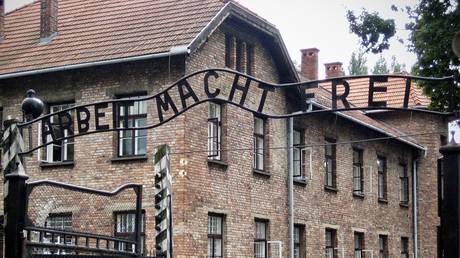
The ground beneath your boots at Auschwitz does not yield easily to modern feet. It is heavy. It smells faintly of ancient dust, wet gravel, and the distinct, sobering chill of a place where time stalled out on a winter afternoon in 1945. People walk here in whispers. They adjust their coat collars against the wind blowing across the railway tracks of Birkenau. They look down at the loose stones, the endless rows of brick barracks, and the empty glass cases holding mountains of human hair, suitcases, and children's shoes.
Then, the ping of a notification cuts through the air.
It is a sound so entirely mundane, so tethered to our dopamine-fueled daily existence, that hearing it in a death camp feels like a physical blow. Someone is scrolling. Someone is checking an app. Someone is annoyed about the Wi-Fi.
We live in an era that has weaponized convenience. We have trained ourselves to expect immediate satisfaction, frictionless service, and five-star hospitality everywhere from the departure lounge of an international airport to the perimeter of a mass grave. When reality fails to match our subscription-model expectations, irritation flares. But what happens when that irritation meets a landscape of absolute, unyielding grief?
Consider the recent spectacle of a British tourist standing near the gates of the former Nazi concentration camp, broadcasting a furious complaint to the internet. The grievance wasn't about the historical exhibits, the preservation efforts, or the sheer, staggering weight of the historical record. It was about a cafe. Or rather, the lack of modern amenities, the perceived slowness of the service, and the general inconvenience of trying to find a comfortable refreshment break while touring an epicenter of genocide.
The video spread rapidly. Backlash followed, sharp and merciless. Commentators rushed to point out the staggering tone-deafness of treating a slaughterhouse as a roadside rest stop. But beneath the online outrage lies a deeper, more unsettling question about how we travel now. How did we become a species of tourists so entirely divorced from context that we mistake sacred history for a theme park missing a food court?
To understand this disconnect, we have to look at the psychological armor we wear when we board a flight. Tourism has been commodified into an exercise in personal enrichment and sensory pleasure. We go to places to be photographed, to collect passport stamps, to eat local delicacies, and to post curated snippets of our lives. Travel is marketed as a continuous loop of indulgence.
When you package the world as a playground, your brain stops processing boundaries. A cathedral becomes just another Instagram backdrop. A palace becomes a hotel lobby. And a concentration camp becomes just another item on a tight holiday itinerary, slotted somewhere between a morning museum tour and a late lunch reservation.
The tourist in question did not wake up intending to desecrate a memory. That is the most terrifying part. This wasn't a deliberate act of malice or ideological posturing. It was something much more ordinary, and perhaps much more dangerous: it was pure, unadulterated thoughtlessness. It was the natural byproduct of a digital culture that tells us our immediate comfort is the central axis around which the universe revolves.
Step back for a moment and imagine the sheer cognitive dissonance required to stand where over a million human beings were systematically murdered, only to pull out a smartphone and grumble about a lack of espresso options. It reveals a fracture in modern empathy. We are so accustomed to curating our environments that we throw tantrums when history refuses to cater to our convenience.
Auschwitz was never designed to be accessible, comfortable, or accommodating. It was designed to erase. Every brick, every rusted wire, every shadow cast by the watchtowers exists as an indictment of human cruelty. The preservation of these sites is an act of profound defiance against oblivion. It demands something difficult from us. It demands that we step outside of ourselves, silence our complaints, and bear witness to horrors that defy easy comprehension.
When we fail to shift gears—when we drag our consumerist entitlement into the halls of catastrophe—we reduce the dead to mere backdrops for our minor inconveniences. We trivialize suffering so we don't have to feel the uncomfortable ache of reality.
The backlash against the viral rant wasn't just about bad manners. It was a collective visceral reaction to a symptom of modern narcissism. We are terrified that we are losing our collective memory, traded away in exchange for seamless booking apps and uninterrupted connectivity.
The wind still blows across the marshland at Birkenau. The crows still circle the skeletal remains of the crematoria. The rails where the cattle cars once emptied their human cargo still rust beneath the gray European sky. They do not care about your battery percentage, your hotel check-in time, or whether the onsite catering meets your dietary standards.
History waits quietly for us to grow up, put our screens away, and remember how to feel.