The air inside the United Nations headquarters in New York always smells faintly of floor wax, old paper, and the suppressed anxiety of men and women trying to prevent the world from tearing itself apart. Outside, autumn leaves drift across First Avenue, ignored by armored motorcades and protesters chanting in shifting languages. Inside, beneath the towering ceilings and polished brass fixtures, time moves at a different speed. It is a glacial pace dictated by protocol, where a single misplaced comma in a draft resolution can trigger a diplomatic crisis, and where a handshake can be weighed on analytical scales by capitals thousands of miles away.
Into this pressurized quiet stepped a rare convergence. Berlin and Moscow. Two capitals bound by a dark, catastrophic history and separated by an unbridgeable canyon of present-day blood and iron.
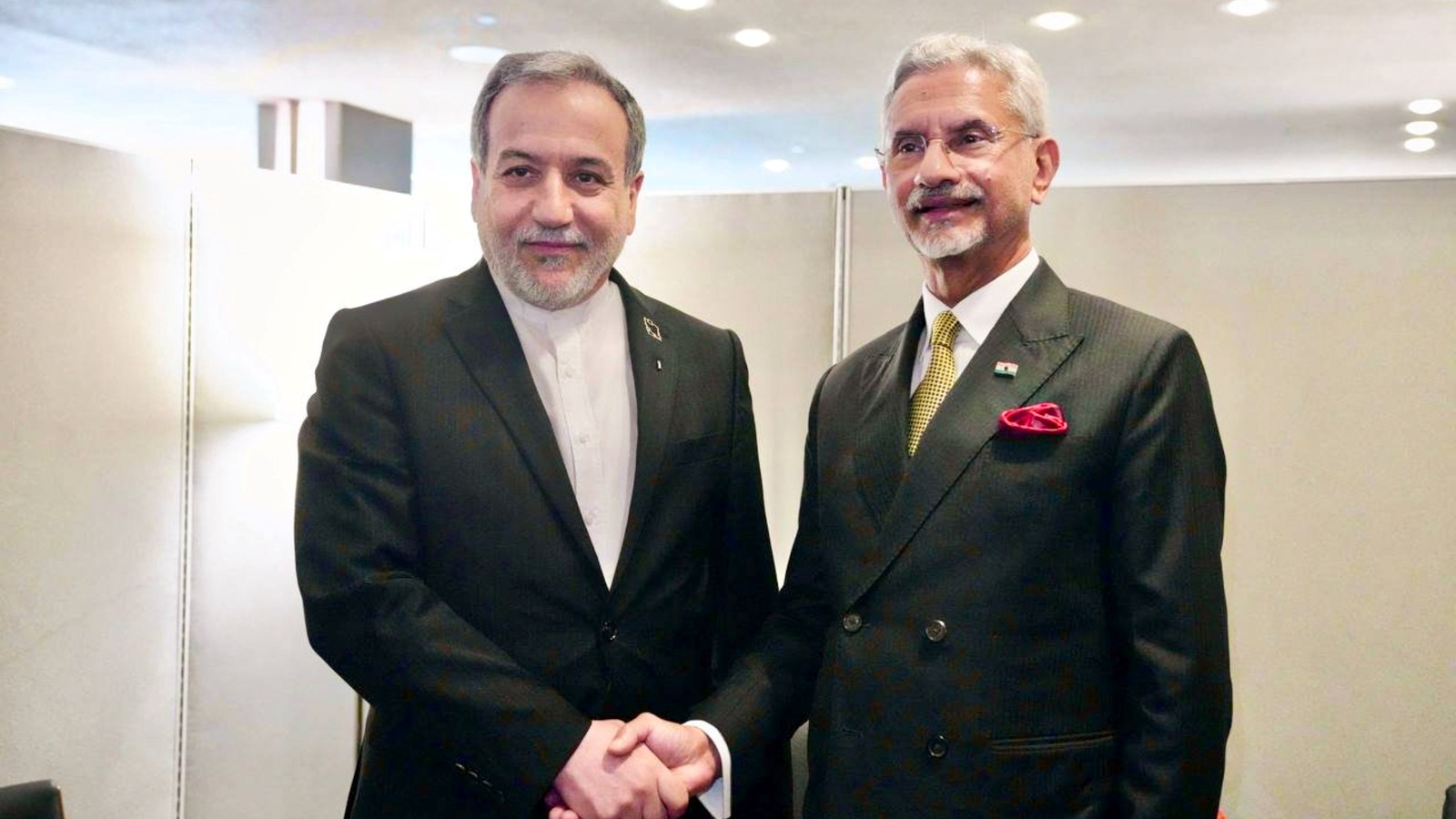
When the German and Russian foreign ministers found themselves in the same room for a rare, direct exchange, the event bypassed the usual routine of press releases and staged photo-ops. There were no smiling handshakes for the cameras. There was no theatrical warmth. Instead, there was the heavy, suffocating weight of two nations whose past agreements lie in ruins across the plains of Eastern Europe.
To understand why this encounter matters, one must step back from the sterile cables and diplomatic dispatches. You must look at the geography of Europe not as lines on a map, but as a living ecosystem that has spent decades stitching itself together after two world wars, only to watch the seams rip open once again.
For generations, the relationship between Germany and Russia was defined by a specific kind of pragmatism. It was a cold, transactional logic built on cheap natural gas, heavy machinery, German engineering, and Russian hydrocarbons. It was a system that assumed economic interdependence would act as an unbreakable anchor against political storms. Berlin built its industrial engine partly on the steady hum of pipelines running beneath the Baltic Sea. Moscow relied on Western currency and technology to modernize its state.
That architecture did not just crack; it shattered. The explosions that crippled the Nord Stream pipelines became a heavy, physical metaphor for the death of an entire era.
When the tanks rolled across the border toward Kyiv, the foundational premise of German foreign policy—Wandel durch Handel, or change through trade—died a sudden and violent death. A nation that had spent three-quarters of a century cultivating a deep cultural aversion to military involvement suddenly found itself scrambling to send Leopard tanks and air defense systems to a war zone. The psychological shock in Berlin was profound. It was not merely a shift in defense spending; it was a total rewriting of national identity, a painful awakening from a long, comfortable dream of perpetual European peace.
On the other side of that divide sits Moscow. A leadership operating in a bunker of its own making, convinced of its historical grievances, viewing the expansion of Western alliances not as a voluntary choice of sovereign neighbors, but as an existential encirclement. In the worldview emanating from the Kremlin, diplomacy is not about finding common ground or mutual compromise; it is an extension of conflict by other means. Words are weapons. Silence is a tactic. Every gesture is parsed for weakness.
Against this backdrop of mutual estrangement, a face-to-face meeting between the top diplomats of these two countries is a rare anomaly.
Why do it? Why sit across a glass table when the words you have for each other are forged in hostility?
Because total silence is more dangerous than hostile speech.
Even in the darkest hours of the Cold War, the telephone lines between Washington and Moscow, between Bonn and Soviet capitals, remained open. Diplomats are the shock absorbers of international politics. They are paid to sit in uncomfortable rooms with people they despise, listening to arguments they know to be false, because the alternative—complete diplomatic severance—leaves room only for the deafening roar of artillery.
Imagine the room. The air conditioning hums at a low, steady pitch. Security personnel stand near the mahogany doors, their expressions carefully neutral, their earpieces whispering static. At the center is a table that feels miles wide, though it is only a few paces across.
On one side sits the German foreign minister. Every posture reflects a nation carrying the historical burden of the twentieth century, yet forced by circumstances to embrace a new, harder reality. There is an urgency in her voice, driven by the images streaming daily from Ukrainian hospitals, schools, and power grids. She is not there to negotiate a grand bargain. There is no grand bargain to be had while shells continue to fall on residential neighborhoods. She is there to draw lines, to state facts, to look the representative of the aggressor in the eye and make it unmistakably clear that the West's resolve is not eroding, no matter how long the winter lasts or how high energy prices climb.
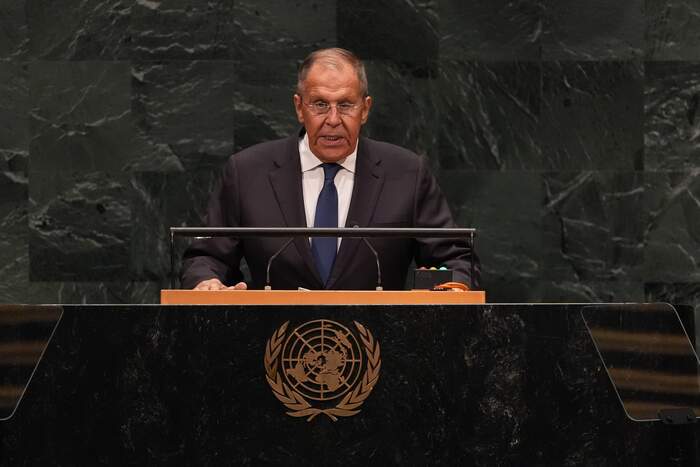
Across from her sits the Russian counterpart. A veteran of the diplomatic trenches, a man who has spent decades perfecting the art of bureaucratic stonewalling, historical revisionism, and verbal deflection. He speaks in measured, ironclad tones, recycling the official lexicon of the state media. To him, this meeting is not a place for conversion; it is an audience chamber. It is a platform to register grievances, to signal domestic resilience, to demonstrate to Beijing, New York, and the Global South that Moscow remains unbowed, engaged, and defiant.
They do not convince each other. Minds do not change. The meeting does not produce a breakthrough, a ceasefire, or a roadmap to peace.
Yet, something vital happens in that room.
Limits are tested. The perimeter of the abyss is measured. In diplomacy, knowing precisely where your adversary stands—hearing the coldness in their voice firsthand rather than reading about it in an intelligence briefing—has an irreplaceable value. It strips away illusions. It destroys any lingering fantasy in European capitals that a quick diplomatic shortcut might suddenly restore the status quo ante. It confirms that the road ahead is long, steep, and fraught with peril.
The ripple effects of this closed-door encounter immediately radiate outward.
In Washington, analysts dissect every leaked detail of the body language. Was there a flicker of hesitation? Did the tone soften when humanitarian corridors were mentioned, or did it harden? In Kyiv, officials watch with a mixture of anxiety and resolve, determined that nothing about their future will be decided behind their backs, yet acutely aware that every diplomatic pulse-check shapes the flow of future aid. In Beijing, strategists measure the durability of European resolve against the staying power of Moscow's war machine.
This is the hidden machinery of the world order. We prefer to think of global politics in cinematic terms—dramatic speeches at the General Assembly podium, sweeping treaties signed with golden fountain pens, triumphant declarations of victory or peace. But the reality is far more mundane and much more fragile. It looks like gray carpets under fluorescent lights. It looks like tired people drinking lukewarm coffee from paper cups while millions of lives hang in the balance. It looks like two diplomats refusing to look away, even when there is nothing left to say.
Consider the human cost that hums silently beneath these high-level maneuvers. While ministers debate in New York, a family in Kharkiv spends another night in a damp basement lit by the flickering glow of a single candle. An elderly man in Berlin opens his monthly utility bill, shaking his head at the numbers—a minor, microscopic inconvenience compared to the destruction in Ukraine, yet a constant, nagging reminder that the war has reached into every kitchen in Europe. A young soldier on the frozen front line checks the charge on his radio, wondering if tomorrow will bring another wave of assaults.
These worlds are intimately connected. The words spoken across that United Nations table dictate whether the artillery fire intensifies or subsides, whether the humanitarian aid corridors stay open, whether the cold grip of uncertainty tightens or relaxes around the heart of a continent.
When the meeting ends, the ministers pack their leather folios. They adjust their ties and coats. They step out into the blinding flash of camera lights and the barrage of shouted questions from journalists hungry for a headline, a sign of hope, or confirmation of doom. They offer brief, carefully scripted statements to the press—statements designed for domestic consumption, calculated not to reveal weakness, calibrated to signal strength.
Then they disperse. Back to their motorcades. Back to their secure lines. Back to capitals separated by an ocean of distrust.
Nothing was solved today. No peace treaty was signed. No map was redrawn.
And yet, the doors did not close permanently. The channel, however frayed and frosted with animosity, remains open. In a world hurtling toward fragmentation, where old rules are discarded and new ones are written in blood and silicon, the mere act of sitting in the same room is a fragile tether to sanity.
The conference room empties. The cleaning staff moves in with vacuums and trash bags, erasing the physical traces of the encounter. The air conditioning hums on. Outside, the autumn evening descends over Manhattan, casting long shadows across the stone facade of the United Nations. Tomorrow, the General Assembly will convene again. Another resolution will be debated. Another speech will be read into the record. And somewhere in the dark, the quiet, grinding work of survival and deterrence will continue, hidden behind closed doors, waiting for the dawn.