The morning air in the Belgorod region usually smells of damp earth and woodsmoke. It is a borderland reality where the rhythm of rural life has spent generations ignoring the arbitrary lines drawn on maps. People here plant cabbage, patch tin roofs, and curse the early frost. But lately, the sky has taken on a different property. It no longer just brings rain or sunshine. It brings iron.
When a rocket tears through the quiet of a border village, the sound does not register as an explosion at first. It is a tearing fabric. A sudden, violent rip in the atmosphere that leaves a vacuum in its wake.
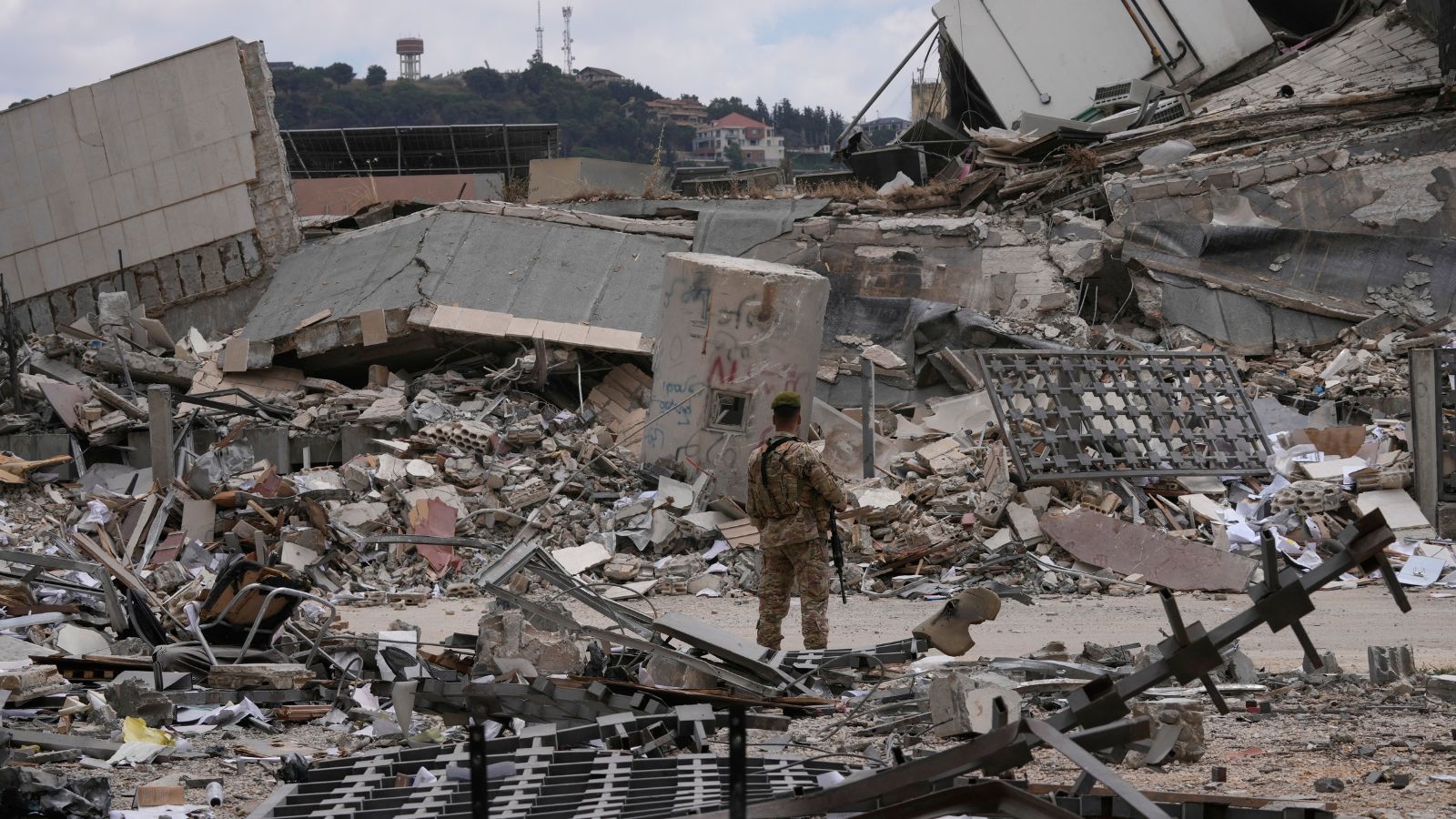
This week, that tearing sound came for a man standing in his own yard. He was not a soldier. He wore no uniform, carried no rifle, and held no strategic secrets. He was simply a resident of a Russian border village, caught in the crossfire of a war that refuses to stay contained within its geopolitical borders. A Ukrainian strike landed, the metal shattered, and in a fraction of a second, another name was added to the collateral ledger of a grinding conflict.
To read the standard news bulletins is to encounter a sterile universe. They tell you the casualty count. They specify the caliber of the rocket. They quote official regional governors who promise administrative aid to the family.
But statistics are an anesthesia for the soul. They smooth over the jagged edges of a messy, bleeding reality. What the official reports omit is the unfinished tea left on the kitchen table. They leave out the panic of neighbors who realize their walls are no longer thick enough to keep out the world. They ignore the dog barking at an empty gate.
The Geography of Vulnerability
Living on a border during a high-intensity conflict means learning a new vocabulary of survival. You learn to differentiate between the dull thud of outgoing artillery and the sharp, whistling shriek of an incoming shell. The former is a reassurance; the latter is a lottery where your life is the ticket.
For decades, these border towns were places of easy transit. Families split across the frontier crossed back and forth for Sunday dinners. Today, that same proximity is a liability. The distance between a Ukrainian launch pad and a Russian living room is now measured in seconds of flight time.
Consider the mechanics of modern artillery. When an explosive projectile detonates, it does not just destroy what it hits. It transforms everything nearby into a weapon. Brick becomes shrapnel. Glass turns into a thousands-strong cloud of razor blades. The dirt itself is weaponized, blasted upward with enough force to suffocate.
[Incoming Projectile]
       │
       ▼
[Detonation Point] ──► Primary Blast Wave (Concussion)
       │
       ├─► Secondary Fragments (Shrapnel, Metal Casings)
       │
       └─► Tertiary Displacement (Airborne Brick, Glass, Soil)
When we look at the broader map, the strikes on the Belgorod region reveal a shifting tactical calculus. As the frontline inside Ukraine remains bogged down in brutal, attritional warfare, the border zones have become a secondary theater. For Ukraine, striking across the frontier is a method of disrupting logistics, pulling Russian air defenses away from the front, and bringing the psychological weight of the war home to the Russian public.
But for the person holding a spade in a garden plot, the grand strategy matters very little. The physics of a blast wave do not care about political justifications. The shockwave moves at supersonic speeds, compressing the air and crushing everything in its path with indifferent velocity.
The Unseen Architecture of Fear
It is a mistake to think the damage of a strike ends when the smoke clears. The true destruction is psychological, an invisible rust that eats away at the community long after the craters are patched with gravel.
Fear changes how a town breathes.
When the sky can turn lethal at any moment, the geometry of daily life shrinks. You no longer walk the long way around the pond. You stay close to concrete structures. You look at the basement door not as a storage space for winter preserves, but as a potential sanctuary. The psychological toll is cumulative, a heavy weight that settles into the shoulders of every resident who chooses—or is forced by circumstance—to stay.
Why do they stay?
It is a question outsiders ask with easy detachment. If it is dangerous, why not leave? The answer lies in the stubborn architecture of human belonging. A home is not just four walls and a roof that can be swapped for another set in a safer province. It is the soil you amended over ten years to make the tomatoes grow. It is the cemetery down the road where your parents are buried. For many, especially the elderly who make up a significant portion of these rural border communities, leaving means abandoning their identity. They choose the lottery of the shells over the certainty of becoming a ghost in a displacement center.
The Shifting Lines of a Modern War
The death of a civilian in a border village is a symptom of a larger, more terrifying trend in modern warfare: the complete erasure of the rear guard.
In the conflicts of the nineteenth and twentieth centuries, there was a defined front. Behind it lay a zone of relative safety where civilians could attempt to maintain a semblance of normal life. Today, technology has destroyed that buffer. Drones loiter for hours over villages, searching for targets of opportunity or tracking military movements hidden among civilian infrastructure. Long-range rockets can strike hundreds of miles behind the line with pinpoint accuracy.
This creates a terrifying paradigm where everywhere is the front line.
Traditional Warfare:
[Front Line / Combat Zone] ═══════════════ [Safe Rear / Civilian Area]

Modern Border Warfare:
[Combat Zone] ───► (Drone Loitering / Long-Range Rockets) ───► [Pervasive Risk Zone]
The human cost of this boundaryless warfare is borne by the unprotected. While military units dig deep bunkers, fortify their positions with electronic warfare jamming gear, and move constantly under the cover of night, the civilian remains exposed. They are still walking to the well. They are still driving their old Ladas down exposed farm roads to buy bread.
The strike that killed a man this week was not the first, and it will not be the last. As the conflict continues to evolve, the borderlands will remain a volatile zone where the mundane acts of daily life are laced with mortal peril.
The tragedy is not just the sudden end of a life. It is the slow, systematic draining of peace from an entire region. The realization that the garden, once a place of quiet labor and growth, has been transformed into a grid coordinate on a target map.
The body has been cleared away. The officials have made their statements. The news cycle has already moved on to the next political summit or economic forecast. But in that border village, the smell of cordite still hangs faintly in the air, mixing with the damp earth, a quiet reminder that the war is no longer something happening somewhere else. It is right outside the door.