The sea off Okinawa does not care about treaties. It rolls against the seawall with a steady, indifferent rhythm, gray-green and heavy with salt, indifferent to the heavy weight of geopolitics that sits upon its shores. For decades, the island has worn a dual mask. It is a subtropical paradise of coral reefs, ancient Ryukyu culture, and sugarcane fields, and it is also the strategic anchor of the United States military alliance in East Asia. Most days, these two realities coexist in an uneasy, murmuring truce. The local shopkeepers sell blue seal ice cream to young servicemen in faded civilian clothes; the mothers wave at passing trucks; the jet noise is just part of the weather, loud and brief.
Then a single night tears the fabric.
Consider the arithmetic of military jurisdiction in a foreign land. When a sovereign nation hosts an army from abroad, it does not merely rent land; it leases its sovereignty in staggered increments. Under the Status of Forces Agreement, or SOFA, the initial custody of a U.S. service member accused of a crime committed off-base and off-duty often rests with the American military, rather than local Japanese police, until an indictment is formally handed down. To a diplomat in Tokyo or Washington, it is a legal clause, a technicality of international law designed to prevent politicized prosecutions. To a grieving family in a quiet neighborhood, it feels like an impenetrable wall.
The silence after a violent crime is never quiet. It hums with questions.
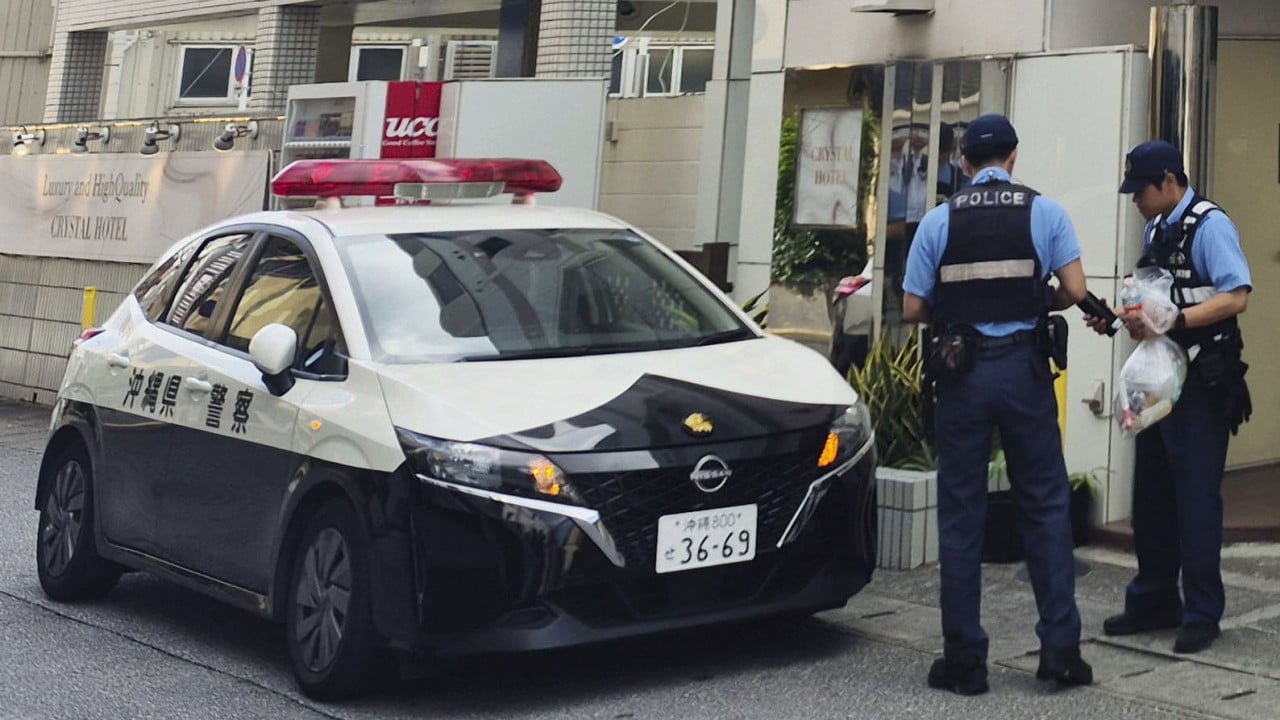
In late 2024, that silence broke. A young woman’s life was abruptly extinguished in a brutal act of murder-robbery, her body found in circumstances that sickened a community. The suspect was a United States Marine stationed at Camp Hansen. And before the local police could complete their interrogation under the framework that ordinary citizens face, the bureaucratic machinery of the alliance swung into gear. The suspect was transferred back to military custody.
To understand why this sparked a diplomatic earthquake, you have to look beyond the cold headlines of diplomatic cables and step into the narrow alleys where local residents walk.
Sanae Takaichi did not become a prominent conservative voice in Japanese politics by ignoring the raw nerves of national pride and public safety. When the news surfaced, the public outcry was immediate, sharp, and visceral. Okinawan residents, already bearing the disproportionate burden of hosting the lion's share of American bases in Japan, felt the old, familiar sting of secondary citizenship. If a crime is committed on Japanese soil, against a Japanese citizen, why should the shield of a foreign flag delay the sword of local justice?
Takaichi pressed the issue with a bluntness that unsettled diplomatic protocol. She demanded accountability, transparency, and a hard look at the structural arrangements that govern how foreign soldiers move through communities without fences. It was not merely a reaction to a horrific crime; it was an airing of accumulated grievances that had festered for generations.
Every alliance is built on a bargain. The deal is simple in theory: protection in exchange for friction. The host country provides strategic real estate, deep-water ports, and quiet compliance with the noisy machinery of global deterrence. In return, the protecting power promises a shield against external threats.
But what happens when the threat comes from inside the perimeter?
Trust is an invisible currency. It takes decades to accumulate through shared drills, joint humanitarian missions, and quiet neighborly interactions at local festivals. Yet it can be squandered in a single horrifying midnight. When a marine steps off base and commits a heinous crime, the psychological contract frays. People look at the high chain-link fences not as a shield against potential adversaries across the sea, but as a cage sheltering someone who should be answering to a local judge.
The political fallout rippled outward from Okinawa to the corridors of Nagatacho and across the Pacific to the Pentagon. Japanese lawmakers who usually tread lightly on security matters found themselves cornered by constituents demanding answers. How many more incidents must occur before the Status of Forces Agreement is fundamentally rewritten? Why are local investigators forced to navigate bureaucratic labyrinths just to speak with a suspect?
The United States military, for its part, faces an agonizing dilemma. Command climate and discipline are not abstract metrics; they are operational imperatives. A military that loses the goodwill of the population it is stationed to protect is fighting with one hand tied behind its back. When high-ranking officials issue formal expressions of deep regret and pledge full cooperation, they are trying to staunch a wound that threatens the entire regional architecture.
Yet apologies are cheap when measured against a lost life.
The mother who sends her daughter out the door in Naha does not care about the strategic imperatives of the First Island Chain. She cares about whether the streets are safe, whether the laws apply equally to everyone, and whether the men with high-and-tight haircuts and American accents are guests or occupiers. That is the human core of this crisis. It is not about grand strategy or the balance of power in the Indo-Pacific. It is about a shattered family, a cold courtroom, and the bitter realization that international law often feels very little like justice.
As the legal proceedings grind forward and the diplomatic notes fly back and forth across oceans, the sea keeps rolling against the Okinawan seawall. The jet engines still roar overhead, shaking the windows of local schools. The alliance will survive, of course. The geopolitical stakes are too high for it to do otherwise. The rising tensions in the region demand unity, deterrence, and steady nerves.
But something fundamental has shifted in the dark soil of Okinawa. The armor of invulnerability has a crack in it now, carved out by grief and anger. And no amount of diplomatic polish can make that shadow disappear.