The federal government’s newly unveiled $750 million investment to drastically expand year-round production of fruits and vegetables sounds like a masterful solution to Canada's structural food vulnerabilities. The mandate appears straightforward: build massive networks of commercial greenhouses and vertical farms to replace imports from California and Mexico, shielding Canadian consumers from supply chain shocks.
It is an expensive illusion. Building on this theme, you can find more in: The Geopolitical Arbitrage of Global Sports Sponsorship: How Chinese Capital Decoupled Brand Equity from National Team Performance.
The underlying premise—that Canada can engineer its way out of seasonal reliance on foreign produce through sheer capital expenditure—ignores the unforgiving economics of controlled environment agriculture (CEA). Building indoor growing spaces at a scale capable of moving the national food security needle is not just difficult. It is structurally cost-prohibitive.
The math underlying the sector reveals an immediate, stark reality. Experts at CNBC have shared their thoughts on this matter.
The Scale and Capital Expenditure Fallacy
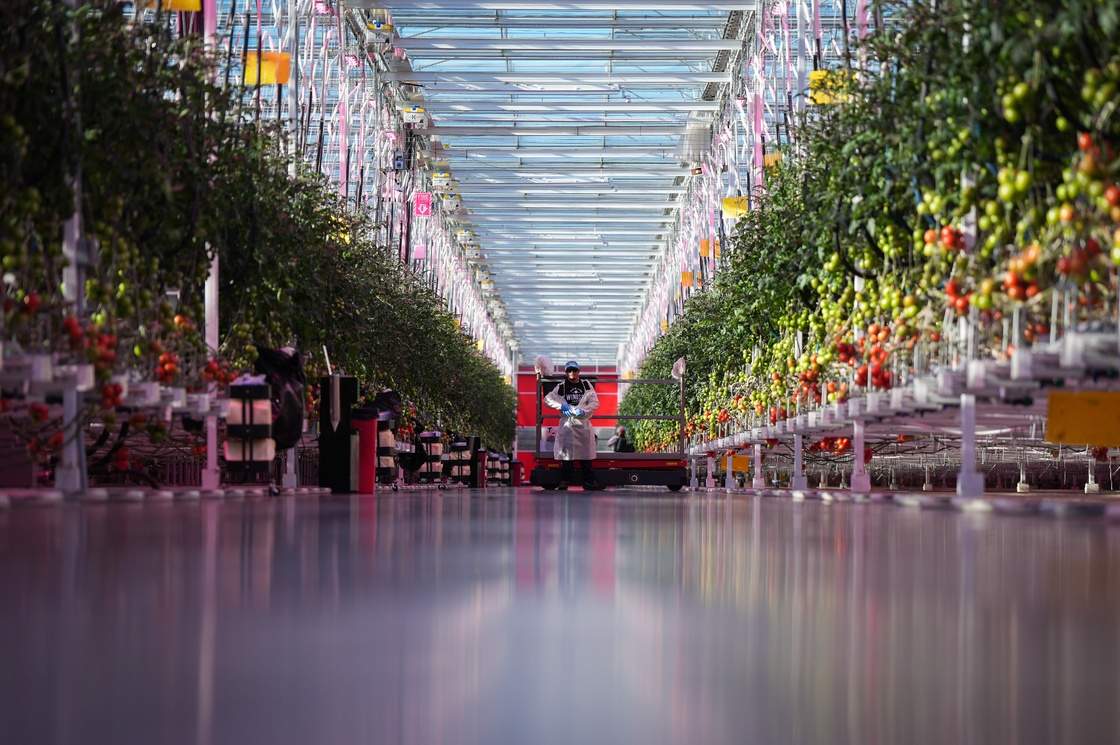
The political appeal of indoor farming relies on high-tech imagery of glowing purple LED arrays and automated glasshouses. However, when these concepts clash with commercial reality, the unit economics fracture.
A traditional outdoor farm relies on free sunlight and natural rain. An indoor facility replaces those free natural inputs with industrial infrastructure, complex HVAC units, and constant electricity.
According to construction cost data, a large-scale commercial greenhouse in Canada requires between $7 and $49 per square foot just for basic construction. When scaled to the acreage required to replace significant import volumes, the upfront capital costs enter the tens of millions of dollars per facility.
Vertical farms are even more capital-intensive. Setting up a commercial vertical growing facility can cost up to 200 times more per acre of growing capacity than buying conventional farmland.
This massive capital expenditure introduces a structural burden. Investors and operators face crushing debt servicing costs before a single seed even germinates. To pay down these initial infrastructure costs, facilities are forced to optimize for maximum crop turnover. This optimization creates a severe agronomic bottleneck.
The Crop Variety Bottleneck
The dream of a self-sufficient Canadian indoor farm producing a diverse basket of winter produce is a fantasy. Greenhouses and vertical farms are strictly constrained by biology and margins. Only a tiny fraction of crop varieties can generate the revenue required to offset indoor operating costs.
Data from Farm Credit Canada highlights that tomatoes, cucumbers, and peppers comprise the overwhelming majority of Canadian greenhouse output. Beyond these three commodities, the system struggles.
- Leafy Greens and Herbs: These crops thrive biologically in indoor systems and feature short growth cycles, but they represent a highly competitive commodity market with thin margins.
- Strawberries: While greenhouse strawberry production grew to 16.5 million pounds recently, it remains a luxury segment that cannot compete on price with field-grown imports.
- The Impossible Staples: Essential, high-volume crops like potatoes, carrots, onions, and tree fruits cannot be grown indoors at commercial scale. Potatoes require deep, loose soil profiles; cranberries require massive water volumes; orchards require years of maturity and vertical space that no commercial indoor layout can economically accommodate.
An indoor facility attempting to diversify into these staples would quickly go bankrupt. The physical limits of vertical space and biological growth rates mean that a $750 million federal injection will only succeed in creating a massive oversupply of premium salad greens, tomatoes, and cucumbers, leaving Canada's core reliance on imported winter staples completely unchanged.
The Grid Killer and the Energy Trilemma
The fundamental flaw of the Canadian indoor farming push is the climate itself. To grow crops during a Canadian winter, operators must replicate the climate of the southern United States or Mexico inside a freezing environment.
This requires an immense amount of energy.
An average indoor vertical farm requires roughly 38.8 kilowatt-hours (kWh) of electricity per kilogram of produce. Compare this to a traditional greenhouse, which uses 5.4 kWh/kg, or an outdoor farm, which uses virtually zero electrical energy for photosynthesis.
[Image graph comparing energy consumption per kilogram of produce between outdoor farming, traditional greenhouses, and vertical farms]
This intense energy profile exposes indoor farming to Canada’s escalating energy crisis. The sector faces an interconnected challenge of surging power demand, carbon emissions, and rising utility bills.
Industrial Power Surges and Regional Grid Constraints
The infrastructure required to power these facilities is pushing regional grids to their limits. In Ontario’s Windsor-Essex and Chatham regions—the heart of Canada’s greenhouse sector—peak power demand is projected to skyrocket from 500 megawatts to 2,100 megawatts over the next decade.
This surge is not just driven by the automotive sector's shift toward electric vehicles; it is heavily accelerated by rows of commercial greenhouses demanding constant power for supplemental lighting and environmental control systems.
Most municipal grids are completely unequipped for this load. An operator looking to build a new, high-tech indoor facility frequently encounters multi-year delays just to secure a grid connection. In many rural or semi-rural areas where land is cheap enough to justify construction, the local electrical infrastructure cannot deliver the necessary voltage without millions of dollars in localized grid upgrades—costs that are passed back to the operator or the taxpayer.
The Natural Gas Contradiction
The energy issue exposes a deeper policy contradiction. To heat massive glass structures during sub-zero Canadian winters, the vast majority of commercial greenhouses rely directly on natural gas.
Between 2013 and 2023, energy costs for Canadian greenhouses surged by 55%. This reliance on fossil fuels means that as Canada attempts to scale its indoor farming footprint to secure food supply, it simultaneously drives up agricultural greenhouse gas emissions.
If operators attempt to transition to clean electricity or renewable natural gas to meet climate targets, they hit a wall. The cost premium for green energy alternatives destroys their already razor-thin operating margins. A farm cannot compete against cheap, sun-grown Mexican imports if its primary operational input is premium-priced green electricity.
Capital Allocation Failures and the Tech Company Trap
The recent history of indoor farming is a graveyard of well-funded failures. Dozens of commercial vertical farming companies went bankrupt over the last two years. The corporate autopsies of these failed ventures reveal a consistent, repeating pattern of structural mismanagement that the Canadian government seems poised to repeat.
The primary failure mechanism was a misunderstanding of agricultural economics by venture capital.
During the low-interest-rate boom, hundreds of millions of dollars flowed into indoor agriculture from investors who treated farming like software development. The prevailing thesis was that if you built a massive facility and packed it with proprietary sensors, custom robotics, and automated climate systems, you could achieve software-like scale.
It was a fatal miscalculation. These startups operated as technology companies first and farming companies second. Their engineering and software budgets dwarfed their agronomy budgets. They built custom, over-engineered robotic harvesting arms before proving they could grow lettuce at a competitive price point.
The result was an industry where tech salaries bloated overhead costs while the underlying biological yield remained tied to the immutable laws of plant physics.
The Myth of the Local Premium
These failed ventures built massive production capacities based on the assumption that Canadian consumers would pay a perpetual, significant premium for a product labeled "locally grown" or "pesticide-free."
They won't.
When grocery budgets are squeezed by inflation, the average consumer chooses the cheaper box of field-grown imported lettuce over the indoor-grown alternative every single time.
Furthermore, these operators built facilities without securing long-term off-take agreements with major grocery chains. A vertical farm capable of producing millions of pounds of baby greens per year is useless if Sobeys or Loblaws refuses to disrupt their existing, highly optimized international supply lines for a volatile, expensive local alternative.
Navigating the Unit Economic Reality
If the federal government wants its $750 million investment to yield actual results rather than corporate bankruptcies, the industry must abandon its obsession with raw scale and high-tech aesthetics.
Survival in indoor agriculture requires shifting away from the industry's favorite vanity metric: kilowatt-hours per kilogram of output ($kWh/kg$).
The $kWh/kg$ metric is an engineering trap. It measures biological conversion efficiency—how effectively a system turns electricity into plant biomass. Because leafy greens grow fast and produce high biomass quickly, this metric systematically biasses operators toward growing lettuce. This bias has resulted in a saturated market and collapsing wholesale prices.
Instead, successful operators are managing their facilities using strict financial metrics: revenue per square meter, capital payback period, and net gross margin per kWh.
The hierarchy of financial viability reveals that an operation prioritizing high-efficacy, multi-million dollar LED systems to grow low-margin commodity crops will lose money. Conversely, a smaller, disciplined facility utilizing standard infrastructure to grow high-value, slower-growing specialty herbs or targeted pharmaceuticals can achieve long-term profitability.
                  [The Indoor Agriculture Metrics Divide]

   The Efficiency Trap (Failure)       The Financial Reality (Survival)
   ─────────────────────────────       ────────────────────────────────
   • Tracked Metric: kWh/kg            • Tracked Metric: Gross Margin/kWh
   • Focus: Maximize Biomass           • Focus: Maximize Revenue Density
   • Crop: Commodity Leafy Greens      • Crop: Specialty Herbs / High-Value
   • Pricing: Competes with Field      • Pricing: Commands Real Premium
   • Outcome: Capital Depletion        • Outcome: Sustainable Cash Flow
The path forward for Canadian food security does not involve building a mega-facility in every province. It requires a decentralized approach focused on medium-scale, energy-integrated systems.
This means building greenhouses directly adjacent to industrial operations to capture and use free stranded waste heat, or co-locating facilities next to rural bio-digesters. It requires tying agricultural policy to local grid realities, rather than throwing capital at flashy startups that substitute tech-sector jargon for real agricultural expertise.
Without this shift in execution, Canada’s multi-million dollar push will not secure the food system. It will simply subsidize a new wave of high-tech agricultural bankruptcies.