The Broken Promise in the Paddock
Grandfather always said a hybrid plant is a brilliant trick played on time. You take two different, highly specialized lines of rice, cross-pollinate them, and reap a harvest so heavy it bends the stalks to the mud. That first generation, known to scientists as F1, is a miracle of vigor. It outgrows weeds, shrugs off pests, and produces grain by the truckload.
Then comes the heartbreak.
If you save a handful of those golden grains from the autumn threshing and plant them next spring, the miracle dissolves. The genetic deck gets shuffled in the soil. The children of the hybrid do not resemble their high-yielding parents. Instead, they split apart into a chaotic jumble of weak stalks, sterile heads, and disappointing yields. For decades, this meant farmers across the globe were trapped on a mandatory treadmill. Every single planting season, they had to march back to the seed merchant and buy fresh bags of hybrid seed. They could never keep their own harvest for the future. They were perpetual renters of innovation.
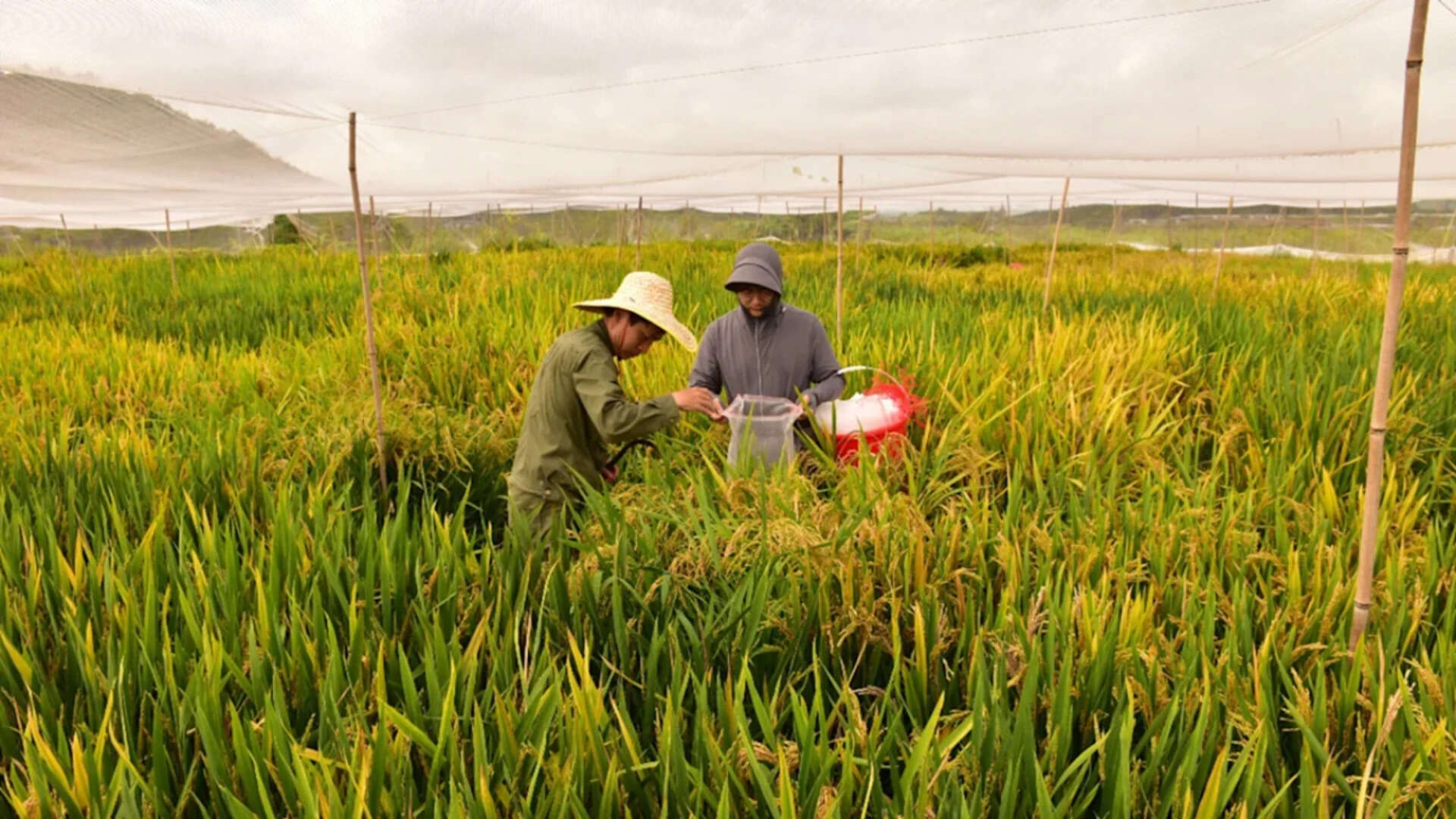
Imagine standing at the edge of a flooded paddy in Hunan Province, watching muddy water lap against your ankles. The wind smells of wet silt and approaching rain. You hold a handful of rice grains. These tiny, hard kernels represent months of aching joints, ruined sleep, and desperate hope. You know that if you plant them next year, the math of biology will betray you.
That cruel rule of agriculture has just been rewritten.
Breaking the Genetic Code
For generations, plant breeders chased a ghost. They wanted apomixis. It is a sterile, clinical word for a wild biological cheat code: asexual reproduction through seeds. If a plant could clone itself through its grain, the offspring would be an exact genetic photocopy of the mother. No shuffling. No betrayal. Just pure, stable vigor passed down from generation to generation without dilution.
Nature guards this secret closely. Wild plants use sexual reproduction to adapt to changing climates, making cloning through seeds an evolutionary rarity. Scientists spent decades banging their heads against laboratory walls, trying to force rice to break its own biological programming.
Consider what happens inside a microscopic grain flower. Usually, meiosis occurs—the cellular dance where genetic material is halved and mixed. Then fertilization happens. To bypass this, researchers had to perform microscopic surgery on the plant's reproductive machinery.
Led by brilliant geneticists, including teams at institutions like Wuhan University, science finally cracked the code. By systematically knocking out specific genes responsible for meiosis and replacing them with genes that trigger mitosis—cell division that creates identical copies—they forced the rice plant to bypass sexual recombination entirely.
The result is a perpetually renewable hybrid rice.
When you plant the seeds harvested from this new strain, the second generation looks, acts, and yields just like the first. The trait is locked in. The genetic memory refuses to fade.
What This Means for the Soil and the Wallet
Let us talk about money. Not abstract national GDP figures, but the heavy, crumpled yuan bills clutched in a farmer's calloused hand at dawn.
Traditional hybrid seed production is an excruciatingly delicate dance. Because the plants do not breed true, seed companies have to grow two separate parent lines side by side in isolation zones, manually or mechanically cross-pollinating them under strict conditions. It is expensive. It is labor-intensive. And those costs trickle down to the rural villages, squeezing the people who grow our food.
When a farmer can save seeds from their own bin, the economic equation flips upside down.
- Input costs plummet because buying new seed every year becomes optional.
- Risk diminishes because farmers are no longer dependent on complex supply chains delivering commercial seed packets on time.
- Food security hardens at the hyper-local level, insulating rural communities from sudden price spikes in the global market.
Critics often worry about unintended ecological consequences. Will these super-stable lines escape into the wild and outcompete native grasses? Biosafety protocols are strict, and field trials are ongoing to monitor environmental interactions. But the primary driver here is resilience. In an era where erratic weather patterns, droughts, and floods threaten traditional farming cycles, having a high-yield crop that retains its strength without requiring a fresh corporate seed purchase every spring is a seismic shift.
The Long View From the Levee
Back in the paddy, the rain stops. The clouds break, spilling a jagged strip of yellow light across the flooded fields.
Science often feels cold when read in a journal. It lives in graphs, statistical significance thresholds, and dense nomenclature about gene editing vectors. But science is ultimately a human endeavor. It is born out of the stubborn refusal to accept hunger as an inevitable law of nature.
The farmer drops a single grain back into the water. It sinks into the dark earth, carrying within its microscopic heart a defiance of history. For the first time, that seed does not have to forget where it came from. It can grow, multiply, and remember its strength, harvest after harvest, unbroken down through the years.