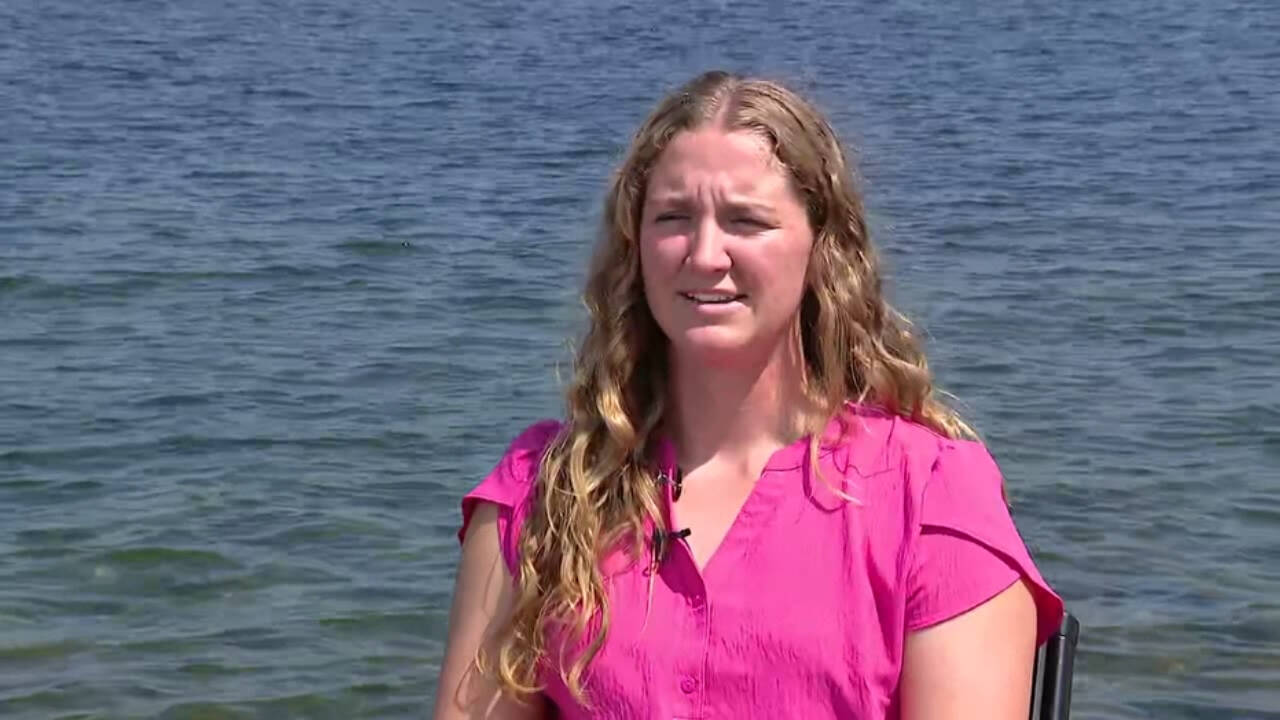
The air over Lake Washington did not just vibrate; it shook.
It was Seafair weekend. Overhead, the Blue Angels painted screaming white lines across the blue indifference of a Seattle sky, drawing thousands of upturned faces to the shoreline. The roar of the jets was a physical weight, pressing against chests, drowning out ordinary conversation, demanding total attention. Most people looked up.
Lillie Vehling looked down.
Water hides its intentions. To someone standing on the shore, a lake can look like a mirror, flat and placid, masking the sudden drop-offs, the biting cold of glacial runoff, and the invisible currents that can exhaust a swimmer in a matter of heartbeats. On that chaotic weekend, amid the noise and the crowds, three young girls found themselves caught in that silent trap.
They were struggling. They were slipping beneath the surface. And the roaring sky overhead meant that nobody could hear them scream.
Panic is a physical thing. It starts in the chest, tightens the throat, and robs the body of rational thought. When a person begins to drown, they rarely thrash like actors in a movie. It is quiet. It is desperate. Water fills the mouth, limbs grow heavy, and the bright world above turns into a distant, muffled memory.
Lillie saw it happen.
There was no time for hesitation. No committee to consult, no plan to draft, no second thought. There was only the sudden, sharp realization that if she did not move right then, the lake was going to claim three lives before the next jet roared overhead.
Water is unforgiving. Plunging into Lake Washington during a busy summer festival means battling more than just the temperature; it means navigating a maze of boat wakes, floating debris, and the sheer psychological shock of the cold. Lillie didn't swim toward a hypothetical scenario or a textbook definition of a rescue. She swam toward raw, breathing human terror.
Consider what happens next in a crisis. The brain floods with adrenaline. Tunnel vision sets in. For Lillie, reaching those girls meant fighting her own fatigue while hauling weight that was pulling downward with the dead, heavy drag of fear.
She reached the first girl. Then the second. Then the third.
By the time the ordeal ended, the airshow was still thundering above, indifferent to the small, profound drama that had just played out on the water's edge. Lives had tilted on a knife-edge, balanced between the terrible quiet of the lake and the sharp, sudden bravery of a teenager who refused to look away.
Heroism is rarely cinematic. It does not come with a swelling orchestral score or a script. It looks like an ordinary afternoon interrupted by a desperate choice. It looks like Lillie Vehling, standing on the shore, wet and exhausted, having pulled three human beings back from the edge of the abyss.
The jets have long since flown away. The ripples on Lake Washington have faded back into stillness. But the water remembers the weight of that day, and the quiet courage that refused to let the surface close over.