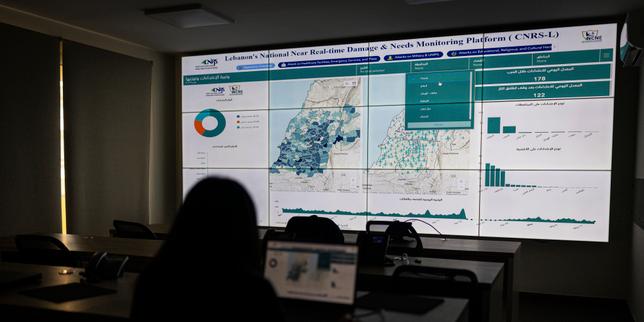
Quantifying structural degradation in high-intensity conflict zones requires moving past superficial visual inspections toward a systematic, multi-layered remote sensing framework. When ground-level verification is impossible due to active kinetic threats, state institutions must rely on orbital data assets to catalog destruction, guide emergency resource allocation, and lay the empirical foundation for post-conflict reconstruction. The efficacy of this process depends on a precise understanding of sensor physics, spatial resolution thresholds, and the mathematical models used to differentiate tactical urban modification from systemic structural collapse.
The primary challenge lies in converting raw electromagnetic backscatter and optical pixel data into legally and forensically defensible damage metrics. A rigorous analysis of this operational environment reveals specific technical bottlenecks, sensor limitations, and data-fusion strategies required to track urban destruction with high confidence. Meanwhile, you can explore other developments here: The Orbital Trash Heap is Already Out of Control.
The Tri-Sensor Framework for Remote Damage Detection
State scientific institutions track conflict-induced changes by deploying three distinct sensor modalities, each operating within specific segments of the electromagnetic spectrum. Relying on a single data stream introduces systemic blind spots, whereas a fused approach minimizes false positives caused by shadows, seasonal vegetation changes, or civilian vehicle movements.
1. High-Resolution Optical Imagery
Optical sensors operating in the visible and near-infrared (VNIR) spectrum provide the foundational layer for qualitative damage categorization. To understand the full picture, we recommend the detailed article by The Verge.
- Spatial Resolution Thresholds: Effective structural assessment requires a Ground Sampling Distance (GSD) of 30 to 50 centimeters per pixel. At this resolution, analysts can identify perimeter breaches, roof collapses, and debris fields.
- The Nadir Limitation: Standard optical imagery captured from a nadir (directly overhead) perspective regularly fails to detect severe lateral damage. A building with completely compromised load-bearing facades may appear intact if the roof structure remains unaffected.
- Off-Nadir Tasking: To mitigate this, tracking institutions must program satellites for off-nadir imaging angles (typically between 15 and 30 degrees). This obliquity exposes structural facades, allowing for the assessment of lower-level kinetic impacts.
2. Synthetic Aperture Radar (SAR)
Unlike optical sensors, SAR is an active system emitting microwave radiation and measuring the returned signal (backscatter). Operating independent of solar illumination and atmospheric interference, SAR is the primary tool for continuous monitoring through cloud cover or thick smoke plumes.
- Coherence Optimization: SAR tracking relies on phase coherence between consecutive satellite passes. When a structure is altered or destroyed, the phase relationship between the emitted and returned radar wave breaks down, resulting in decorrelation.
- Intensity Changes: Double-bounce scattering occurs when a radar signal hits the ground and reflects off a vertical wall back to the sensor. A sudden drop in double-bounce intensity across a time-series dataset mathematically signals the removal or collapse of that vertical structure.
- Geometric Distortion Bottlenecks: SAR data suffers from inherent distortions in dense urban topography, specifically foreshortening, layover, and shadow zones. These geometric anomalies require complex digital elevation model (DEM) corrections before any reliable damage classification can occur.
3. Thermal Infrared (TIR) Anomalies
Thermal sensors detect long-wave infrared radiation, mapping surface temperature differentials that indicate industrial disruptions, active fires, or subterranean structural failures.
- Operational Baseline: By comparing current thermal signatures against a multi-year historical baseline, analysts isolate active combustion zones from normal urban heat island effects.
- Utility in Utility Monitoring: TIR is highly effective for verifying the operational status of critical infrastructure, such as power generation plants, water treatment facilities, and heavy industrial zones, where structural damage might be minimal but operational capacity has ceased.
The Structural Degradation Scale: A Formally Defined Typology
To eliminate subjective interpretation from state reporting, damage must be classified using rigid, quantifiable physical criteria rather than qualitative descriptions. The following four-tier matrix standardizes the evaluation of individual structures based on remote sensing indicators.
Level 1: Superficial Non-Structural Impact
- Physical Manifestation: Shrapnel scarring on facades, minor roof pitting, localized window failure.
- Remote Sensing Signature: Optical imagery shows minor spectral variations in the VNIR bands, but SAR phase coherence remains stable above a 0.7 threshold. No structural deformation is detectable.
Level 2: Component-Level Compromise
- Physical Manifestation: Partial roof collapse, localized wall breaches, destruction of secondary outbuildings.
- Remote Sensing Signature: Localized alterations in optical texture metrics. SAR backscatter shows a measurable shift in the double-bounce profile, indicating a change in a specific aspect of the building geometry.
Level 3: Structural System Failure
- Physical Manifestation: Multiple floors pancaked, major load-bearing walls compromised, partial structural lean.
- Remote Sensing Signature: Complete loss of SAR phase coherence across the structural footprint. Optical imagery registers a distinct shadow alteration and a significant increase in surrounding debris-field pixels.
Level 4: Complete Subsurface Leveling
- Physical Manifestation: Structure reduced to a foundation-level debris pile.
- Remote Sensing Signature: The total elimination of the building's original spatial signature. The radar return reverts to a rough-surface scattering model, and high-resolution optical imagery confirms the complete absence of vertical shadows.
Data Fusion Architecture and Causal Modeling
The true analytical power of a government scientific institution does not come from viewing these data streams in isolation, but from integrating them into a deterministic causal framework. This process transforms raw observations into actionable evidence of conflict dynamics.
[Raw Optical Imagery] ----+
                          |--> [Spatial Registration & Alignment] --> [Change Detection Engine] --> [Damage Verification]
[SAR Backscatter Phase] --+
The change detection engine applies change-vector analysis to multi-temporal datasets. When an optical pixel shift correlates spatially with a sudden drop in SAR coherence and an localized thermal spike, the system flags the event as a verified kinetic impact with high statistical confidence.
This automated pipeline exposes cause-and-effect relationships that standard reporting overlooks. For example, tracking the temporal sequence of destruction across an urban grid often reveals a systematic denial-of-service strategy targeting specific civilian supply lines. The destruction of warehousing infrastructure regularly precedes a drop in local agricultural distribution efficiency, mapping a direct line from structural damage to broader economic destabilization.
Methodological Vulnerabilities and Error Profiles
Any strategy reliant on orbital analysis possesses structural limitations that must be explicitly accounted for to prevent the propagation of false data.
False Positives via Environmental Variables
High-winds, rapid seasonal vegetation growth, or heavy snow accumulation can cause significant decorrelation in SAR datasets, mimicking the signature of structural damage. Similarly, shadow casting from high-rise buildings during low-sun-angle optical captures can obscure intact structures, leading to erroneous classifications of collapse.
The Resolution Gap in Dense Urban Centers
In old, highly dense urban quarters where buildings share common party walls, a spatial resolution of 50cm GSD is often insufficient to distinguish individual property boundaries. If one internal structure collapses while the shared facade remains standing, the sensor suite may fail to log the internal volume loss, underreporting the true extent of residential displacement.
Strategic Countermeasures and Camouflage
Deceptive tactics employed by actors on the ground introduce deliberate errors into remote sensing workflows. The application of non-reflective coatings, the deployment of tactical netting to alter SAR double-bounce signatures, or the intentional burning of tires to create persistent obscurant plumes can temporarily blind optical and thermal tracking systems, delaying accurate assessment.
Operational Execution Protocol for State Entities
To maximize the utility of remote sensing data under active conflict conditions, tracking institutions must shift from ad-hoc analysis to a continuous, programmatic acquisition cycle.
- Establish Rigorous Pre-Conflict Baselines: Ground truth data must be continuously ingested during peacetime. This involves building a comprehensive library of SAR coherence maps and nadir/off-nadir optical orthomosaics for every major urban and industrial center.
- Automate Constellation Tasking: Configure automated triggers based on open-source intelligence (OSINT) feeds, thermal anomaly alerts, or seismic networks to automatically retask high-resolution commercial and state imaging constellations over suspected impact zones.
- Implement Cross-Platform Standardization: Ensure all incoming imagery is orthorectified using identical digital elevation models and radiometric calibration protocols to prevent false change-detection loops caused by sensor interoperability mismatches.
- Isolate Data Pipelines from Geopolitical Bias: Independent scientific validation requires peer-reviewed change-detection algorithms that run without human intervention, ensuring that the final damage maps reflect physical ground changes rather than political messaging objectives.