The air inside a high-level diplomatic summit always smells of expensive wool, cold mineral water, and suppressed panic. Every gesture is choreographed down to the millimeter. The tie widths are scrutinized; the seating charts are negotiated over weeks of cable transmissions; the choice of words is weighed on a jeweler’s scale. Leaders do not speak off the cuff. They recite scripts written by armies of historians, analysts, and speechwriters who spend months scrubbing away any possibility of surprise.
Then, there are moments when the script is tossed entirely into the shredder.
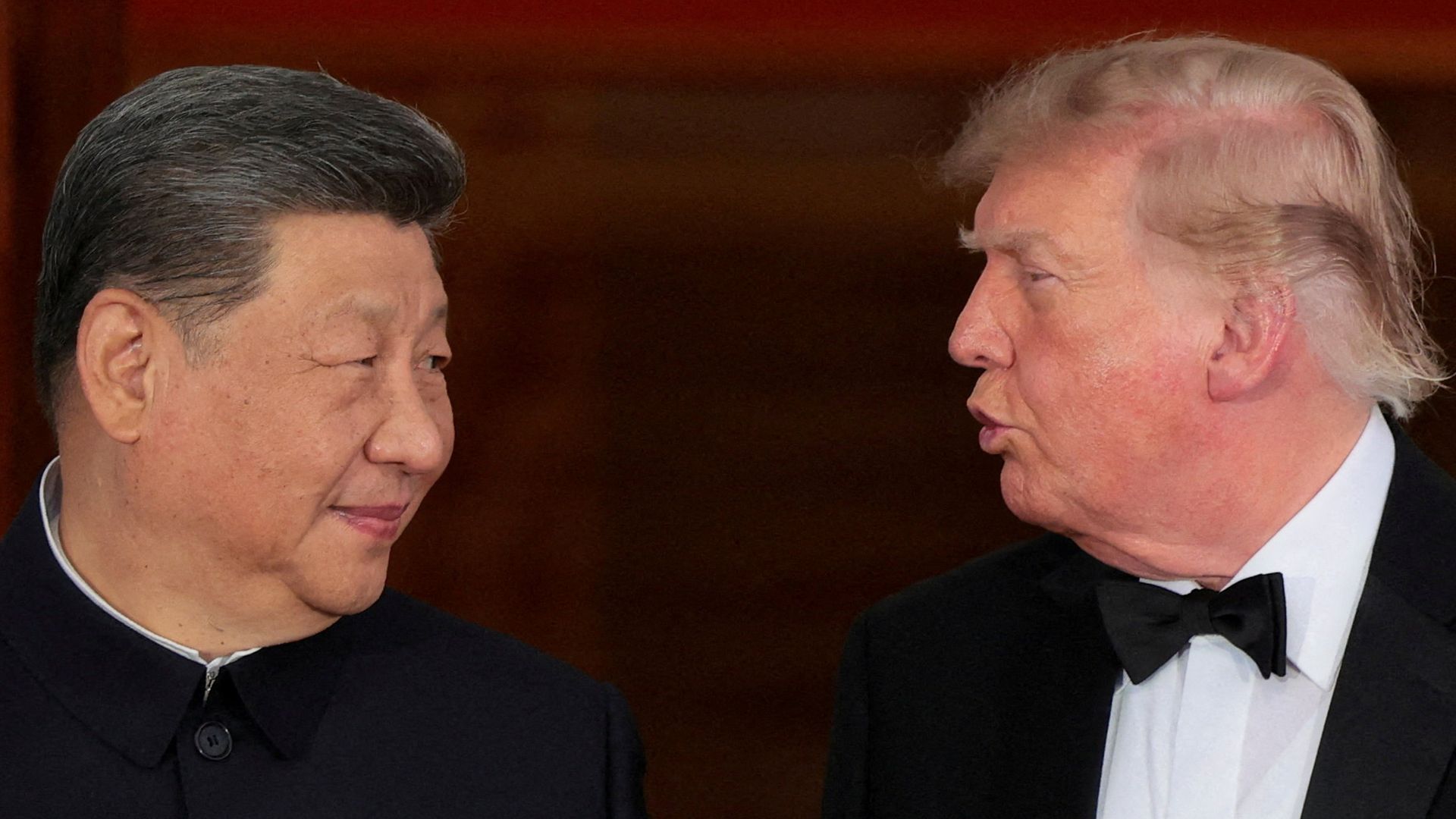
Picture the room. It is quiet. Outside, a Beijing afternoon presses against thick, soundproof glass, cloaked in the heavy grey haze of a metropolis shifting tectonic plates in real time. Inside, two men sit across a polished mahogany table. One represents a dynasty of communist statecraft, steeped in dynastic patience, believing in centuries rather than election cycles. The other represents an impatient commercial empire, a man who spent his life measuring success in square footage, tower heights, and quarterly profits.
Across the table, the American president leans forward. The translation hums in the earpieces of the aides standing stiffly against the wood-paneled walls. The question drops into the silence like a lead weight.
Do you want to buy our weapons? We make the best in the world.
The silence that follows is not diplomatic silence. It is a vacuum.
To understand why that sentence rattles the rafters of international relations, you have to strip away the abstractions of foreign policy and look at what a weapon actually is. A weapon is not merely a tool of violence. It is an export, a statement of technological supremacy, a political anchor, and a long-term marriage certificate. When one nation buys another nation's missile defense system or fighter jet, it is signing a multi-decade contract of dependency. It is inviting foreign technicians into its most secure bases. It is binding its security architecture to another capital's software updates, spare parts supply chains, and political whims.
For decades, the United States maintained a strict division between commerce and statecraft, or at least pretended to. Allies bought weapons through formalized foreign military sales programs, wrapped in solemn communiques about mutual defense, shared values, and the preservation of a rules-based international order. The rhetoric was always high-minded. It was about freedom. It was about standing shoulder-to-shoulder against tyranny.
And here was an American leader treating the most sophisticated machinery of death on the planet like inventory sitting on a showroom floor.
Let us step back for a moment and consider the sheer audacity of the pitch. China is not just any buyer. China is the primary strategic competitor, the peer rival, the nation toward which American military planners orient every war game, satellite trajectory, and budgetary request. To turn to Beijing and offer hardware is to blur the line between adversary and customer in a way that leaves career diplomats gasping for air.
Imagine being the ambassador sitting two chairs down, watching the gears turn behind the impassive eyes of the Chinese president. You have spent your life studying Mandarin characters, tracing the subtle shifts in Politburo factions, understanding the weight of centuries of humiliation and pride that animate modern Chinese nationalism. You know that security to Beijing is absolute, non-negotiable, and deeply sovereign. You know that asking them to buy American missiles is not just a commercial pitch; it is a profound category error.
Yet, beneath the shock value of the moment lies a revealing window into a specific kind of worldview. To the businessman president, every interaction is a negotiation. Every relationship is transactional. If someone has a need and you have a product, the ideological gap is merely a pricing negotiation waiting to happen. Why fight over the South China Sea or trade deficits when you could theoretically close a multi-billion-dollar defense deal?
It sounds absurd, almost cartoonish in its simplicity. But it touches on a fundamental tension in modern power dynamics. As the world becomes flatter, faster, and more interconnected, the old playbooks of ideological crusade look increasingly threadbare. Nations that trade billions in consumer goods suddenly find themselves locked in cold technological rivalries. The lines between merchant and soldier blur every single day.
Consider what happens inside a modern defense manufacturing plant in towns scattered across the American Midwest. Picture the assembly line in St. Louis or Fort Worth. Sparks fly from robotic welding arms. Workers in steel-toed boots and safety glasses check digital readouts on composite panels that will eventually form the skin of a supersonic fighter. To those workers, the machine is a paycheck, a pension, a livelihood built through generations of engineering precision. They do not care about geopolitical theories or balance-of-power equations. They care about orders, supply chains, and keeping the lights on.
When the president pitches weapons to a rival, he is speaking the language of that assembly line, transposed onto the grand stage of history. He is looking at the ledger. The United States spends staggering sums on defense research and manufacturing. The economy demands scale. If you can sell the hardware, you lower the unit cost, fund the next generation of research, and cement industrial dominance.
But weapons are never just manufactured objects. They carry an ideology written in their code.
When a nation purchases military technology, it adopts the logic of the maker. It accepts the telemetry, the operating systems, the backdoors, and the invisible umbilical cords that tie every missile and radar installation back to the country of origin. No major power—least of all a rising superpower like China, determined to build an indigenous, self-reliant technological empire—is going to outsource its national survival to its chief rival.
The offer, therefore, was dead on arrival. It was met with polite evasion, a cool dismissal, or the stony silence that diplomacy uses when a guest says something profoundly improper at a state dinner.
Yet the story, recounted later by ambassadors and memoirists, lingers in the cultural memory because it captures the bizarre theatricality of our current era. We live in a time when the solemn rituals of statecraft are constantly colliding with the raw, unfiltered impulses of populist commerce. The grand chessboard of the Cold War has been replaced by a chaotic bazaar where everything is for sale, or at least up for discussion.
To dismiss the moment as a mere diplomatic gaffe is to miss the deeper transformation happening beneath the surface of global politics. We are witnessing the exhaustion of the old vocabularies. The traditional diplomatic corps speaks in the fading dialect of multilateral institutions, treaties negotiated over decades, and carefully calibrated communiques that mean everything and nothing. The new actors speak the language of the deal, the public relations stunt, and the immediate, transactional shock.
The tension between these two worlds defines our contemporary reality. Every time a leader treats national security as a showroom floor, the bedrock of international stability tremers slightly. Allies wonder if their protection is just a line item on a balance sheet. Adversaries wonder if every threat is just an opening gambit for a commercial concession.
Let us trace the trajectory of this mindset further. What happens when the tools of violence are completely commodified? When drone swarms and artificial intelligence algorithms are hawked like software subscriptions? We are moving toward a reality where military might is evaluated not by martial valor or strategic depth, but by market penetration and supply chain resilience.
The ambassador who recorded that exchange understood the gravity of the moment. They knew that words spoken in a closed room between two titans do not simply evaporate. They settle into the collective consciousness, shifting the baseline of what is considered possible in international relations. Once a leader suggests that the ultimate instruments of national sovereignty can be pitched like commercial airliners, the taboo is broken. The unthinkable becomes merely eccentric; the eccentric becomes a footnote; the footnote becomes precedent.
We find ourselves standing at this strange crossroads today. The old rules no longer command absolute authority, and the new rules have not yet been written. Every summit, every press conference, and every closed-door negotiation carries the electric charge of unpredictability.
When we look back at the grand sweep of history, we see that empires rarely fall because they are defeated by superior force alone. They rot from within when their institutions lose their shared vocabulary, when the rituals that bind allies and restrain rivals lose their sacred weight. When everything becomes a negotiation, nothing retains its value.
The silence in that Beijing conference room was telling us something profound about the world we are building. It was the sound of an old order holding its breath, realizing that the people steering the ship no longer believe in the compass, only in the speedometer.
And so the machine rolls on. The assembly lines in the Midwest keep humming. The satellites keep tracing their silent arcs through the ionosphere. Leaders gather in opulent rooms to whisper about war and commerce, each trapped in their own understanding of reality.
The question asked across that mahogany table remains suspended in the air, echoing across the corridors of power. It was absurd. It was transactional. It was entirely emblematic of our age. And long after the principals have left the stage, the implications of that strange, transactional impulse will continue to shape the contours of our fragile, dangerous world.