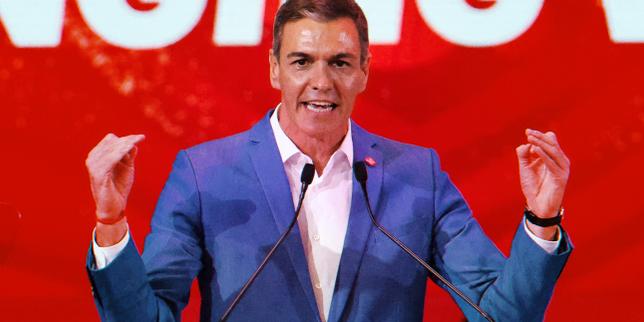
Scaring voters with the ghost of a far-right takeover doesn't carry the weight it used to. For years, Spanish Prime Minister Pedro Sánchez positioned himself as the ultimate political survivor, the left-wing dam holding back a conservative-populist wave in Europe. But relying on the fear of what the opposition might do is a losing strategy when your own house is on fire.
The Spanish political landscape in 2026 isn't the same one that allowed Sánchez to pull off miraculous comeback victories in the past. Today, his administration faces a brutal reality. Voters are exhausted by constant political polarization, and a massive corruption scandal involving his former closest allies has shattered the moral high ground the Socialists long claimed. To stay in power, Sánchez needs more than a defensive playbook. He needs a narrative built on actual governance, economic performance, and a clear vision that goes beyond just existing as the lesser of two evils.
The Limits of the Anti-Fascist Playbook
For a long time, the political strategy of the Spanish Socialist Workers Party (PSOE) was simple. Whenever elections loomed or poll numbers dipped, the party pointed across the aisle at the conservative Partido Popular (PP) and the right-wing Vox. The message was loud and clear: vote for us, or watch Spain slide back into authoritarian tendencies. Sánchez used this tactic to great effect, framing Spain as the progressive exception to a Europe drifting toward right-wing nationalism.
That message has hit a wall. Voters don't just care about hypothetical threats; they care about daily reality. When you scream wolf about fascism every single week, the urgency fades. The cultural battles that once mobilized the left-wing base are yielding diminishing returns. People are looking at their grocery bills, their housing costs, and the stability of their local communities.
Relying entirely on a defensive identity means you let your opponents set the agenda. Instead of highlighting progressive achievements, the political conversation centers on what the right-wing might destroy. It’s an exhausting, negative way to run a country, and Spanish society is showing severe signs of fatigue.
The Structural Reality of the Spanish Economy
If Sánchez wants to survive, he has to redirect the conversation to the economy. The numbers are actually on his side, yet his team struggles to get people to focus on them. Spain has outpaced most of its eurozone neighbors in post-pandemic recovery, posting a growth rate of 8.5% compared to pre-2020 levels. The country is producing an impressive share of the Eurozone's new jobs, recently crossing the mark of 22.5 million social security contributors.
Spain Economic Indicators (2026 Data)
--------------------------------------------
GDP Growth Since Pre-Covid: +8.5%
Eurozone Average Growth:    +6.1%
Active Social Security Contributors: 22.5M
Recovery Plan Reforms Implemented:  90%
The government has successfully triggered massive tranches of European Union NextGeneration recovery funds, using them to push a heavy digital and ecological transition. Spain currently ranks high globally in artificial intelligence adoption and infrastructure investment. Nearly half of these billions have filtered down to small businesses and self-employed workers.
The problem is a massive disconnect. A macro-economic growth rate of 8.5% looks great on a slide deck in Madrid or Brussels. It feels completely different to a young worker in Seville trying to rent an apartment on a stagnant salary. Inflation may have stabilized, but the structural cost of living remains painfully high. Sánchez cannot simply brag about GDP data while people feel squeezed. He has to connect the grand European funding directly to the wallets of working-class families, making the economic transition feel like a benefit rather than an administrative burden.
The Corruption Storm Over Moncloa
No amount of positive economic data can easily wipe away the political damage of a major political scandal. The sentencing of José Luis Ábalos, the former transport minister and the organizational mastermind behind Sánchez's original 2018 rise to power, to 24 years in prison for pandemic-era contract kickbacks has hit the administration right in its core. Compounded by separate ongoing investigations involving family members, the political narrative has turned toxic.
Sánchez has fought back hard in parliament, claiming that the opposition and conservative media outlets are trying to manufacture an aura of widespread corruption that doesn’t exist. He maintains that he never knew about or tolerated the practices of his former allies.
But in politics, perception operates as reality. The prime minister won his original office by launching a vote of no confidence against a conservative government mired in corruption. To have the same allegations now circling his immediate orbit destroys the moral authority that made him a global progressive icon. He can no longer argue that his party represents a clean, fundamentally decent alternative to a corrupt right wing. The playing field has been leveled, and not in his favor.
A Fragmented Coalition and Regional Fractures
Governing Spain requires a fragile balancing act. Sánchez doesn't lead a monolithic majority; he commands a minority government that relies on a chaotic coalition with the hard-left Sumar party and various regional nationalist factions from Catalonia and the Basque Country.
Maintaining this alliance has required massive political sacrifices, including controversial amnesty agreements for Catalan independence leaders. While this kept Sánchez in the Moncloa palace, it deeply alienated moderate voters across the rest of Spain who view these deals as a betrayal of constitutional equality.
The internal dynamics of his government are also shifting. Key ministers have stepped down to run in regional elections, leading to a major cabinet reshuffle that brought Carlos Cuerpo into the role of principal deputy prime minister. Pushing the upcoming 2027 national budget through this highly divided parliament will require every ounce of Sánchez's famed negotiating skills. Every single vote from regional parties comes with a price tag, making the central government look transactional rather than principled.
Shifting From Defensive Fear to Active Governance
To avoid a devastating defeat in the next cycle, the Spanish left must abandon the rhetoric of constant emergency. The strategy of using fear as a political shield has run its course. To build a resilient political future, the administration must pivot toward concrete, undeniable actions.
First, own the economic narrative locally. Stop talking about billions of euros in abstract EU funds. Start talking about the tangible infrastructure, the new vocational training slots, and the direct subsidies that affect everyday communities. Make the green transition look like local job creation, not globalist elite policy.
Second, embrace absolute transparency regarding the current scandals. Defensive deflections and attacks on the judiciary or the press only make the administration look guilty to undecided voters. Radical accountability is the only way to salvage the progressive moral brand.
Finally, offer an optimistic vision for Spain's future that doesn't depend on the opposition's actions. Show how a diverse, decentralized Spain can thrive economically without sacrificing social safety nets. If Sánchez spends the coming months simply warning people about what happens if he loses, he will almost certainly ensure that outcome. True political endurance comes from giving people something to vote for, not just something to fear.