The heat in Kandahar does not just rise from the dirt; it presses down on your chest like a physical weight. Under thirty pounds of body armor, every breath feels like inhaling dust and old iron.
Imagine a twenty-year-old corporal standing at a checkpoint. His heart is hammering against his ribs. A motorcycle kicks up a cloud of dust two hundred yards away, speeding toward his position. The rider does not slow down. In his left hand, the corporal holds the entire weight of international law, the Geneva Conventions, and the honor of his unit. In his right hand, he holds a loaded rifle. Read more on a similar issue: this related article.
He has a fraction of a second to decide. Is this a local farmer whose brakes have failed, or a suicide bomber carrying enough ammonium nitrate to vaporize everyone in the grid?
If he fires and he is wrong, he destroys an innocent family and poisons the very ground his country sent him to stabilize. If he hesitates and he is wrong, his friends go home in silver boxes. Additional analysis by NPR highlights similar perspectives on the subject.
This is the agonizing, razor-thin line where the actual military operates. It is a world of gray zones, immense restraint, and the heavy burden of consequence.
But thousands of miles away, in the brightly lit studios of Manhattan, that agonizing line is easily erased. On a television screen, the gray vanishes. It is replaced by a glittering, high-definition fantasy of absolute certainty, where the only true virtue is violence, and the rules of engagement are merely paperwork written by bureaucrats who have never smelled gunpowder.
The Audition for Mercy
We now know how the decisions were made at the highest levels of power to bypass the military justice system.
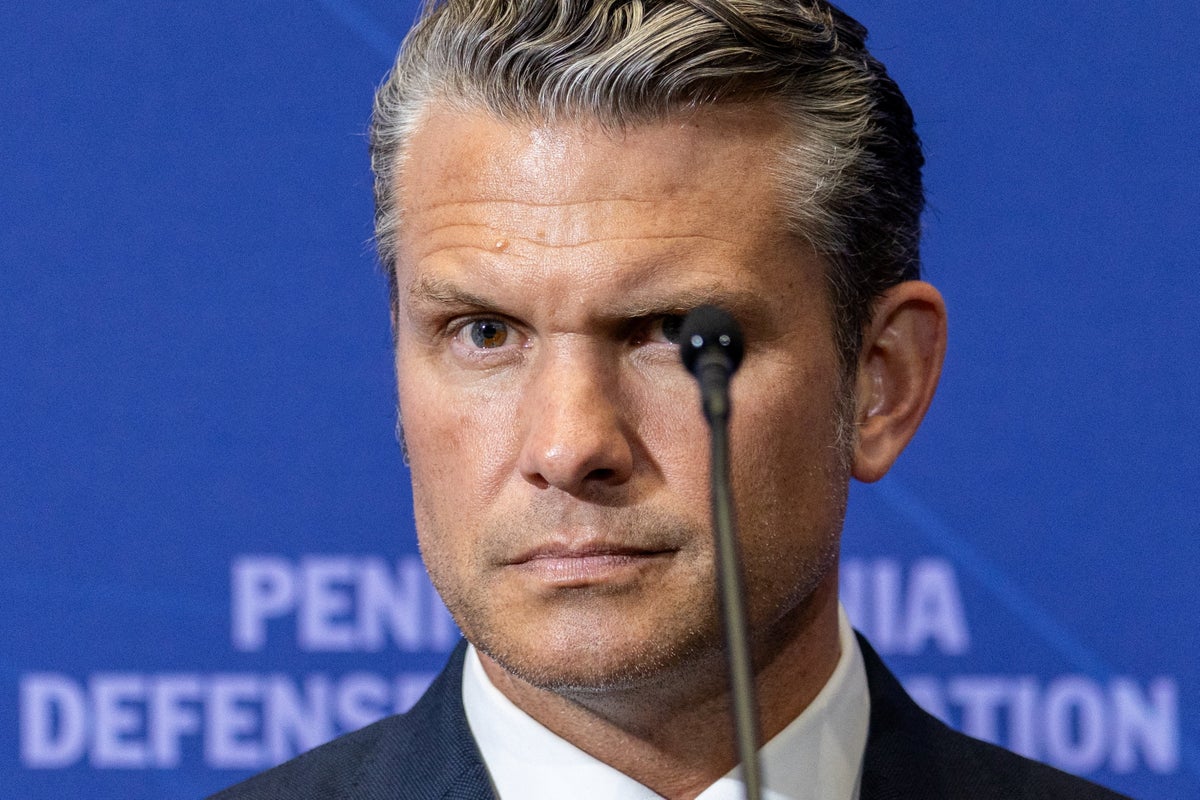
During his first term in office, Donald Trump bypassed decades of military tradition to issue highly controversial pardons to service members accused or convicted of war crimes. For years, observers wondered about the exact mechanics of those decisions. The answer arrived with startling clarity when Trump himself described the lobbying efforts of Pete Hegseth, the former Fox News host whom he would later select to lead the Department of Defense.
Trump recalled Hegseth’s relentless advocacy for these men. He described how Hegseth would walk into the Oval Office, carrying the stories of soldiers who had crossed the line.
But it was the criteria Hegseth used that laid bare the philosophy driving the effort.
According to Trump, Hegseth did not come to him pleading the cases of men who were unjustly accused or caught in administrative technicalities. He wanted pardons for the men who had done the most damage. He only ever wanted to help the ones who "killed a lot of people."
To the political base watching at home, this was framed as standing up for the forgotten warrior. To the men and women who actually wear the uniform, it felt like a profound betrayal of everything they had been taught about honor, discipline, and the laws of land warfare.
The Cost of the Exception
Consider what happens when the highest authority in the land decides that the rules are optional for the most violent.
In the military, discipline is not a secondary objective. It is the core requirement. Without it, an army is simply an armed mob with a flag. The rules of engagement exist to protect the innocent, but they also exist to protect the soldiers themselves. They are the only barrier keeping a young person from losing their humanity in the crucible of combat.
When those rules are cast aside from afar, the entire structure begins to splinter.
Take the case of Clint Lorance. In 2012, in the volatile provinces of Afghanistan, Lorance took command of an Army platoon. Within days, he ordered his men to open fire on three Afghan men riding a motorcycle. The men were unarmed. His own soldiers testified against him, detailing how he tried to cover up the shootings and lied to his superiors.
Lorance was court-martialed, found guilty of second-degree murder, and sentenced to nineteen years in prison. His own platoon members—the men who had to live with the moral stain of those deaths—were the ones who sought justice. They were the ones who insisted that what happened that day was not war. It was murder.
Yet, after a sustained campaign on cable television, Lorance was pardoned.
The message sent back to the barracks was devastatingly clear. The testimonies of the honest soldiers who stood up for the law did not matter. The careful deliberations of the military jury did not matter. What mattered was how the story could be packaged for a prime-time audience.
The Cult of the Hard Man
There is a persistent, dangerous myth that the best soldiers are the ones who lack a conscience. It is the cult of the "hard man"—the belief that civilized society only survives because there are monsters on the perimeter willing to do monstrous things on our behalf.
This is a spectator's view of warfare.
The veterans who have actually looked into the eyes of the people they were sent to protect know better. They know that the moment you treat the local population as subhuman, you have lost the war. You have turned every survivor into an insurgent. You have made the next roadside bomb inevitable.
By advocating exclusively for those who "killed a lot of people," the narrative shifts. It suggests that the ideal soldier is not the disciplined professional who exercises restraint under pressure, but the wild card who refuses to be bound by civilized constraints.
It elevates the rule-breaker above the rule-keeper.
Think about the quiet professional. The sniper who waits hours, confirms his target is an active combatant, and declines to shoot because a child walked into the frame. The medic who treats a wounded enemy fighter with the same care as his own squadmate, adhering to the laws of war even when his heart is breaking for his fallen brothers.
These are the true heroes of our military history. But their stories do not make for sensational, grievance-driven television segments. They do not yell. They do not provide the raw, polarizing anger that fuels modern media.
So they are ignored, while the men who desecrated corpses or ordered the execution of unarmed civilians are paraded as martyrs.
The View from the Trenches
The real danger of this philosophy is not just historical; it is active.
When a commander-in-chief signals that the most extreme actions will be excused if they are packaged correctly on television, it alters the calculations made by every soldier on the ground. It tells them that the chain of command is irrelevant. It suggests that if you commit a crime grave enough, you might just bypass your officers entirely and find a champion in a television studio.
It degrades the authority of the military justice system, a system designed to keep our forces accountable to the Constitution rather than political whims.
We are left with a system where mercy is not granted based on justice, contrition, or evidence, but on a bizarre metric of body counts and public relations value. It treats the lethal power of the state not as a tragic necessity to be governed by strict laws, but as a brand to be celebrated.
The young corporal at the checkpoint in Kandahar does not have the luxury of a television crew. He does not have a publicist. He only has his training, his values, and his faith that the country he serves stands for something decent.
When we tell him that the only soldiers worth saving are the ones who broke the rules and killed without distinction, we leave him entirely alone in the dust. We take away his armor, not the steel plates on his chest, but the moral armor that keeps him whole.
The damage of these easy pardons is not paid by the politicians who sign them or the hosts who lobby for them. It is paid in the slow, quiet erosion of the soldier's soul, long after the cameras have turned off and the studio lights have gone dark.