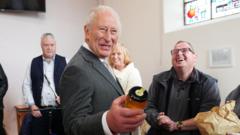
King Charles III recently turned a potentially embarrassing public mishap into a masterclass in modern crisis management during an official engagement. When a passing bird left its mark on the monarch, the situation was instantly defused not by a flurry of anxious aides, but by a sharp, self-deprecating quip from the King himself. "At least it wasn't on my head," he remarked, drawing laughter from the gathered crowd and immediately shifting the media narrative from an awkward indignity to a moment of relatable, lighthearted human connection.
Behind this fleeting interaction lies a sophisticated framework of contemporary public relations that the House of Windsor has spent decades perfecting.
The Anatomy of an Unrehearsed Moment
Public figures operate under an intense microscope. Every gesture, wardrobe choice, and facial expression undergoes rigorous scrutiny by the press and the public alike. When an unpredictable environmental factor disrupts a tightly scheduled event, the immediate reaction of the principal determines the media fallout.
Historically, heads of state maintained an aura of detached perfection. A mishap of this nature might have been met with a swift, hushed retreat or an awkward attempt by security to shield the monarch from view. Such a response invariably amplifies the incident, transforming a minor inconvenience into a symbol of rigid vulnerability or elitist detachment.
By choosing immediate acknowledgment, the King neutralized the comedic value of the event for critics. He controlled the punchline. This strategy relies heavily on the psychological principle of pratfall effect, where an individual’s perceived attractiveness or relatability increases after they commit a minor blunder, provided they are generally perceived as competent.
Weaponizing Levity in the Modern Media Ecosystem
The current information landscape rewards authenticity, or at least the convincing illusion of it. Social media algorithms prioritize raw, unpolished moments over carefully staged press releases. Royal communications teams understand that trying to suppress a visual gaffe in the era of smartphone cameras is an exercise in futility.
Instead, the modern strategy embraces the spin.
- Immediate Defusion: Addressing the issue within seconds prevents the press from framing the narrative as a disaster.
- Humor as an Equalizer: Self-awareness signals that the individual does not take themselves too seriously, bridging the gap between an ancient institution and a contemporary audience.
- Shifting the Focus: A quick joke redirects the conversation from the physical mess to the wit of the response.
This approach reflects a broader shift within institutional public relations. For generations, the royal family relied on the mantra of "never complain, never explain." While that rule still applies to deep structural critiques or family disputes, it has been abandoned for day-to-day public engagements. Today, the goal is accessibility.
The Strategy of Managed Spontaneity
It would be naive to view these moments as entirely accidental successes. While the bird itself was obviously unplanned, the capacity to handle the unexpected with grace is the result of rigorous, lifelong media conditioning.
Monarchs and high-level politicians undergo extensive briefing sessions. They are trained to operate under the assumption that things will go wrong, weather will fail, and crowds will be unpredictable. The core lesson of this training is simple: maintain composure at all costs.
When the King joked about the location of the drop, he demonstrated an acute awareness of how the image would look on the front pages the following morning. A stained jacket is a minor, forgettable detail; a stained crown or a look of aristocratic disgust would be an enduring meme. By ensuring the crowd laughed with him rather than at him, he preserved the dignity of the office while showcasing a distinctly British sense of stoicism.
The Risk of Over-Correction
There is a delicate balance to maintain here. If a public figure appears too polished, they look robotic. If they appear too casual, they risk degrading the authority required for their role.
Had the King reacted with excessive drama or spent too much time discussing the matter, it would have looked desperate. The brilliance of the interaction was its brevity. A single sentence, a shared smile, and an immediate return to the business at hand. This signaled to the onlookers that the incident was trivial, unworthy of disrupting the serious work of the day.
The Evolution of Royal Media Relations
To understand why this moment succeeded, one must look at the historical trajectory of royal interactions with the press. Queen Elizabeth II maintained an iron wall of mystique. Her public appearances were flawless, silent, and deeply symbolic. She rarely spoke spontaneously to cameras, preferring structured speeches where every syllable was vetted.
The current reign operates under a vastly different set of cultural expectations. The public demands transparency and a sense of shared humanity from its leaders. The institution can no longer survive purely on deference; it requires affection and cultural relevance.
This creates a paradox for royal strategists. They must preserve the grand theater of monarchy for state occasions while delivering a grounded, approachable figurehead for daily consumption. Incidents like this provide the perfect vehicle for the latter. They offer proof that beneath the ceremonial robes and historical titles is a person who can laugh at life's minor indignities just like anyone else.
The true test of a public relations strategy is not how it functions during a scripted speech, but how it holds up when the script is thrown out. By leaning into the absurdity of the moment, the King didn't just survive a minor public embarrassment; he actively strengthened his connection to the public by showing that even a monarch is subject to the unpredictable whims of nature.


