Grief makes pragmatists of us all. When you inherit a massive, sprawling estate—whether it is a suburban house packed with decades of porcelain figurines or the ancient, gilded machinery of the British Crown—you do not keep everything. You look at the ledger. You look at the maintenance costs. You make cuts.
In the autumn of 2022, following the death of Queen Elizabeth II, King Charles III inherited one of the most storied, expensive, and emotionally freighted hobbies on earth: the Royal Stud. For seventy years, the late Queen had poured her fierce, quiet passion into breeding and racing thoroughbreds. She knew their bloodlines better than she knew the genealogies of European dukes. She watched their morning gallops at Sandringham with binoculars pressed to her eyes, wearing a headscarf against the Norfolk wind. If you found value in this piece, you should read: this related article.
Charles, however, is a man of gardens, architecture, and organic farming. Horses were his mother’s obsession, not his. So, within weeks of ascending the throne, the new King began trimming the stables at Newmarket. Dozens of horses were sent to the Tattersalls autumn sales.
Among them was a modest, unassuming chestnut gelding named Gilded Water. For another angle on this story, refer to the latest coverage from The Athletic.
Sold. Gone. A line item crossed off a royal balance sheet.
Fast forward to the first Tuesday in November at Flemington Racecourse in Melbourne, Australia. Over eighty thousand people—dressed in morning suits, fascinator hats, and designer silks—packed the grandstands, holding their breath as twenty-four horses thundered down the two-mile stretch of turf in the Melbourne Cup. It is the race that stops a nation, a brutal, lung-bursting test of stamina worth more than eight million Australian dollars.
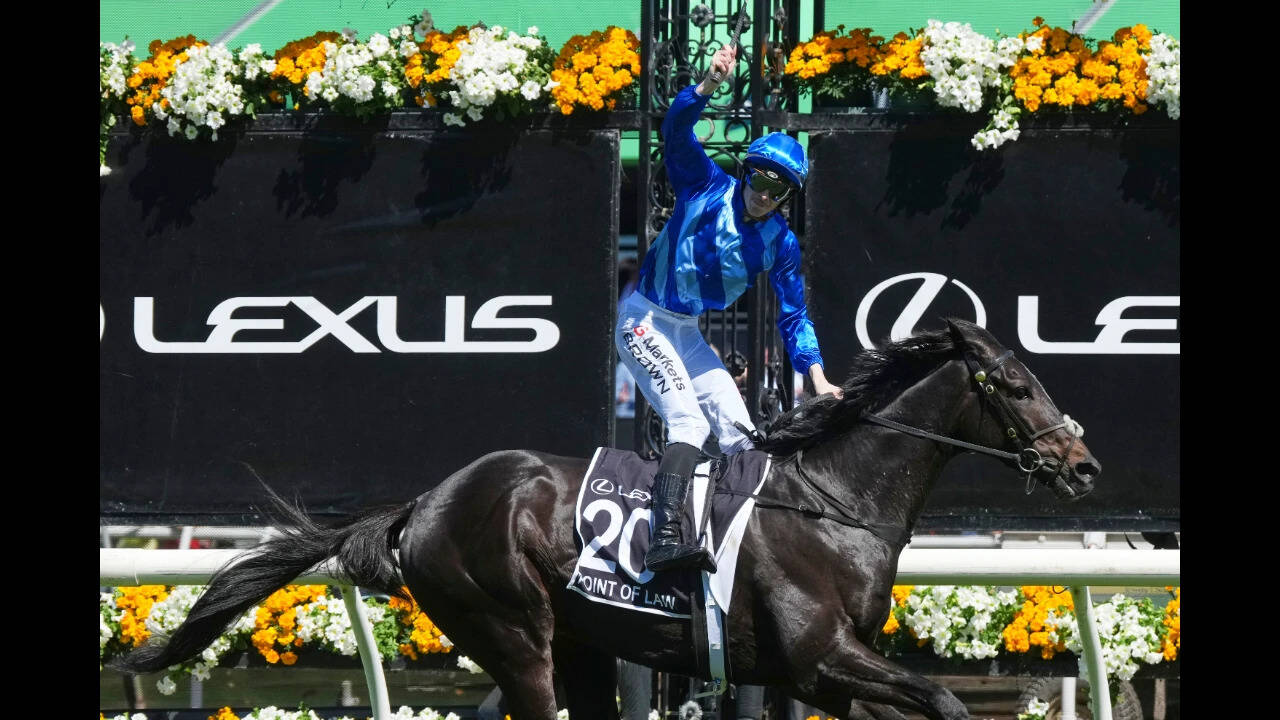
And crossing the finish line first, mud spraying from his hooves and a roar shaking the southern hemisphere, was the horse King Charles didn't want.
The Anatomy of a Misjudgment
To understand the sheer, delicious irony of a discarded royal horse winning Australia’s greatest sporting prize, you have to understand how thoroughbred racing actually works. From the outside, it looks like a game of crystal balls and billionaire intuition. In reality, it is closer to blindfolded archery.
Think of a young racehorse as an unedited manuscript sitting on a publisher's slush pile. The pedigree—the sire and dam—is the author's credentials. Gilded Water had impeccable credentials, bred from deep royal bloodlines that stretched back generations. Yet, on the training tracks of England, he looked ordinary. He was slow to mature, a bit gangly, lacking the explosive early speed that makes European trainers salivate over two-year-old colts.
When a horse fails to dazzle early in Britain, the clock starts ticking. Training fees at Newmarket run tens of thousands of pounds a year. Even for a monarch, keeping a stable of over a hundred horses requires ruthless culling. You keep the sprinters that win at Royal Ascot; you sell the slow-burners at Tattersalls.
I have stood in the bidding ring at Tattersalls on a freezing October afternoon, watching the breath of auctioneers turn to steam in the floodlights. The atmosphere is thick with tobacco, wet wool, and quiet desperation. Buyers clutch catalogues marked with frantic pen scratches, trying to spot the genetic glitch or the hidden engine that everyone else missed. When a royal horse enters the ring, the room goes quiet. People assume the Palace knows something they don't. If the King is selling, the thinking goes, the horse must have a glass jaw or a slow heart.
So, when Gilded Water went under the hammer, he didn't command the astronomical sums reserved for future champions. He was bought by a syndicate of Australian owners and shipped ten thousand miles away to the Southern Hemisphere, where the grass is different, the climate is warmer, and—most crucially—the racing culture worships endurance over flash.
Why Australia Changes Everything
European flat racing is often a game of tactical sprints over rolling, undulating turf. Australian racing, particularly the kind geared toward the Melbourne Cup, is a war of attrition.
Imagine taking a marathon runner who looks clumsy and awkward during a hundred-meter dash, cutting him from the track team, and watching him win Olympic gold three years later in the twenty-six-mile race. That is the exact biological shift that happens when an English stayer is exported to Victoria.
In Britain, Gilded Water was asked to accelerate quickly over shorter distances—a style of racing that punished his big, loping stride. Under the care of Australian trainers, however, his entire routine changed. He wasn't pushed to peak early. He was given time to grow into his massive frame, conditioned on flat, rhythmic tracks, and trained specifically for the grueling, two-mile slog of the Flemington turf.
Consider the invisible stakes here. For the syndicate of everyday Australian owners who pooled their money to buy him, this wasn't a tax write-off or a heritage obligation. It was the dream of a lifetime. Many of them were small business owners, retirees, and lifelong punters who had spent decades losing money on slow horses just for the microscopic chance of standing in the Flemington mounting yard on the first Tuesday in November.
When the gates crashed open at 3:00 PM local time, nobody in the royal household was likely watching. Why would they? The King was half a world away, dealing with statecraft, red boxes, and the endless, suffocating protocol of the British monarchy.
Two Miles of Pure Attrition
A two-mile horse race is not a sprint; it is a rolling chess match played at thirty-five miles per hour.
For the first mile, Gilded Water sat buried in the pack, conserving energy while faster, flashier horses burned through their oxygen reserves up front. This is where the amateur observer gets confused, assuming a horse sitting twelfth or thirteenth is out of contention. In truth, the jockey is acting like a careful accountant, rationing every ounce of glycogen in the animal's muscles for the final six hundred meters.
As the field swung around the home turn into the famous Flemington straight, the early leaders began to falter. Their strides shortened. Their heads came up. The brutal weight of the handicap and the relentless distance took their toll.
Then, from the center of the track, the chestnut gelding with the royal pedigree found another gear.
He didn't explode past the field like a sprinter; he simply refused to slow down while everyone else hit the wall. Stride after relentless stride, he swallowed up the ground, passing horses that had cost three times as much at auction, guided by a jockey who knew the exact millisecond to ask for everything the horse had left.
When he hit the wire a length clear, the roar from the grandstand was deafening. Champagne corks exploded across the lawn. Grown men wept openly into their race books, clutching tickets that had just turned into small fortunes.
The Ghost in the Winner's Circle
There is a peculiar, lingering melancholy that hangs over stories like this, even amid the confetti and the silver trophies.
Had Queen Elizabeth II lived, Gilded Water would almost certainly never have left British soil. The late Queen adored stayers—horses with deep chests and stubborn hearts that could grind out a victory over long distances. She famously watched her own horses race in Australia from the drawing room at Windsor, cheering with an uncharacteristic lack of royal restraint. Watching a horse she bred win the Melbourne Cup would have been one of the crowning joys of her twilight years.
Instead, the trophy was hoisted by a group of jubilant Australians who had bought the horse at a discount because the new King wanted to balance the books.
To be fair to Charles, running a monarchy in the twenty-first century requires optics of fiscal responsibility. You cannot preach sustainability and modern restraint while maintaining a bloated, hyper-expensive racing operation that hemorrhages millions of pounds a year. Reducing the size of the Royal Stud was the logical, sensible, thoroughly modern thing to do.
Logic, however, has a terrible track record at the racetrack.
Thoroughbreds do not care about balance sheets, royal succession, or pruning strategies. They are creatures of blood, bone, and stubborn instinct, completely indifferent to the crowns painted on the silks of their riders. Sometimes, greatness simply needs a change of scenery, a warmer sun, and someone patient enough to wait for it to wake up.
At Flemington, as the sun began to dip below the Melbourne skyline and the crowds slowly drifted toward the train stations, the newly minted Melbourne Cup champion stood quietly in his stall, steam rising from his coat as a groom hosed down his legs. Millions of dollars richer, immortalized in Australian sporting history, and completely unaware that he was supposed to be a royal castoff.