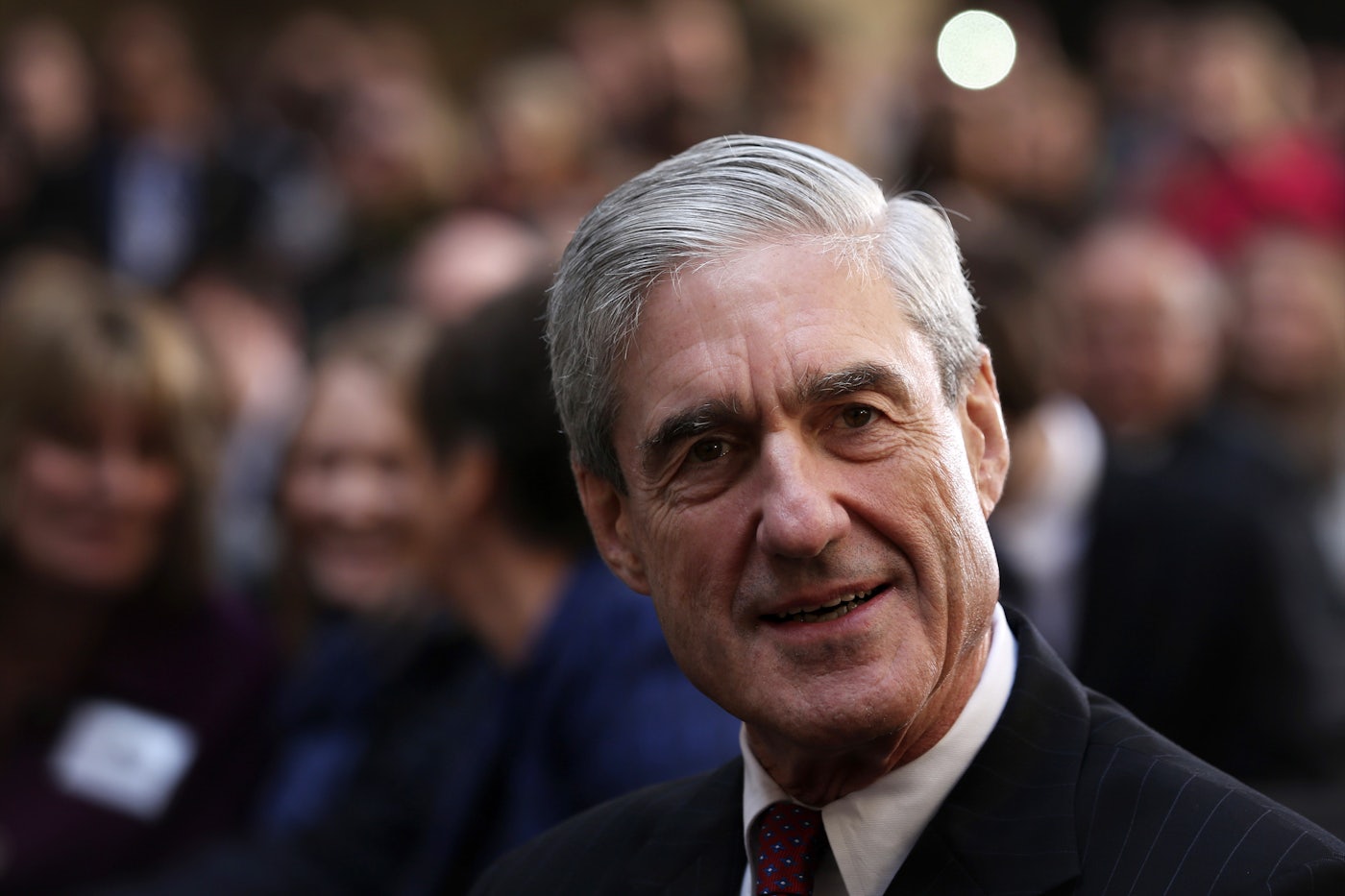
Robert S. Mueller III, the former FBI director and special counsel who spent his final active years as the most polarized figure in American law enforcement, died Friday night at the age of 81. His family confirmed the passing on Saturday morning, ending the life of a man who served as a Marine in Vietnam and later led the FBI through the crucible of the September 11 attacks. While the official reports will focus on his decades of service, his death marks more than the end of a long career. It signals the final collapse of the "institutional man"—the belief that a strictly non-partisan, process-driven official could survive a political environment that has no interest in neutrality.
Mueller died in the wake of a prolonged battle with Parkinson’s disease, a diagnosis that kept him largely out of the public eye after his halting 2019 congressional testimony. That final appearance on Capitol Hill was a jarring departure from the "Bobby Three Sticks" persona—the ramrod-straight, meticulously prepared prosecutor who had transformed the FBI from a domestic crime unit into a global counterterrorism machine.
The burden of the 9/11 transformation
Mueller took over the FBI exactly one week before the Twin Towers fell. The timing was more than unfortunate; it was a mandate for a total overhaul. Before Mueller, the Bureau was a reactive agency, pridefully local and focused on catching bank robbers and mobsters after a crime had been committed. After 9/11, Mueller was forced to pivot toward intelligence and prevention, a move that often set him at odds with the agency’s old guard.
He stayed for twelve years, two more than the statutory limit, under both George W. Bush and Barack Obama. During that time, he built a reputation for a terrifyingly disciplined work ethic. He was known to strike every instance of the word "I" from his speeches, insisting that the work belonged to the institution, not the individual. This refusal to engage in self-promotion or personality-driven politics made him the obvious choice for Deputy Attorney General Rod Rosenstein when a special counsel was needed in 2017 to investigate Russian interference.
The special counsel trap
When Mueller accepted the role of special counsel, he was widely viewed as the last honest man in Washington. Republicans and Democrats alike praised his integrity. It was a rare moment of consensus that would not survive the first year of his investigation.
The investigation yielded 34 indictments, including top Trump campaign officials like Paul Manafort and Rick Gates. It exposed a systematic Russian effort to tilt the 2016 election. Yet, the 448-page Mueller Report failed to deliver the one thing the American public had been conditioned to expect by cable news: a simple, binary verdict. By adhering to a strict Department of Justice policy that a sitting president cannot be indicted, Mueller produced a document that refused to "reach a conclusion" on whether Donald Trump had obstructed justice.
"If we had confidence after a thorough investigation of the facts that the President clearly did not commit obstruction of justice, we would so state."
That sentence, tucked into the report, was Mueller's attempt to signal to Congress that the ball was in their court. He operated on the assumption that the constitutional process of impeachment would take the facts he gathered and apply them. He was wrong. Instead, the report was swallowed by a vacuum of partisan interpretation. Attorney General William Barr’s four-page summary preemptively framed the findings as an "exoneration," a narrative that took hold long before the public saw a single redacted page.
A legacy of silence in a loud era
Mueller's greatest strength—his silence—became his greatest liability in the digital age. While he stayed behind a wall of "no comment," his opponents used that silence to define him. To the right, he was the face of a "deep state" conspiracy. To the left, he was a disappointment, a man too wedded to dusty protocols to save the republic from itself.
The 2019 testimony was the breaking point. For years, the public had imagined Mueller as a sharp-edged crusader. When he appeared before the House Judiciary Committee, he seemed frail and struggled to recall specific details of his own report. The performance was widely panned as a disaster. It was later revealed that his health had already begun to decline, but the damage to his public image was done. The man who had once been the ultimate authority on the facts appeared to have been overtaken by the very speed of the world he was trying to regulate.
The reaction and the rift
The news of his death immediately reignited the same fires that defined his final years. Donald Trump, on his social media platform, celebrated the passing, calling Mueller a man who "can no longer hurt innocent people." It was a blunt reminder that the tradition Mueller represented—one where a career civil servant could be respected by both sides—is effectively dead.
Mueller’s death is not just a personal loss for his family or a historical footnote for the FBI. It is the closing chapter on an era where we believed that "the work speaks for itself." In a media environment where the loudest voice wins, Mueller’s insistence on the quiet application of the law was viewed by many as a failure of nerve. In reality, it was a stubborn refusal to change his DNA to fit a mutated political landscape.
He leaves behind a Justice Department that remains deeply scarred by the investigations he led and an FBI that still struggles to balance its law enforcement roots with its intelligence-gathering requirements. His life was defined by the belief that the rules are more important than the outcome. Whether that belief can survive the current century is a question he left unanswered.
The funeral services for the former director are expected to be held in Washington D.C., where the attendees will likely include the very people who spent the last decade debating whether he was a hero or a villain. Mueller, true to form, will have nothing to say about it.
Would you like me to analyze the specific legal precedents established by the Mueller investigation's 34 indictments?