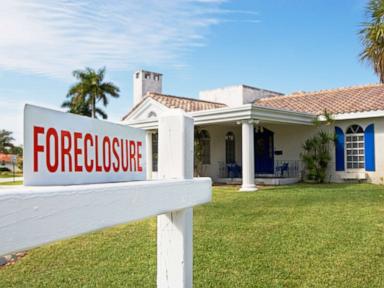
Panic sells clicks. Every time headline writers catch a slight uptick in foreclosure filings, they dust off their 2008 playbooks, queue up images of rusty padlock chains, and scream that the sky is falling.
It is lazy. It is wrong. And it completely misses how housing economics actually work.
The media looks at a raw percentage jump in default notices and declares an impending doom. What they refuse to tell you is that a surge from near-zero is still near-zero. We have spent the last several years living through an artificially suppressed distress environment. What commentators are calling a crisis is actually a long-overdue return to baseline economic hygiene.
If you are waiting for a foreclosure wave to crash the housing market and hand you a half-price home, stop holding your breath. Here is what is really happening beneath the noise.
The Mathematical Illusion of the Spiking Distress Rate
The entire "foreclosure crisis" narrative relies on a basic trick of financial statistics: percentage shifts from extreme low baselines.
If a town records two foreclosures in January and four in February, headlines will trumpet a 100% surge in bank repossessions. Technically true. Economically meaningless.
During the pandemic era, foreclosure moratoria, forbearance programs, and massive fiscal stimulus drove default rates down to historical lows. Mortgage distress practically ceased to exist on paper because the legal machinery to process defaulting borrowers was legally halted.
Now, as court dockets clear and legacy defaults work through the system, filing volume is moving back toward pre-pandemic norms.
To put this in perspective: total foreclosure filings remain significantly lower than standard historical averages established over the last thirty years. In a healthy, dynamic economy, some level of default is not just normal—it is necessary. It signifies that credit markets are functioning, risks are being realized, and non-performing assets are being recycled back into active circulation.
The Equity Cushion Prevents 2008 Style Collapses
People love to compare today to the Great Financial Crisis. The comparison falls apart the second you examine balance sheets.
In 2008, the market was flooded with exotic mortgage products: subprime loans, option ARMs, zero-down-payment structures, and predatory balloon payments. Homeowners had zero skin in the game. The moment property values dipped by 5%, millions of borrowers were instantly underwater, owing more on their mortgages than their homes were worth. Walking away was the rational financial move.
Today’s borrower profile is the exact opposite.
Due to strict qualified mortgage standards enforced since 2014, the vast majority of current homeowners hold fixed-rate mortgages backed by rigorous income verification. More importantly, they sit on an unprecedented mountain of home equity built over years of historic home price appreciation.
Imagine a homeowner who falls into financial distress today due to job loss or medical emergency.
Even if they default on their monthly payments, they almost certainly hold 30%, 40%, or 50% in net home equity. Bank repossession is the absolute last resort because the homeowner has a far better option: list the property on the open market, sell it through a traditional real estate transaction, pay off the mortgage balance, and walk away with cash in hand.
Distressed sales today happen as normal market transactions long before they ever reach the auction block. The bank never gets the keys because the market absorbs the asset first.
Why Freezing Foreclosures Squeezed Home Buyers
For years, well-meaning policies sought to halt foreclosures entirely. While intended to protect families, total suppression of mortgage defaults creates severe side effects across the broader housing economy.
When distressed assets are permanently locked out of the market through perpetual forbearance, housing turnover drops. Inventory shrinks to microscopic levels. First-time home buyers find themselves priced out of competitive metropolitan areas because existing inventory is completely frozen.
A functional foreclosure process serves an essential economic purpose: asset reallocation.
When a property sits in permanent default without resolution, it degrades. Neighborhoods stall. Capital remains trapped in non-performing debt. By allowing the natural default pipeline to clear non-viable positions, inventory re-enters the supply chain.
For real estate buyers who have spent years sidelined by record-low housing inventory, a normalizing foreclosure pipeline is not a threat. It is the first breath of supply oxygen the market has seen in years.
The Flaw in the Crash Narrative
People asking "When will foreclosures crash the market?" are asking the wrong question entirely.
The real question is: why are you expecting a inventory flood when systemic underwriting standards have never been stronger?
The fundamental driver of property values is supply and demand, not paper filings. With structural housing deficits persisting across major metropolitan markets, the limited trickle of repossessed properties hitting the market will be absorbed almost instantly by institutional investors, retail buyers, and sidelined capital waiting on the margins.
Stop reading raw percentage increases out of context. The housing market is not collapsing; it is simply shedding its artificial life support and returning to historical realities.
If you are managing portfolio risk or trying to buy a primary residence, stop waiting for a fire sale that is mathematically impossible under current equity levels. Adjust to the real mechanics of supply, build your capital buffers, and act on real market conditions rather than headline hysteria.