Walk down to the docks at Warnemünde, on Germany’s Baltic coast, and the world feels vast, quiet, and intensely cold. The container ships slide past the horizon like dark, rusted ghosts, their hulls laden with the mundane machinery of global life—car parts from Stuttgart, electronics from Taipei, solar panels from Shanghai. The water here feels light-years away from the tropical, sun-bleached ripples of the South China Sea.
Yet, they are tied together by a single, invisible thread.
When a German president travels halfway across the globe to stand on a shoreline in Southeast Asia and speak of tension, he is not just engaged in the polite theater of diplomacy. He is acknowledging a terrifying reality of the modern age. Distance is dead. A tremor in a disputed patch of water thousands of miles away can shatter the economy of a quiet German port town within weeks.
To understand why Europe is suddenly gripped by anxiety over a body of water it does not border, you have to look past the military briefings and look at the map through the eyes of the people who actually move the world.
The Invisible Highway
Consider a hypothetical sea captain named Thomas. He has spent thirty years navigating the maritime highways, commanding vessels the size of horizontal skyscrapers. When Thomas steers a mega-container ship out of the Malacca Strait and enters the South China Sea, he is entering the most critical economic artery on Earth.
Nearly a third of all global maritime trade flows through this single body of water.
For Europe, this is not an abstract geopolitical sandbox. It is the grocery store. It is the pharmacy. It is the factory floor. If those shipping lanes choke, the consequences do not stay in Asia. They land on the shelves of supermarkets in Paris, Berlin, and Rome.
The current anxiety stems from a simple, unyielding fact: China claims sovereignty over almost the entire sea, drawing a sweeping "nine-dash line" that swallows the maritime zones of Vietnam, the Philippines, Malaysia, and Brunei. To solidify this claim, Beijing has spent years turning tiny reefs and sandbars into heavily fortified military outposts, complete with runways, radar domes, and missile batteries.
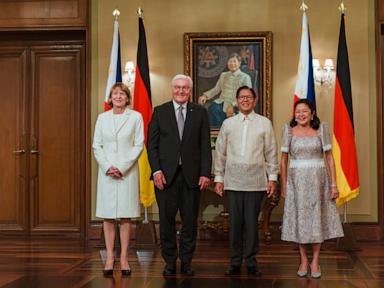
During a state visit to the region, German President Frank-Walter Steinmeier made the European position explicitly clear. The message was polite, wrapped in the careful verbiage of international diplomacy, but the undercurrent was pure steel. Europe is watching. Europe is worried.
The fear is not necessarily that a full-scale world war will erupt tomorrow. The fear is friction.
In shipping, friction is fatal. If a commercial vessel has to reroute around the South China Sea to avoid military exercises or aggressive coast guard maneuvers, it must travel around Australia or through the deeper parts of the Pacific. That adds days to a journey. It burns thousands of tons of extra fuel.
In a world built on "just-in-time" supply chains, a delay of five days means a car assembly line in Bavaria grinds to a halt because a single semiconductor didn’t arrive. It means a hospital in Hamburg faces a shortage of basic antibiotics.
The Memory of Broken Chains
It is easy to forget how fragile our interconnected world actually is until the gears jam. European leaders are haunted by the recent memories of the pandemic and the energy crisis sparked by the war in Ukraine. Those events proved that comfort is an illusion.
For decades, European foreign policy operated on a comfortable assumption: trade creates peace. The theory was that if you bind nations together through commerce, war becomes too expensive to contemplate. It was a beautiful, rational idea.
It was also wrong.
The sudden cutoff of Russian gas forced Europe into a brutal, expensive awakening. It learned that dependencies can be weaponized overnight. That hard-earned lesson is exactly why the German presidency is focusing so intently on Southeast Asia now. Europe cannot afford to be caught off guard a second time.
The South China Sea is the ultimate choke point. If freedom of navigation is compromised there—if a single superpower decides who gets to pass and under what conditions—the concept of international law collapses.
This is the core of the European argument. Steinmeier’s warnings in the region were anchored heavily in the defense of the United Nations Convention on the Law of the Sea (UNCLOS). It sounds like dry legal jargon, but UNCLOS is the only thing preventing global waters from reverting to the law of the jungle, where the biggest navy writes the rules.
The Weight of the Smallest Nation
To truly feel the tension, you have to look at the places where the friction is literal.
In recent months, the waters around the Second Thomas Shoal have become a flashpoint. Here, a tiny, rusting World War II-era ship called the BRP Sierra Madre sits intentionally grounded on a reef. A handful of Filipino marines live aboard it, guarding their nation’s maritime territory.
Chinese coast guard vessels have repeatedly used water cannons and aggressive blocking maneuvers to stop Philippine boats from resupplying those marines.
[Global Maritime Trade Distribution]
───────────────────────────────────────────────────────
██████████████░░░░░░░░░░░░░░░░  ~33% Passes Through
                                South China Sea
───────────────────────────────────────────────────────
When a massive steel hull slams into a small wooden resupply boat, the splash is heard in Brussels. Why? Because the Philippines has a mutual defense treaty with the United States. If an accidental collision escalates into a military conflict, the world's two largest economies are dragged into a direct confrontation.
Europe, tied inexorably to the American security umbrella and the global financial system, would be pulled into the economic abyss instantly.
This explains the shift in European strategy. You are no longer seeing just words; you are seeing hulls. Germany, France, and the Netherlands have begun sending warships to transit the South China Sea on freedom of navigation deployments. It is a high-stakes gamble designed to show that these waters belong to everyone.
The Price of Standing Up
There is an inherent vulnerability in this position, and European leaders know it.
China is Germany’s largest trading partner. Every sharp statement issued by Berlin, every warship sent through the Taiwan Strait or the South China Sea, risks a retaliatory economic strike from Beijing. It is a tightrope walk over a gorge.
If Europe stays silent, it allows the erosion of the international rules that protect its own security. If Europe speaks too loudly, it invites immediate economic pain.
But the silence is fading. The anxiety expressed by the German presidency reflects a growing consensus across the continent: the cost of inaction is now higher than the cost of speaking out.
The true stakes are not about who owns a collection of uninhabited coral reefs. They are about whether the global order will be governed by rules or by raw power. For a continent that survived the twentieth century by finally learning to replace conflict with law, that is a question of existential survival.
Back on the Baltic coast, the sky turns a deep, bruised violet as the sun sets. A fisherman packs up his gear, completely unaware of the political maneuvering happening in manicured government halls in Manila or Berlin. He doesn't think about the Second Thomas Shoal. He doesn't think about presidential itineraries.
He doesn't have to. Not yet.
But the water touching his boots is part of the same vast, unbroken ocean that laps against the hulls of warships in the tropics. If that distant ocean catches fire, the freeze will be felt here, on these quiet northern shores, long before the smoke ever clears.