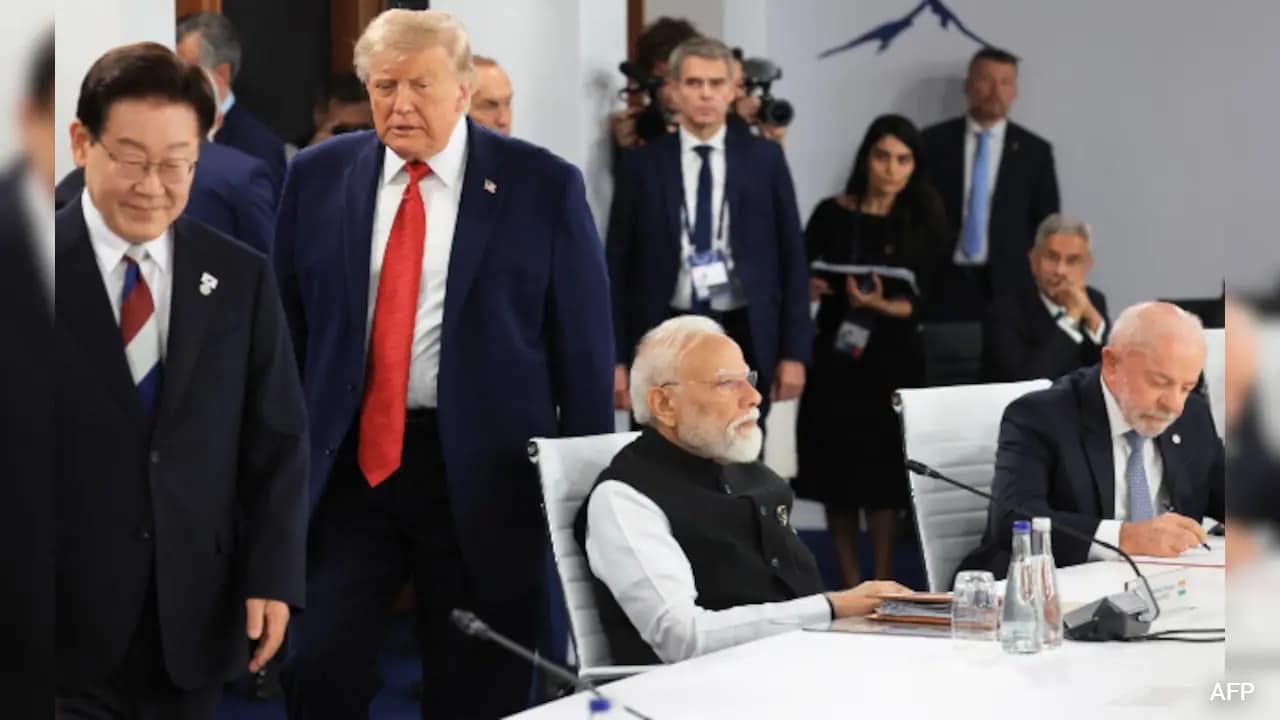
International diplomacy operates on an implicit code of structural equilibrium, where institutional protocol serves to neutralize asymmetrical power dynamics among sovereign states. When a Head of State deliberately breaches this protocol, the action is rarely an isolated error; it is a tactical deployment designed to recalibrate interpersonal leverage. The recent viral interaction at the G7 summit in France, where US President Donald Trump entered a final-day session declaring, "I'm the boss," followed by the subsequent clarification that he was "trying to be funny, not the boss," offers a clear case study in calculated disruptive rhetoric.
To analyze this event strictly as a gaffe or a spontaneous joke ignores the mechanics of modern political communication. Instead, this dynamic can be dissected using established concepts from game theory, behavioral economics, and strategic communications. By mapping the interaction through these formal lenses, we can isolate the actual mechanisms of leverage, narrative control, and diplomatic fallout that occur when domestic political branding collides with multilateral statecraft.
The Two Stages of Disruptive Communication
The interaction follows a precise two-step cycle used to establish a dominant position while retaining plausible deniability. This cycle can be broken down into two distinct phases:
Phase 1: Asymmetrical Power Signalling
By walking into a room of sovereign peers and declaring unilateral authority ("I'm the boss"), the actor executes a dominance display. In multilateral forums like the G7, decisions require consensus, meaning all members are structurally equal. Introducing a claim of hierarchy directly challenges the established equilibrium.
This creates a cognitive bottleneck for the other participants. If the remaining leaders remain silent, they passively accept the subverted hierarchy. If they react defensively, they validate the assertion by demonstrating that it threatened their positioning. The immediate effect is a structural destabilization of the room's power dynamics, giving the instigator a psychological first-mover advantage.
Phase 2: Plausible Deniability and Humor Recalibration
The second phase occurs when the instigator walks back the assertion under the guise of humor ("I was trying to be funny"). In communication theory, this acts as an off-ramp designed to defuse formal pushback. By reclassifying an assertive statement as a joke, the speaker shifts the burden of interpretation onto the audience.
If a peer objects to the initial statement, they risk appearing overly rigid, literal, or lacking in humor. This maneuver preserves the underlying message of dominance for domestic audiences who favor a strong stance, while technically neutralizing the offense within the diplomatic room.
The Cost Function of Multilateral Friction
While disruptive rhetoric yields short-term attention and domestic political capital, it carries measurable transaction costs in international relations. Multilateral diplomacy relies on a currency of trust and predictable alignment. When these variables are disrupted, a clear cost function emerges across multiple diplomatic fronts.
The Breakdown of Allied Reciprocity
The primary casualty of asymmetric signaling is allied goodwill. Immediately following the summit, external friction manifested when the administration claimed Italian Prime Minister Giorgia Meloni had "begged" for a photograph—a claim Meloni sharply rejected as a complete fabrication, stating that "Italy and I never beg." This rhetorical escalations led directly to Italian Foreign Minister Antonio Tajani canceling a scheduled diplomatic visit to the United States.
The cost here is quantifiable in lost diplomatic utility. When a state routinely insults its security and economic partners, it creates a bottleneck in collaborative negotiations. Future agreements require more explicit guarantees, enforcement mechanisms become costlier, and informal concessions disappear.
The Bifurcation of Public and Private Signals
A structural paradox emerges between private negotiations and public declarations. At the same summit, significant policy shifts were underway, including the preliminary steps toward a memorandum of understanding to halt conflicts in West Asia and stabilize maritime trade routes in the Strait of Hormuz.
When public communication focuses entirely on dominance displays, it creates a credibility gap. Allies must constantly calculate whether the private commitments made by an administration will be undermined by public rhetorical pivots designed for domestic consumption. This variance increases the risk premium for any nation entering into long-term strategic treaties with the United States, as seen by the immediate pushback from former national security officials who labeled the diplomatic maneuvers a structural disaster.
Strategic Realignment and the Domestic Audience
The ultimate driver of this communication strategy is the prioritization of domestic political equity over external institutional standing. For a populist leader, international summits are not merely forums for policy execution; they are backdrops for the projection of domestic strength.
- The Domestic Optimization Vector: The domestic audience views the subversion of foreign protocols as a sign of strength and refusal to bow to globalist institutions. A viral clip of foreign leaders laughing or looking uncomfortable is interpreted at home as a successful assertion of national supremacy.
- The Institutional Erosion Premium: The long-term risk of this strategy is the degradation of the multilateral frameworks that historically protected American interests. When the G7 is reduced from a policy-coordination body to a venue for competitive rhetoric, the institutional capacity to manage global economic crises or security threats diminishes.
The definitive trajectory of this diplomatic style points toward an increasingly transaction-based, bilateral international landscape. As classic multilateral alliances degrade under the weight of strategic friction, international relations will look less like a stable framework of shared norms and more like a series of isolated, short-term negotiations where leverage must be continuously re-established by raw power metrics rather than institutional consensus.