The French "Journal officiel" recently printed a law regarding the restitution of looted cultural property, and the art world let out a collective, self-congratulatory sigh of relief. They think they solved a century-old problem with a few strokes of a pen. They are wrong.
This framework law, designed to streamline the return of objects taken during the colonial era, is being hailed as a victory for justice. In reality, it is a bureaucratic surrender that prioritizes performative politics over the actual preservation of human history. We are watching the systematic dismantling of the "universal museum" concept, replaced by a fragmented, nationalistic approach to heritage that benefits politicians more than the public.
The Myth of the Clean Slate
The prevailing narrative suggests that by returning an object, we "undo" the colonial crime. This is a logical fallacy. History is not a chalkboard you can wipe clean. An object taken in 1897 and housed in Paris for 120 years has acquired a new layer of history—one of global interaction, scholarship, and, yes, conflict.
When the French state simplifies the exit of these works from national collections, it isn't just returning an artifact; it is erasing a century of shared, albeit painful, context. The "lazy consensus" says that "belonging" is tied strictly to soil and DNA. I’ve sat in rooms with curators who are terrified to say the quiet part out loud: culture is fluid. It migrates. The moment we decide that an object has a singular, permanent home based on 19th-century borders, we kill the very essence of what makes art universal.
The Bureaucratic Trap of "Pillaged"
The new law hinges on the definition of "pillaged" or "stolen" goods. On paper, this sounds objective. In practice, it is a nightmare of shifting definitions.
Standard art history often overlooks the nuance of "unequal treaties" or "forced sales" that weren't technically thefts at the time but are now viewed through a modern moral lens. By creating a fast track for restitution, France is inviting a flood of claims that will be decided by committees, not historians.
Imagine a scenario where a kingdom in 1850 sold an artifact to buy European weapons. Under the current trajectory, that sale could be reclassified as "coerced" because of the power imbalance. If we apply that standard across the board, every museum in the world—from the Met to the Louvre—would be empty by Tuesday.
- The Problem: Restitution focuses on the act of taking, ignoring the act of keeping.
- The Reality: Many of these objects only survive today because they were housed in climate-controlled, secure European environments during periods of extreme regional instability.
The Universal Museum is Under Siege
We are losing the idea of the "Cosmopolitan Canopy." The universal museum—the British Museum, the Louvre, the Pergamon—was built on the Enlightenment ideal that human achievement belongs to everyone. It allows a student in Paris to see the genius of the Kingdom of Benin alongside the masterworks of the Italian Renaissance.
By breaking these collections apart and sending them back to their points of origin, we are effectively telling the world that you must travel to specific, often inaccessible or unstable regions to see "your" history or "their" history. It’s a return to tribalism.
If we follow this logic to its bitter end, why should the Louvre keep the Mona Lisa? It was painted by an Italian. Why should New York keep the Temple of Dendur? This hyper-fixation on "original" ownership ignores the fact that art, once released into the world, becomes the heritage of the human species, not just the local municipality.
The Hidden Cost of Moral Posturing
Let’s talk about the scars I’ve seen in this industry. I’ve watched institutions return masterworks only to see them disappear into private collections of local elites or languish in crates because the receiving nation lacks the infrastructure to maintain them.
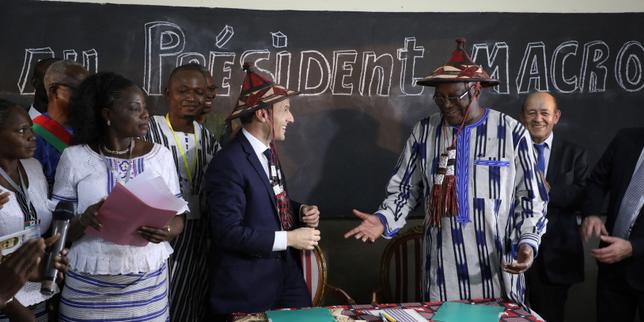
The French law makes no mention of the massive financial and technical burden it places on the receiving end. It’s a "drop and run" policy. France gets the moral high ground and a nice photo op, while the objects themselves face an uncertain future.
True "restitution" would involve 50-year funding guarantees for new museums in the global south, massive digital sharing initiatives, and rotating long-term loans. Instead, we get a law that makes it easier to get rid of the "problem" so politicians can stop answering uncomfortable questions at press conferences.
Addressing the "People Also Ask" Delusions
People ask: "Shouldn't stolen property always be returned?"
My answer: Define "stolen" in the context of an empire that no longer exists, regarding a transaction that happened before international law was even a concept. If you steal my car today, there is a clear victim and a clear thief. If a colonial administrator took a statue from a tribe that was later absorbed into a modern nation-state, who is the victim? The modern government? The descendants of the tribe? The global public?
People ask: "Does restitution fix the relationship between former colonies and colonizers?"
Hardly. It’s a cheap band-aid on a gaping wound. It’s a way for European powers to avoid the much harder work of economic and diplomatic reparations by tossing a few bronze statues back over the fence.
The Dangerous Precedent of "De-accessioning"
In the museum world, "de-accessioning" is the ultimate taboo. It means removing an object from a collection. For decades, French national collections were "inalienable"—they belonged to the people of France, forever.
This new law shatters that principle. Once you admit that the state can simply give away pieces of the national collection based on the moral fashion of the day, you have opened a door that can never be closed. What happens when a future government decides that "degenerate" art or politically "incorrect" works should be removed? The inalienability of art was the only thing protecting it from the whims of the state. Now, that shield is gone.
Stop Giving It Back, Start Sharing It
The obsession with physical ownership is a 20th-century hang-up. In a world of high-resolution 3D scanning, VR, and global logistics, the "where" of an object is becoming less relevant than the "who can see it."
The contrarian move isn't to empty the Louvre. It’s to turn the Louvre into a node in a global network.
- Digital Sovereignty: Every object stayed in Paris should be 100% digitally owned by the source community, with all licensing fees flowing to them.
- The "Rotating" Mandate: No object of significance should sit in a vault. If it's not on display in Paris, it should be on a mandatory 5-year loan to a museum in Lagos, Cairo, or Lima.
- Infrastructure Tax: If France keeps a "pillaged" work, it should pay an annual "heritage tax" to the source nation to fund their own local arts programs.
This keeps the objects safe and accessible while acknowledging the debt. It treats culture as a living connection rather than a static piece of property to be traded like a poker chip.
The Final Blow
This law isn't about justice. It’s about clearing the conscience of the French elite at the expense of global scholarship. By turning artifacts into political pawns, we are stripping them of their power to bridge cultures and reducing them to mere symbols of grievance.
When you fragment the world’s great collections, you don’t empower the marginalized. You just make the world smaller, more divided, and significantly more ignorant. The "Journal officiel" didn't publish a victory for human rights; it published the beginning of the end for the shared history of mankind.
Keep the art. Share the power. Anything else is just theater.

