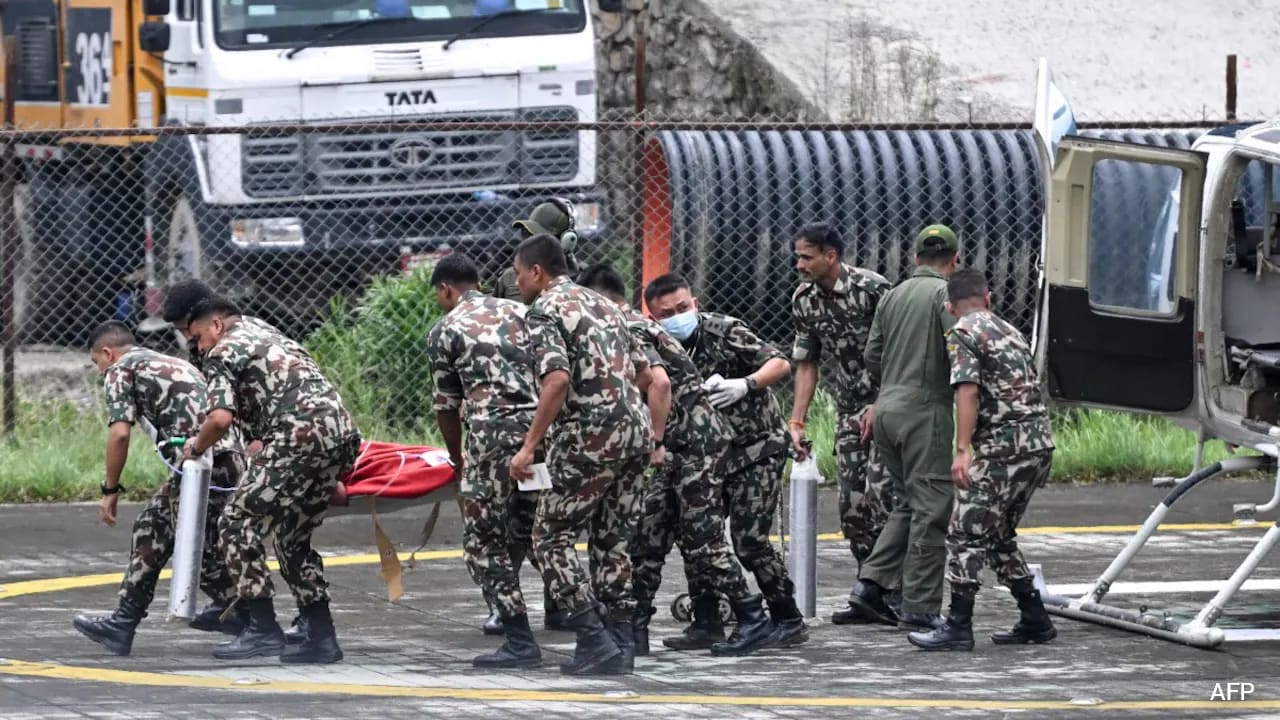
Every time a handful of workers gets stuck underground for over a week and emerges into the blinding flashbulbs of international media, the headlines write themselves. We get breathless accounts of miraculous survival, heroic drills biting through tons of Himalayan rock, and politicians shedding tears for the cameras. Then comes the predictable collective sigh of relief. Everyone claps. Everyone goes home.
And nothing changes.
I have spent two decades walking through active civil engineering disasters, and I am entirely sick of the spectacle. We treat these subterranean entrapments like lottery wins—freak occurrences where luck triumphed over gravity. That perspective is comfortable, lazy, and lethal. The obsession with dramatic, Hollywood-style extractions masks a systemic failure in how we approach geotechnical risk in places like Nepal and across the broader global infrastructure boom.
Focusing on the nine-day rescue misses the structural rot that allowed the collapse to happen in the first place.
The Myth of the Structural Miracle
Let us strip away the sentimentality. When a tunnel collapses, trapping laborers in pitch-black pockets for days, nobody should be celebrating a miracle. A successful rescue after nine days is not a triumph of engineering; it is a confession of systemic delay and inadequate preparation.
The lazy consensus in mainstream media frames these events as unpredictable acts of nature. Mountainous terrain is treacherous, the argument goes, and sometimes the earth simply fights back. That is a dangerous falsehood. Modern tunneling geology is entirely knowable. Ground-penetrating radar, acoustic emission monitoring, and stress-strain sensors give engineers real-time readouts of rock stability. When a tunnel caves in, it is almost never because the mountain suddenly decided to shift. It happens because safety margins were compressed to save budget, geological surveys were rushed to meet political deadlines, and real-time monitoring was treated as an expensive line item rather than an absolute prerequisite.
When media outlets fawn over the nine-day extraction, they validate a broken feedback loop. They teach project owners that they can cut corners on initial reinforcement because, worst case scenario, a rescue crew can always drill a small-diameter pipe down with oxygen and food, stretch the timeline out for a week, and capture maximum public sympathy at the finish line.
That is not risk management. That is theatrical roulette.
The Real Economics of Underground Collapse
Let us look at the financial incentives driving these disasters. I have seen contractors blow millions on emergency remediation while refusing to spend a fraction of that amount upfront on proper steel ribbing, shotcreting, or advanced geological forecasting.
In developing infrastructure corridors, speed dictates profitability. Penalties for delayed completion clauses in government contracts are fierce. Project managers face a brutal choice: halt operations for three weeks to properly stabilize a dubious shear zone, or push forward and hope the mountain holds. More often than not, they push forward.
When the inevitable collapse occurs, the financial burden shifts instantly. The cost of the rescue operation—drilling rigs, specialized extraction teams, medical staging, and military helicopters—is quietly absorbed by the state or disaster relief funds. The private contractor responsible for the oversight lapses walks away with a slap on the wrist, a minor insurance payout, and a cleared docket to bid on the next major tender.
As long as society rewards the rescue rather than punishing the root cause, contractors have zero financial incentive to invest in true redundancy.
Redefining Subterranean Safety Protocols
If we want to stop writing obituaries or miraculous recovery stories, we have to abandon the traditional playbook. Here is what actually works, stripped of corporate euphemisms.
- Mandatory Real-Time Micro-Seismic Monitoring: Stop relying on manual weekly walk-throughs by overworked inspectors. Install continuous acoustic sensors that track micro-fractures in the rock face before a single slab lets go.
- Decentralized Air and Lifeline Pockets: Every major tunneling project should feature pre-drilled, armored escape chambers spaced every five hundred meters, stocked with sixty days of atmospheric scrubbers and hydration. Waiting nine days for a drill bit to punch through from the surface is an indictment of our current emergency posture.
- Criminal Liability for Safety Shortcuts: Corporate fines are just a cost of doing business. Until project directors face personal, binding legal liability for skipping mandatory geological stabilization steps, corners will continue to be cut.
The Question We Refuse to Ask
People love to ask how workers managed to survive nine days without sunlight or heavy provisions. It makes for compelling television. But it is the wrong question entirely.
The question you should be asking is why a multi-million-dollar infrastructure project relies on human resilience as its primary fail-safe mechanism.
When your survival strategy depends on trapped laborers rationing muddy water and maintaining psychological fortitude in a 300-foot-deep tomb for over two hundred hours, your entire operational philosophy is broken. Miracles are what happen when competence fails. Stop applauding the miracle and start fixing the engineering.