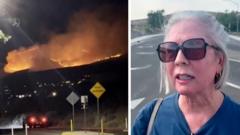
When a wildfire moves fast enough to leap over active fire trucks, standard evacuation timelines go completely out the window. That is the terrifying reality unfolding in northwest Reno, Nevada, where the human-caused Hawk Fire has forced roughly 90,000 people under evacuation orders and warnings.
If you think a few minutes of warning will save you when the Sierra foothills catch fire, you are dangerously mistaken.
The blaze started near the Hawk Meadow Trail and erupted across the Peavine Peak area. Fueled by low humidity, dry vegetation, and violent gusty winds, it ballooned past 10,500 acres almost overnight. Washoe County officials didn't stutter when they told 42,000 residents to get out immediately, while another 45,000 people sat in active warning zones.
The Logistics of a Mass Panic
Evacuating an entire city district isn't like pulling out of a grocery store parking lot. Major arteries like sections of U.S. Route 395 were forced to close as flames licked the asphalt.
Local officials opened the Reno-Sparks Convention Center for displaced residents, but the rules complicated things fast. Large animals and household pets couldn't go into the main shelter. Evacuees had to split up their families and drop pets off at designated spots like Washoe County Regional Animal Services or the Ironwood Event Center.
When you're running for your life, sorting out animal drop-off zones is the last thing you want to deal with. Yet this is the messy reality of modern disaster response. Governor Joe Lombardo declared a state of emergency for Washoe County, deploying the Nevada National Guard and aerial firefighting chopper crews to secure abandoned neighborhoods.
Why Human-Caused Fires Spread With Zero Mercy
Authorities confirmed the Hawk Fire was human-caused, though precise details remain under investigation. Months of dry weather combined with a dismal winter snowpack across the American West left the region looking like a tinderbox.
When winds shift mid-blaze, fire behavior becomes entirely erratic. Washoe County Sheriff Darin Balaam noted that the flames moved so aggressively on Saturday night that they literally jumped over responding fire engines. First responders couldn't even reach certain hot spots because escape routes were compromised instantly. At least six people—split evenly between civilians and first responders—sustained injuries amid the chaos.
People living near high-risk brush zones make the same fatal mistake every season. They wait to see smoke or smell ash before packing a bag. By that point, power grids fail—cutting off local electricity for tens of thousands—and cellular towers get overloaded.
Practical Survival Steps for High-Risk Zones
If you live anywhere near a wildfire-prone wildland-urban interface, you need an actionable strategy right now. Stop relying on last-minute alerts.
- Maintain a 100-foot defensible space: Clear dead brush, dry leaves, and flammable vegetation away from your exterior walls. Embers travel miles ahead of the actual front.
- Keep your gas tank full: If you own a vehicle, never let it drop below half a tank during fire season. Gas stations lose power instantly when local grids fail.
- Prep an emergency grab-and-go kit: Pack essential medications, hard copies of important documents, N95 respirator masks, and pet carriers where you can grab them in ten seconds flat.
- Know your local animal protocols: Familiarize yourself with regional fairgrounds or animal shelters that handle livestock and small pets before an emergency hits.
Wildfires don't care about your schedule. When local authorities issue a "GO NOW" order, grab your family, leave your non-essentials behind, and get out before the roads close for good.


